|



Learning System Design is one of those journeys every engineer eventually takes.
Some of us take the scenic route
Some of us take the painful one
This was originally written by javinpaul, and it continues to be one of the clearest and most structured guides on how to learn system design without getting overwhelmed. Highly recommend checking out the Javarevisited Newsletter
I’m republishing it as a guest post because it deserves a fresh spotlight, especially for engineers preparing for interviews in 2026
Break Into Senior Engineer Roles
“Break Into Senior Engineering Roles,” a live cohort course to help you prepare better and position yourself right for tech interviews and senior engineering roles. [Check Details Here]
 |
If you are interested in levelling up to FAANG and 2x your compensation, you can fill out the form below
Why System Design Feels Hard at First
Most engineers start their system design prep the worst way possible:
random Medium articles
endless YouTube videos
too many course signups
scattered engineering blogs
whitepapers without context
It “works,” but it’s chaotic and slow.
If Soma had to start from scratch today, he’d take a structured route instead — something you can reuse for interviews, real-world work, or long-term architecture skills.
Below is that path.
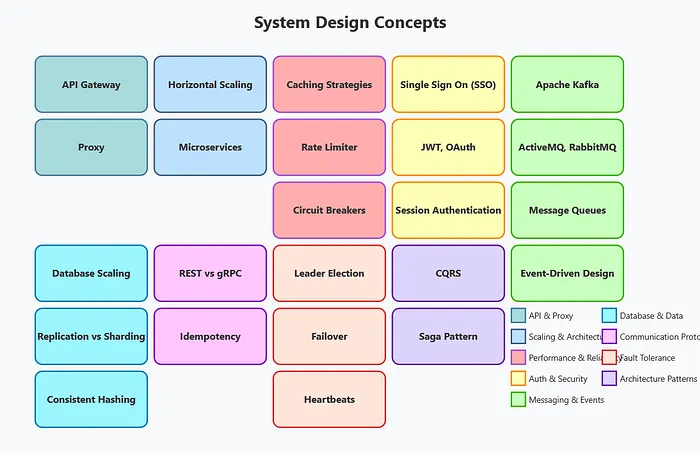
1. Start with the Core Concepts
Everything in system design sits on top of a few fundamentals.
If you get these right, the rest becomes easier.
Scalability
Understand vertical vs horizontal scaling and why horizontal is usually the long-term answer.
Availability
Active-active vs active-passive.
How failover works.
How SLAs and SLOs shape reliability.
CAP Theorem
You don’t need to memorize the theorem.
You need to understand the tradeoff forced by partitions.
Latency vs Throughput
Low latency is about speed.
High throughput is about volume.
Different problems, different tuning strategies.
Fault Tolerance
Replication, redundancy, leader election, heartbeats, failover logic.
💡 Resource Tip: Join a comprehensive course like “Grokking the System Design Interview” or Read real-world case studies from companies like Netflix and Google to see how they implement these concepts.
 |
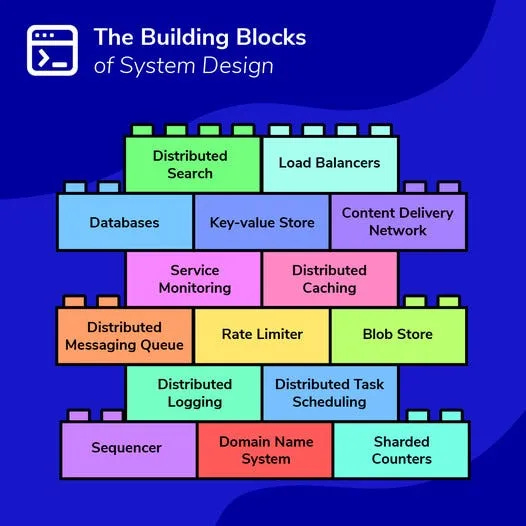
2. Master the Building Blocks
These are the tools you use again and again in every system design question.
CDN
Caches static content closer to users, reduces round-trip times.
Load Balancing
Know algorithms like round robin, least connections, IP hash, and where each fits.
Caching
Read-through, write-through, write-back, eviction policies, cache invalidation mistakes.
Message Queues
Kafka, RabbitMQ, SQS.
Queues decouple producers from consumers and unlock async workflows.
Circuit Breakers
Protect upstream services during failures.
API Gateways
Routing, rate limiting, authentication, CORS.
💡 Practical Step: Watch an interview focused System design course like Grokking Modern System Design for Software Engineers & Managers or Build a small project (e.g., a chat app) to see how load balancing, caching, and API gateways come together.
 |
3. Dive Deep Into Databases
This is where most interviews get real.
SQL vs NoSQL
Joins and ACID vs flexibility and horizontal scale.
Indexes
B-trees, hash indexes, covering indexes.
Faster reads, slower writes. Tradeoffs everywhere.
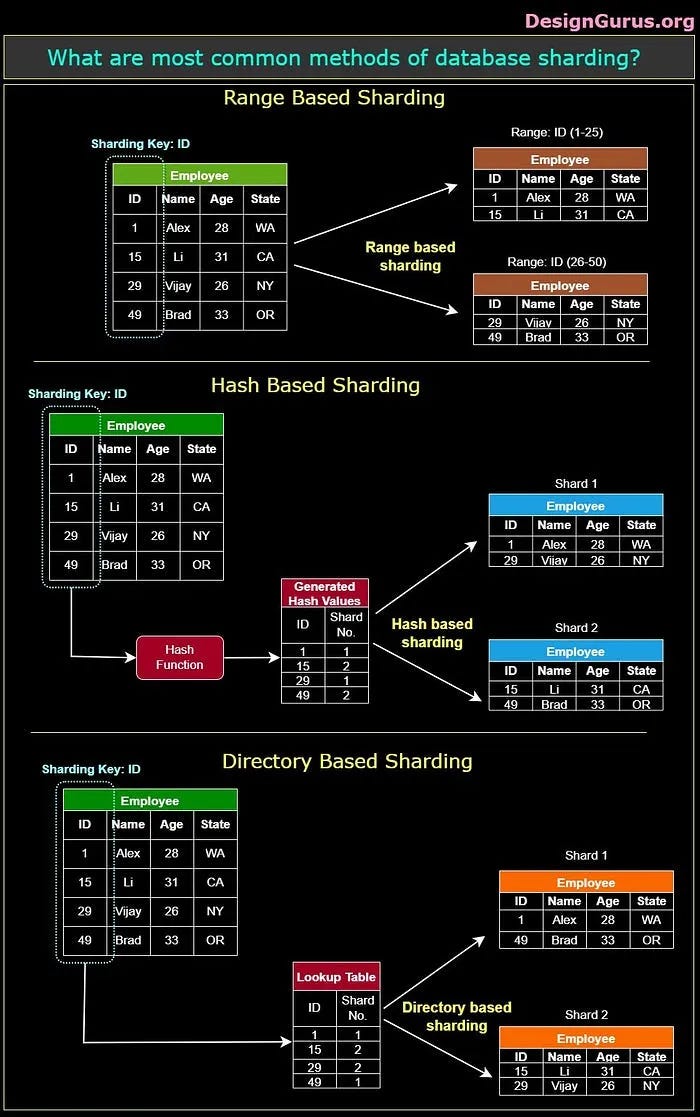
Sharding
Range-based, hash-based, directory-based.
Why resharding is painful.
Replication
Leader-follower, leaderless, quorum reads, quorum writes.
ACID Transactions
Atomicity, consistency, isolation, durability.
Why it matters for financial systems.
💡 Practice Exercise: Design a schema for a large-scale e-commerce app and experiment with sharding and replication, you can also checkout Grokking the advanced System Design course on DesignGurus.io for more such topics.
 |
4. Understand Key Tradeoffs
System design is more about choosing what to give up than what to add.
Strong vs Eventual Consistency
Banking vs social feeds.
Sync vs Async Communication
When to use APIs, when to use queues.
Batch vs Stream
Hadoop vs Kafka.
ETL vs real time.
Stateful vs Stateless
Stateless scales easier.
Stateful is sometimes unavoidable.
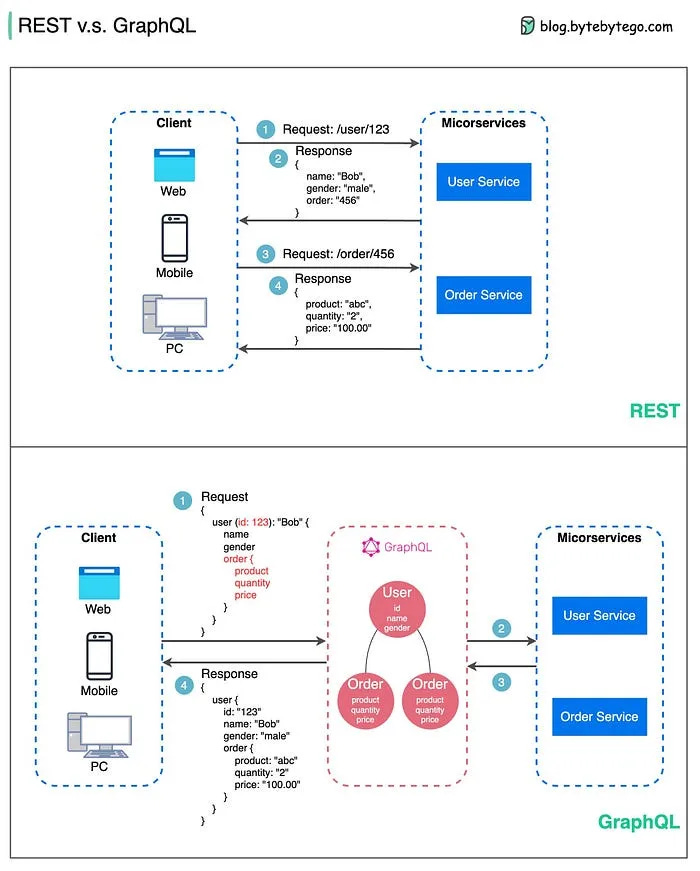
💡 Real-Life Example: Analyze the tradeoffs between REST and gRPC in designing APIs. You can also checkout ByteByteGo, which explain this kind of concepts with a nice diagram shown below.
 |
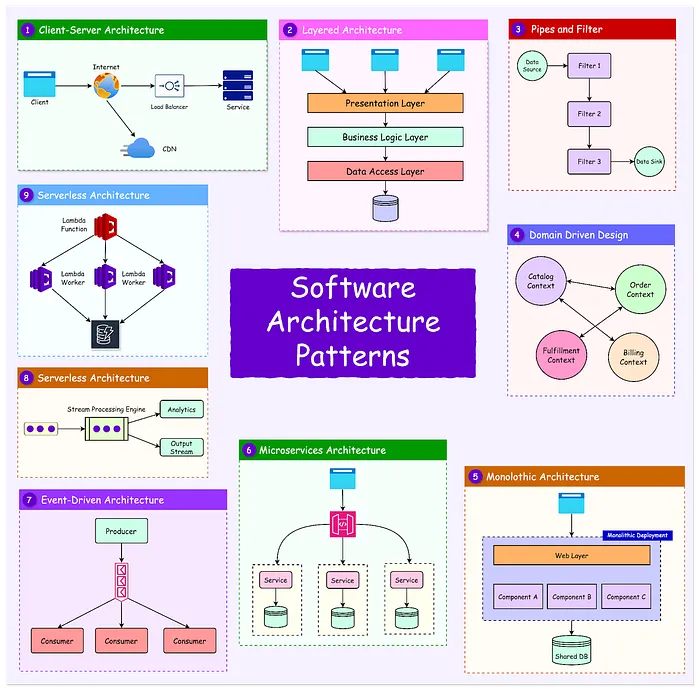
5. Study Architectural Patterns
These patterns show up in interviews all the time.
Client-Server
Simple, clean, but limited.
Microservices
Independent deploys, isolation, but complex coordination.
Serverless
Event-driven, scalable, but with cold starts and vendor lock-in.
Event-Driven
Kafka-centric pipelines.
Async workflows.
Powerful for e-commerce, logging, and analytics.
P2P
Decentralized, resilient, used in blockchain and torrent systems.
💡 Project Idea: Design a system like Uber using a combination of event-driven and microservices architecture. You can practice such problems on codemia.io, a great place to practice system design.
 |
6. Hands-On Learning Is Non-Negotiable
Theory gets you interviews.
Practice gets you offers.
Beginner project
Design a URL shortener.
Talk about hashing, read-heavy workloads, caching.
Intermediate
Twitter clone.
Focus on fanout, rate limits, feed generation.
Advanced
Ride-hailing app.
Geo queries, pub sub, consistency boundaries, matching algorithms.
💡 Mock Interviews: Participate in system design interviews on platforms like Pramp , Designgurus.io, or InterviewKickStart with peers to gain confidence.
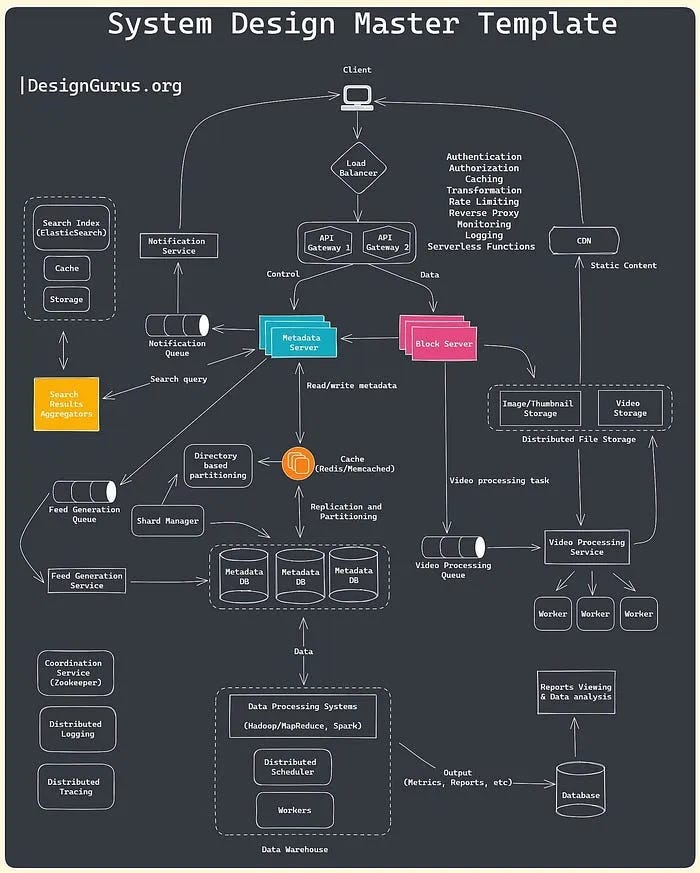 |
7. Study Real-World Architectures
Netflix, Facebook, Google Drive.
Understand their caching layers, ingest pipelines, replication models, load balancers, and tradeoffs.
💡 Resource Tip: Check out YouTube channels like Tech Dummies and System Design Simplified for breakdowns of real-world architectures.
8. Use Structured Learning Resources
Lastly, supplement your learning with curated courses, books, and blogs.
Books: “Designing Data-Intensive Applications” by Martin Kleppmann or “System Design Inside Guide” by Alex Xu
Courses: Alex Xu’s ByteByteGo or Exponet System Design Course
Blogs: Check out articles on Medium, GitHub, and educational platforms like Educative.io.
 |
Conclusion
If I had to begin again today, I’d learn system design the structured way:
fundamentals first
building blocks second
databases third
real projects throughout
Because system design isn’t about memorizing patterns.
It’s about developing engineering intuition.
What’s your approach to learning system design?
Drop a reply. I’d love to hear how you structure your learning.
Join my cohort
“Break Into Senior Engineering Roles,” a live cohort course to help you prepare better and position yourself right for tech interviews and senior engineering roles. [Check Details Here]Sponsor this newsletter
Want to reach 23,000+ senior engineers and tech leaders? [See sponsorship options]Digital Products
Check out my digital products to help you grow better as a Software Engineer and Leader in Tech
Stay in touch
Find me on
Any questions? Just email me at hemant.pandey17@gmail.com
 | A guest post by
|
| ||||||||||

