| In partnership with |  |
|
|
| Welcome Automaters, 👋 | Here's something wild: there's a sentence structure so overused by AI tools that spotting it in a document is basically like finding a neon sign that reads "a robot wrote this." The phrase? "It's not just this. It's also that." | Yep. That one. You've definitely seen it. | TechCrunch senior writer Amanda Silberling flagged a Barron's report revealing something genuinely jaw-dropping: this exact phrase has gone absolutely wild across corporate earnings reports, official press releases, and even government filings. | Using data from market research firm AlphaSense, Barron's tracked the phrase exploding from around 50 mentions in 2023 to over 200 uses in 2025. That's more than quadrupled. In just two years. | And the receipts are everywhere. Silberling pulled real examples from major companies caught using the construction: | Cisco writing about AI as "not just a tool" but "a collaborator." Accenture saying the future of autonomy "isn't just on the horizon." McKinsey describing AI systems as "not just executing tasks." Microsoft's Satya Nadella using the phrase multiple times in a single blog post.
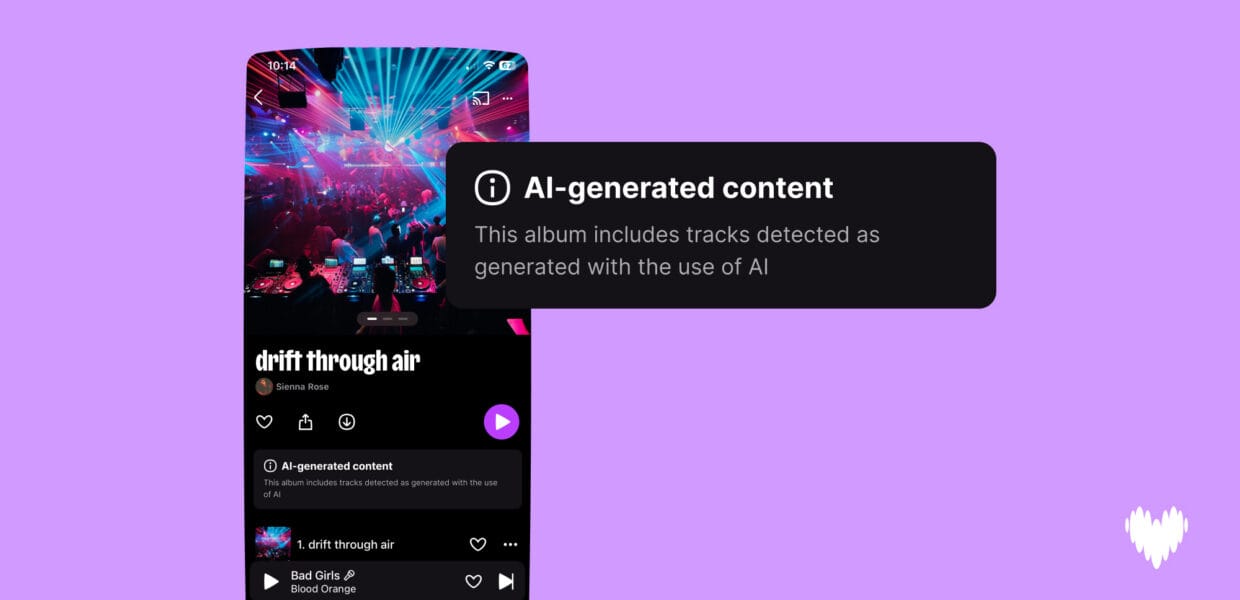
| Now, to be fair: we cannot say for certain whether any of these were written by AI. But the pattern is hard to ignore. | Silberling points out that AI tools picked up this habit honestly: they learned it from us. These models were trained on human writing across the internet, including writing created and used to train AI without the authors' knowledge or consent. As she notes, that is not just a quirky footnote. It is a real and ongoing issue for writers. | And it's not just this phrase either (see what we did there). The trusty em-dash is in on it too. That elegant little punctuation mark (yes, this one: —) has quietly become another widely recognised signature of AI-generated text, right alongside the "not just... but also" construction. | Put it all together and what you have is a growing AI fingerprint problem baked directly into how these tools communicate. The more corporations lean on AI for official communications, the more their documents start sounding like they all came from the same robot intern. | Funny? Absolutely. But also kind of a big deal. | Here's what we have for you today | | | | | | | 🎼 Deezer's Shocking 2026 Report: 44% of Daily Music Uploads Are AI-Generated and Growing Fast | | So, you wake up, make your coffee, and by the time you finish your first sip, thousands of brand-new "songs" have already been uploaded to a major music platform. Not by artists. Not by bedroom producers grinding at 2am. But by AI. Lots and lots of AI. | The Numbers That Broke Our Brains? | Paris-based music streaming platform Deezer published an official report, and it is the kind of reading that makes you put your phone down and stare at the ceiling for a minute. | According to that report, 44 percent of every song uploaded to Deezer daily is AI-generated. That’s nearly one in every two tracks. In raw numbers, that is roughly 75,000 AI-made songs landing on the platform per day. Stack those up monthly and you are looking at 2 million flagged AI songs every single month. | But wait, it gets bigger. Zoom out to all of 2025, and Deezer's system detected and flagged over 13.4 million AI-generated songs across the entire year. I mean, that’s a tsunami! | So How Did We Get Here So Fast? | Well, back in January 2025, Deezer launched a patent-pending AI music detection tool, essentially a digital bouncer trained to spot AI-made tracks sneaking into the platform. | In the early months after launch, the tool was catching around 20,000 AI-generated tracks per day, which made up about 18 percent of total daily uploads. That felt alarming enough at the time. Fast forward just over a year and that number has more than tripled. Same tool. Same platform. Wildly different reality. The AI music machine did not slow down. It levelled up. | So Who Is Making All This AI Music? | Deezer's detection tool is specifically trained to identify music churned out by two of the biggest names in AI music generation right now: Suno and Udio. If those names sound familiar, they should. Both platforms have faced lawsuits from record labels over copyright concerns in their early days. Awkward. | Interestingly though, the story did not end there. Some major record labels later had a change of heart and actually struck licensing deals with both startups. The music industry, ever unpredictable, decided that if you cannot beat them, maybe sign them. | But here's the silver lining hiding inside all these jaw-dropping numbers: | Despite the absolute avalanche of AI uploads, only 1 to 3 percent of total streams on Deezer actually involve AI-generated music, which means, real artists, real songs, and real listeners are still driving the platform. | Even better? The majority of those AI streams are flagged as fraudulent and demonetized. So the bots are uploading in bulk, but they are not cashing checks. Not yet anyway. | But hey, Deezer is not the only one building walls. Streaming newcomer Coda Music is also fighting back, rolling out "AI Artist" labels so listeners always know what they are hearing. Coda even lets regular users flag suspicious artists themselves, turning the whole community into a detection squad. | The message from across the industry is getting clearer: AI music is here, it is growing fast, and platforms are scrambling to keep up. | Learn more here. |
| |
| | |
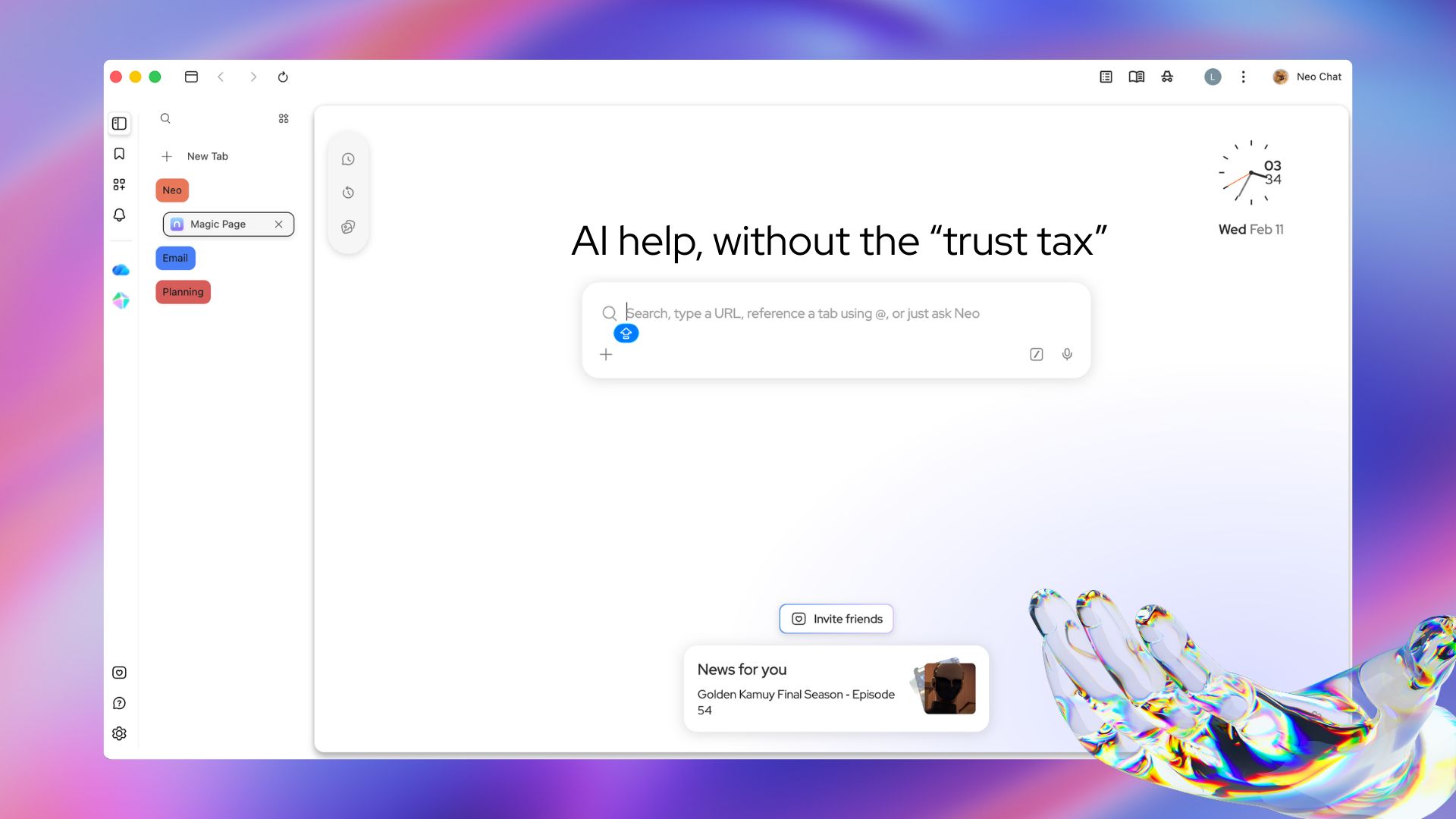
| | AI help, without the trust tax. | | Most AI tools ask you to trade your data for intelligence. Norton Neo doesn't. It's the first safe AI-native browser built by Norton, and it gives you powerful built-in AI without handing your privacy over to get it. Search, summarize, and write with AI built directly into your browser. Your data stays yours. Your context stays private. | Built-in VPN, anti-fingerprinting, and ad blocking come standard. No add-ons. No setup. No compromises. | Fast. Safe. Intelligent. That's Neo. | Download Norton Neo |
|
| | | | | | | | | | 🤖 AI Workout Of The Day: How to Break Down Complex Prompts for Better Results | | Ever tossed a giant, overloaded prompt at AI only to get back a messy, uneven answer? Yep, we’ve all been there. When you cram too much into one request, the AI struggles to balance everything. Some parts get skimmed over, others get way too much love. | The game-changer? Breaking your prompts into smaller steps. Think of it like giving your AI a recipe instead of a mystery box; it knows exactly what to do, and you stay in control. | How to Break Down Complex Prompts | Step 1: Start with the structure → “List the main sections for…” Step 2: Gather stats or facts → “Give me 3–5 statistics about…” Step 3: Add examples or case studies → “Provide 2–3 examples of…” Step 4: Compare strengths vs. weaknesses → “List the pros and cons of…” Step 5: Predict trends or next steps → “What are 3–4 predictions for…” Step 6: Put it all together → “Using the previous answers, write a full article…”
| 💡 Prompts to try: | Write an article about AI in marketing. Include statistics, case studies, pros and cons, expert recommendations, and future trends. The style should be professional yet easy to understand.”
OR
Instead of writing everything in one go, help me break this {INSERT TASK} into clear steps. Start by listing the structure, then move on to facts, examples, pros/cons, trends, and finally combine everything into a polished piece.
|
| |
| | |
| | Is this your AI Workout of the Week (WoW)? Cast your vote! | | That's all we've got for you today. | Did you like today's content? We'd love to hear from you! Please share your thoughts on our content below👇 | What'd you think of today's email? | | Your feedback means a lot to us and helps improve the quality of our newsletter. |
|