In partnership with |  |
|
“Very little is needed to make a happy life; it is all within yourself, in your way of thinking." | | | | Marcus Aurelius |
|
|
Date: Monday, April 13, 2026 |
|
Hey AI Visionaries, |
Alright when we started out we did not think we would reach 100 editions! So we have gone old school with a focus on business strategy (Open AI’s Ad gambit and Coreweave’s build out) and stuff that can help you in practice (Claude). |
Table of Contents |
|
Thank you for being an engaged reader and helping us cross 5,500 subscribers over 100 editions! As usual, please send in your feedback and suggestions - it helps me to improve. |
-Renjit |
PS: If you want to unleash the power of OpenClaw and Hermes AI agents for personal productivity, you can setup time speak to me here» |
|
|
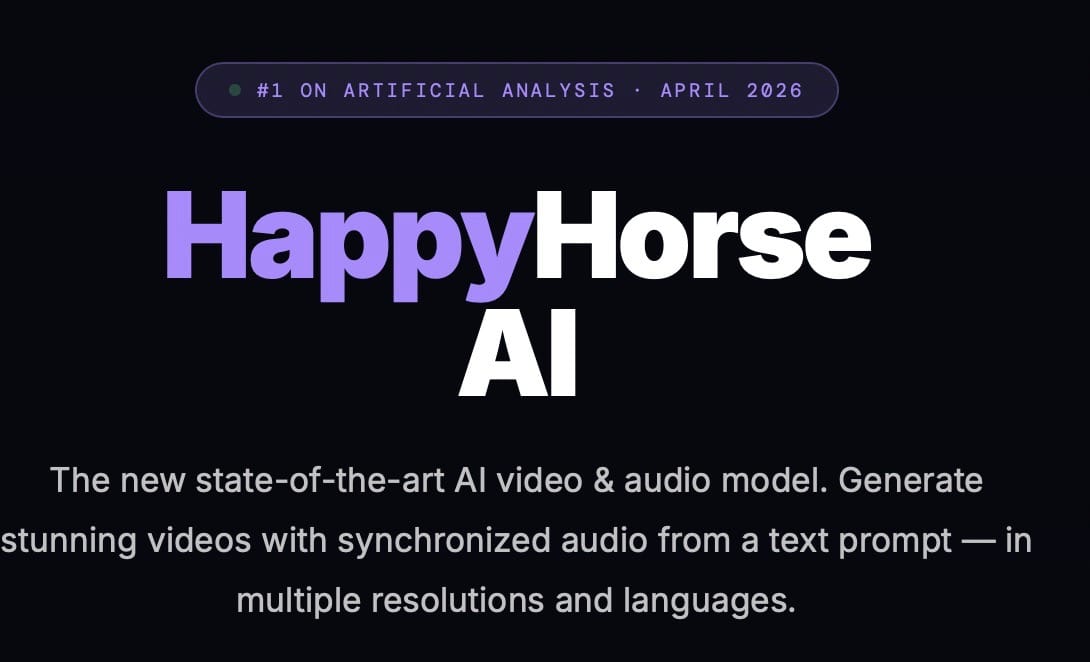
Alibaba’s Happy Horse Gallops to the Top of Video AI Rankings |
The mystery surrounding the latest leader in video models has been solved. Alibaba recently confirmed it is the mastermind behind “Happy Horse,” a video AI model that stunned the industry by topping global rankings upon its debut. Developed by the Alibaba Token Hub’s innovation unit, Happy Horse 1.0 secured the number-one spot on the Artificial Analysis text-to-video leaderboard, even surpassing ByteDance’s highly acclaimed Seedance 2.0. |
|
With OpenAI recently pulling back from the video generation segment, Chinese tech giants are racing to fill the vacuum. Alibaba’s success is a milestone in CEO Eddie Wu’s aggressive pivot toward Artificial General Intelligence (AGI) and business monetization. The market has already reacted with enthusiasm, sending Alibaba’s shares climbing as much as 8% following rumors of the model’s performance. |
Looking ahead, Alibaba plans to open API access for Happy Horse “in the near future,” signaling a move to monetize this capital-intensive technology quickly. |
So what? As video generation becomes the next frontier for reliable AI revenue, Alibaba’s secret model has placed the company at the front of the race. Stay tuned for more updates as this “Happy Horse” prepares to leave the stable for wider public use. |
|
LLM traffic converts 3× better than Google search |
|
58% of buyers now start their research in ChatGPT or Gemini, not Google. Most startups aren't showing up there yet. |
The ones that are get cited by the AI tools their buyers, investors, and future hires already use. And they convert at 3×. |
Download the free AEO Playbook for Startups from HubSpot and get the exact steps to start showing up. Five minutes to read. |
Get the free playbook |
|
Learn AI: Save your Claude Credits |
Most people are using Claude Code like it’s unlimited. It’s not- we know that. You’re paying in latency, cost, and worse outputs. Fix these five things. |
1. Stop using Claude Opus for everything |
Run /models. Route based on task.
* Opus → architecture, deep debugging, multi-file changes
* Sonnet → tests, edits, explanations, daily work
* Haiku → lookups, formatting, repetitive tasks
You don’t deploy max horsepower for admin work.
Better routing = faster responses + lower cost.
2. Reset context aggressively
Claude carries baggage. Every prompt adds weight.
Long sessions = slower + noisier + more expensive.
Do this:
* /clear → between unrelated tasks
* /compact → before starting something large
Otherwise you’re compounding cost for declining quality.
3. Default to CLI over MCP
If a CLI exists, use it.
Example: GitHub.
* gh CLI → fast, minimal tokens
* MCP → heavy schema + verbose outputs
MCP injects context both ways. You pay for inputs and outputs.
Rule:
* CLI first
* MCP only when necessary
4. Install context-mode
If you use MCP heavily, this is non-negotiable. It prevents raw tool output from bloating context. Instead of dumping 10,000 tokens of JSON into your session:
* It indexes it externally
* Returns a usable summary
Result:
* 50–90% token reduction
* Cleaner context
* Better responses
Set it once. Forget it. |
5. Shrink your CLAUDE.md
This file is injected every time. Every prompt. Every follow-up.
A 5,000-token file = permanent tax.
Keep it lean:
* 5–7 rules max
* Reference details via file paths
Example:
```
# CLAUDE.md
Rules
- Use TypeScript strict mode
- Write tests for every new function
- Follow existing patterns
Key Files
- API: src/api/README.md
- Schema: docs/schema.md
- Style: docs/style-guide.md
```
Let Claude pull detail only when needed. Not on every turn.
(PS: I picked this from Sabrina Ramonov’s awesome channel on AI. She is a legend, you should follow her) |
|
Perplexity enters the Personal Finance space |
Perplexity is making a bold move into the personal finance space, transforming its AI search engine into a comprehensive money dashboard. By deepening its integration with Plaid, Perplexity now allows users to connect everything from checking and savings accounts to credit cards and loans, sitting right alongside their investment portfolios. This isn't just about viewing balances; it’s about leveraging natural-language analysis to gain deep insights into your financial health. New competition for Chime?
Users can now treat Perplexity like a personal AI financial analyst, asking it to track spending categories, visualize net worth, or build custom debt-payoff planners. While the earlier 'Portfolio' feature focused primarily on brokerage accounts, this update pivots toward everyday financial management. The rollout utilizes Plaid’s massive infrastructure—supporting over 12,000 institutions—to provide a unified view of fragmented accounts without requiring users to execute trades or move money.
The service offers tiered functionality, with advanced 'Computer' workflows reserved for Pro and Max subscribers. |
Takeaway: However, the launch hasn't been without debate. While many celebrate the 'AI Personal CFO' utility, others are cautious about the security implications of granting an AI assistant full access to their financial data. Whether you see it as the ultimate productivity tool or a step too far in data sharing, Perplexity is clearly positioning itself to be much more than a search engine—it wants to be the brain behind your bank account. |
|
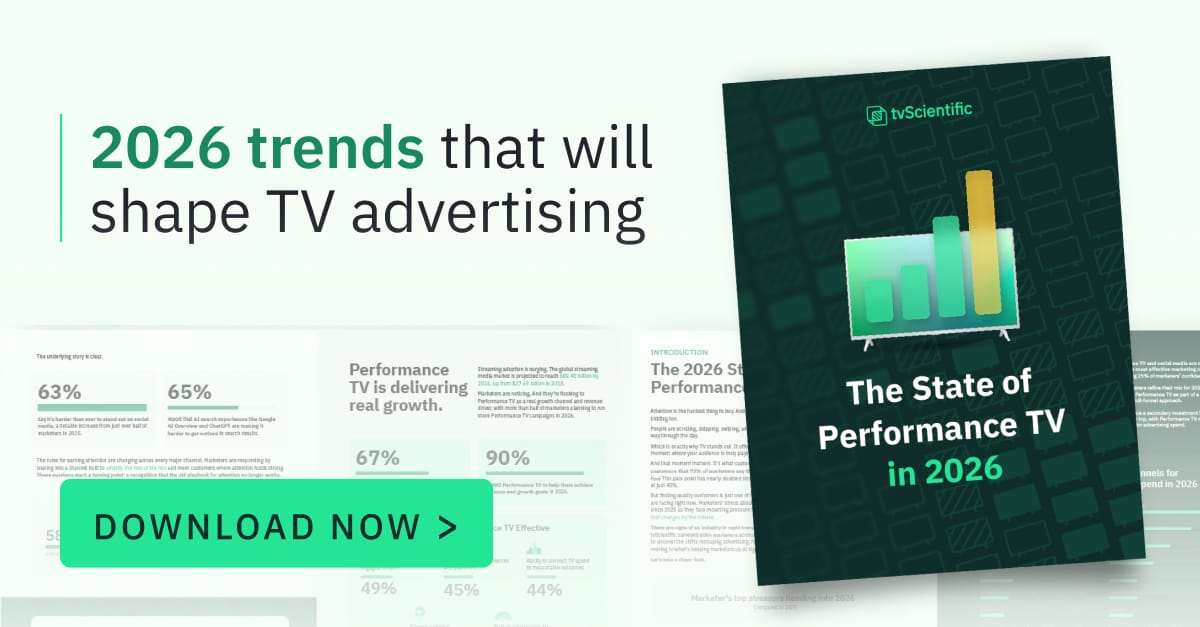
2026’s biggest media shift |
|
Attention is the hardest thing to buy. And everyone else is bidding too. |
When people are scrolling, skipping, swiping, and split-screening their way through the day, finding uninterrupted moments where your audience is truly paying attention is the priority. |
That’s where Performance TV stands out. |
Check out the data from 600+ marketers on the most effective channels to capture audience attention in 2026. |
Download Report |
|
CoreWeave’s $88 Billion Backlog: Inside Meta’s Massive AI Infrastructure Bet |
The race for AI supremacy is being paved with billions of dollars in hardware and some serious financial engineering. Meta Platforms recently signaled its long-term commitment to "superintelligence" by inking a massive $21 billion deal with CoreWeave for AI processing capacity through 2032. This follows a previous $14.2 billion agreement, positioning Meta as a primary anchor tenant for the world’s leading "neocloud." With this latest deal, CoreWeave’s revenue backlog has ballooned to a staggering $87.8 billion, with Meta and OpenAI accounting for nearly two-thirds of those guaranteed future earnings.
However, building the infrastructure for the GenAI boom is a high-stakes gamble. While CoreWeave’s revenue grew 2.7x in 2025 to $5.13 billion, it still faces significant net losses and a voracious appetite for capital. To meet its ambitious goals, the company expects to invest up to $35 billion in 2026 alone, expanding its fleet of Nvidia GPUs and building out its massive 3.5-gigawatt power capacity. |
To fund this expansion, CoreWeave is tapping the debt markets with billions in senior notes. |
Takeaway: As tech giants like Meta and OpenAI look to bypass traditional cloud limitations, CoreWeave is positioning itself as the critical, albeit expensive, alternative to AWS and Google Cloud. The question remains: can the financial engineering keep pace with the frantic speed of data center design? |
|
OpenAI Targets $100 Billion Ad Revenue: The Race for Digital Dominance |
OpenAI is pivoting from a pure tech pioneer to a digital advertising powerhouse, setting its sights on a staggering $100 billion in annual ad revenue by 2030. According to recent investor reports, the creator of ChatGPT expects its nascent advertising business to pull in $2.5 billion this year alone, with projections scaling to $11 billion in 2027 and $53 billion by 2029. |
This aggressive roadmap is fueled by a massive user growth target: reaching 2.75 billion weekly active users by the end of the decade.
The strategy represents a direct challenge to the industry’s current titans, Alphabet’s Google and Meta, which currently dominate the global digital ad market. To achieve these lofty goals, OpenAI is testing ads on ChatGPT’s free tier and its entry-level 'Go' plan. |
Since the company’s exploration of 'in-chat commerce,' where it earns commissions on purchases made directly within the AI interface, has not gone as well as it planned, ads are the way to go. While analysts warn that ads could potentially alienate users, early pilot data shows stable consumer sentiment and a growing roster of over 600 advertisers. |
Takeaway: As OpenAI balances the immense costs of developing advanced AI with the need for sustainable monetization, the shift toward a volume-based advertising model is an inevitable move in the evolution of generative AI platforms. |
|
Unitree Robots for less than $6000! |
 | Unitree Introducing | Unitree R1 Intelligent Companion Price from $5900 |
|
|
The robotics giant is taking its most affordable humanoid global next week via AliExpress, targeting North America, Europe, Japan, and Singapore. Priced afforadably, it's built for dynamic, sport-ready movements like cartwheels and downhill running. Aiming to ship between 10,000 and 20,000 units in 2026, the launch tests whether affordable humanoid robots can crack mainstream Western markets. You can see the robot in action in the video above. My question is: Is it just a cute addition to your household or can it actually do anything? |
How Intrepid hit record profits without dropping its principles |
|
29% revenue growth. Record profits. And a company willing to say what didn't go to plan. Intrepid's 2025 Integrated Annual Report shows how purpose and profitability scaled together, and what it's targeting next on the path to $1bn. |
Read how they did it |
|
📚 Sources & Further Reading |
|
|