This is Atlantic Intelligence, a newsletter in which our writers help you wrap your mind around artificial intelligence and a new machine age. Did someone forward you this newsletter? Sign up here.
|
|
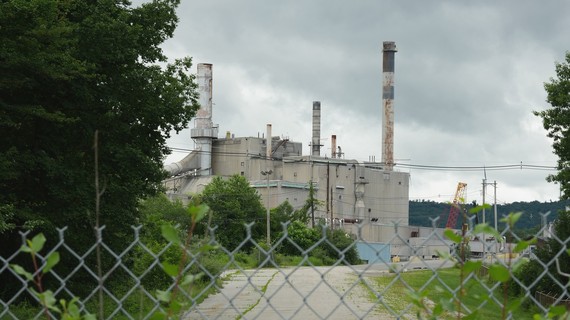
Data centers have, over just a few years, risen from relatively obscure gray structures on the side of the highway to perhaps the most politically charged buildings in the world. These noisy, mysterious, expensive facilities have become symbols of the AI boom—and, in particular, a locus for the growing anxiety many Americans harbor about the technology. Although most people cannot influence the decisions made in OpenAI’s and Anthropic’s boardrooms, they can push back against new data-center construction in their community. The opposition has been fierce across the country—with one big exception. That would be Jay, a town in Maine that is begging for a data center to be built in the shell of an abandoned paper mill. When Maine Governor Janet Mills vetoed earlier this year what would have been the first statewide data-center moratorium—a temporary ban on new construction—it was something of a shock. Mills’s reason was simple: The town of Jay wanted a data center, so it should be able to have one. My colleague Ethan Brooks drove north to investigate. “I wanted to understand why this town had fought for the very thing that so many others dread,” he wrote. “What I found was a reminder that politics is local.” |
|
| | The power plant at the former Androscoggin paper mill (Julia Kokernak for The Atlantic) | | | |
|
|
| There are two Maines. The first Maine is right there on the license plate: “Vacationland.” Lighthouses, lobster bibs, the jagged coast, anywhere with a big, beautiful lake or a big, beautiful ski mountain. The other Maine—Jay’s Maine—is Appalachia. When I asked ChatGPT what I should see in Jay, it suggested (gently) that I should visit somewhere else. Jay is a 90-minute drive from the coast. It has no lighthouse and no giant lake. The school is the town’s largest employer. A surprising number of people ride motorized scooters—they can no longer afford cars. What Jay does have is space. In 2023, a company called JGT2 bought 1,000 acres just across the Androscoggin River from Jay. To inexpert eyes, the property—the site of the former Androscoggin paper mill—doesn’t look like much: a few rusted and stained industrial buildings sprouting weeds in the shadow of an immense landfill. But to Tony McDonald, one of the developers who leads JGT2, the site looks like money. It has direct rail access, gas, a 35-million-gallon-a-day wastewater-treatment plant, and, crucially, power: a 150-megawatt electrical interconnect, plus access to 25 megawatts of hydroelectric power. McDonald’s original idea had been to turn the place into a wood-product manufacturing facility. Mills traveled to Jay to announce the project, which was expected to create about 125 jobs. And yet over the next two years, the factory plan quietly died—throttled by the Trump administration’s tariffs on specialized equipment, steel, and aluminum. Jay has minimal zoning laws; McDonald didn’t need to ask anyone’s permission for what he planned to do with the land. So few in the town knew that his focus had switched from wood to data until one freezing night in late March. | |
|
|
|
|
- Inside the dirty, dystopian world of AI data centers: Last year, I traveled to multiple data centers and a nuclear-power plant to get a deep look into this construction boom’s environmental consequences. “The rush to power data centers as fast as possible has already pushed the U.S. to expand its reliance on fossil fuels,” I wrote.
- The AI backlash could get very ugly: “As politicians lean into anti-AI messaging, local fights over data centers could intensify,” my colleague Lila Shroff wrote in May.
|
|
The spread of AI throughout society is already warping children’s brains. Many liken the bots to social media, but in an essay adapted from her new book, the childhood-development researcher Dana Suskind argues for another analogy: AI is like ultra-processed food for developing brains. — Matteo
Sign up for Work in Progress, a newsletter where Rogé Karma investigates the mysteries of a complicated economy. For full access to our journalism, subscribe to The Atlantic. |
|
Most Popular on The Atlantic | |
|
|
Get stories worth slowing down for

Take a breath. Take a moment. Take your time this summer, with stories that are worth savoring. Get unlimited access to The Atlantic, for this summer and the whole year ahead, when you subscribe today.
Subscribe
|