| | In today’s edition: After two months of war, we look at its effects on stocks, bonds, and logistics ͏ ͏ ͏ ͏ ͏ ͏ |
| |  | Gulf |  |
| |
|
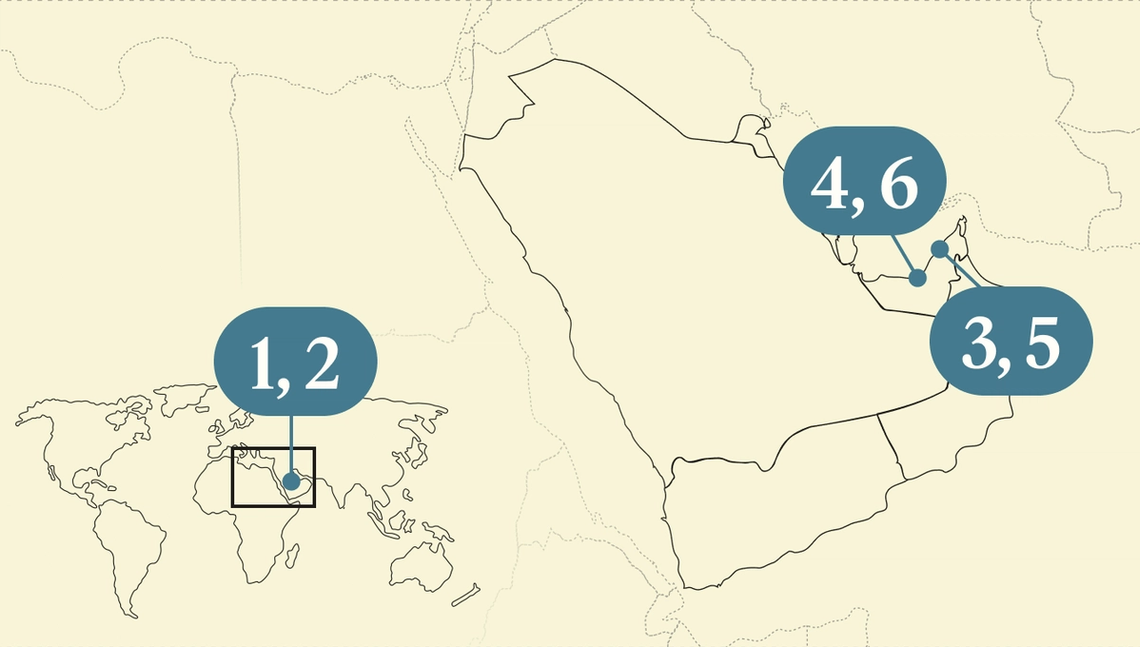 - Regional stocks recover…
- … but bond issues stall
- Citi’s big Gulf hire
- Abu Dhabi’s satellite push
- Online scammers caught
- Moving beyond oil (cartels)
 Petrodollars, capital flight, and other weekend reads. |
|
(Some) Gulf bourses bounce back |
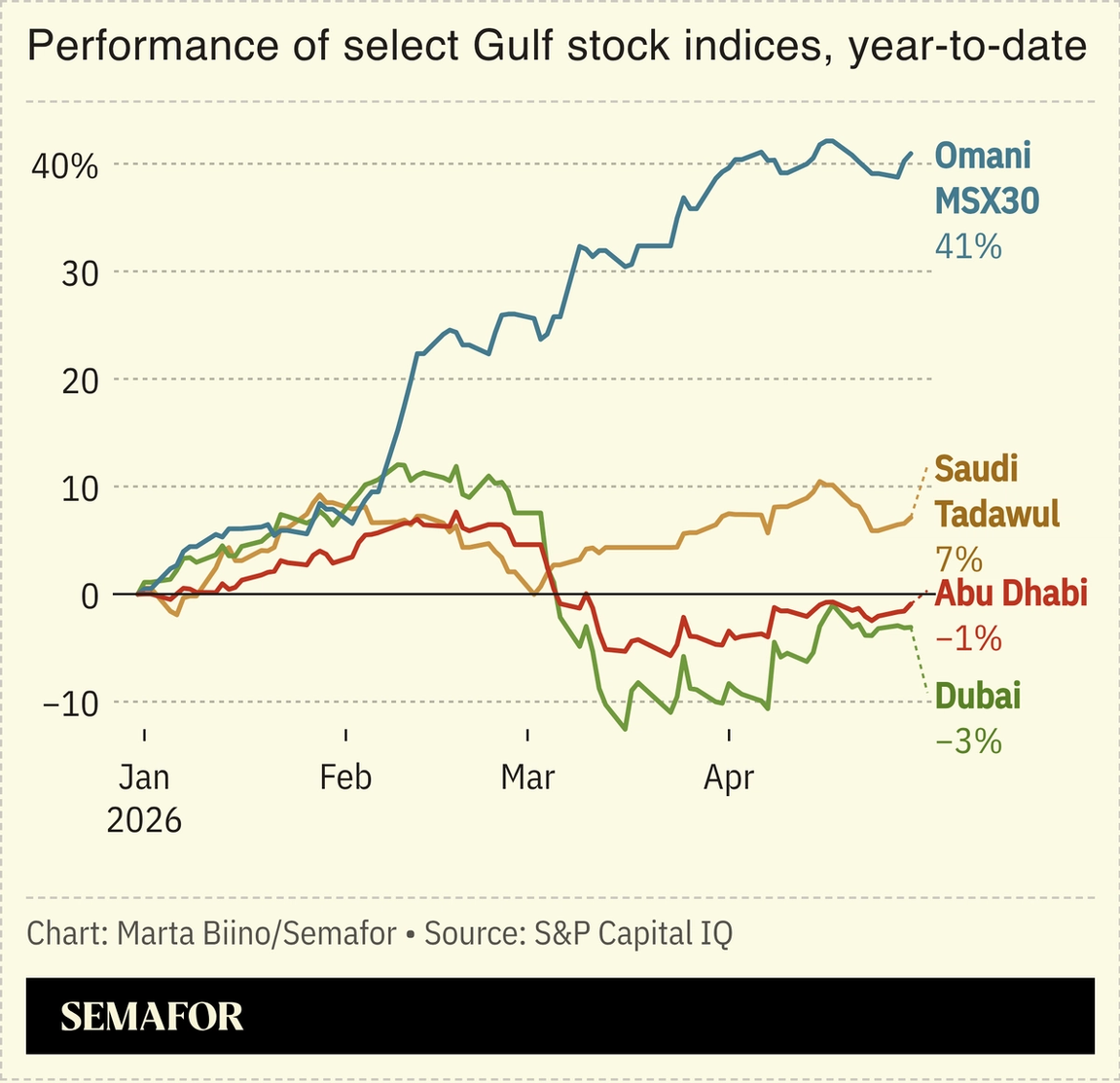 Two months since the start of the Iran war, Gulf stock markets have recovered a significant portion of their earlier losses, as investors welcomed the early April ceasefire, which is holding for now. The Omani and Saudi bourses are now above their prewar levels, with market performance broadly mirroring the ability of countries to continue exporting oil: Oman is not exposed to the closure of the Strait of Hormuz and Saudi Arabia is among the Gulf countries most able to use alternative routes to ship out crude and import other goods. Saudi Arabia has also used the disruption to position itself as a key node in sending goods in and out of the region. As a result, Oman’s bourse has posted a more than 10% rise since late February, when the conflict began, and the Saudi index has risen 6%. The more diversified and expatriate-dependent economies of Abu Dhabi and Dubai have been hit harder. While the ceasefire has helped restore a degree of confidence, both markets are still down since the war started, as are those in Bahrain and Qatar. |
|
Booming bond market slows |
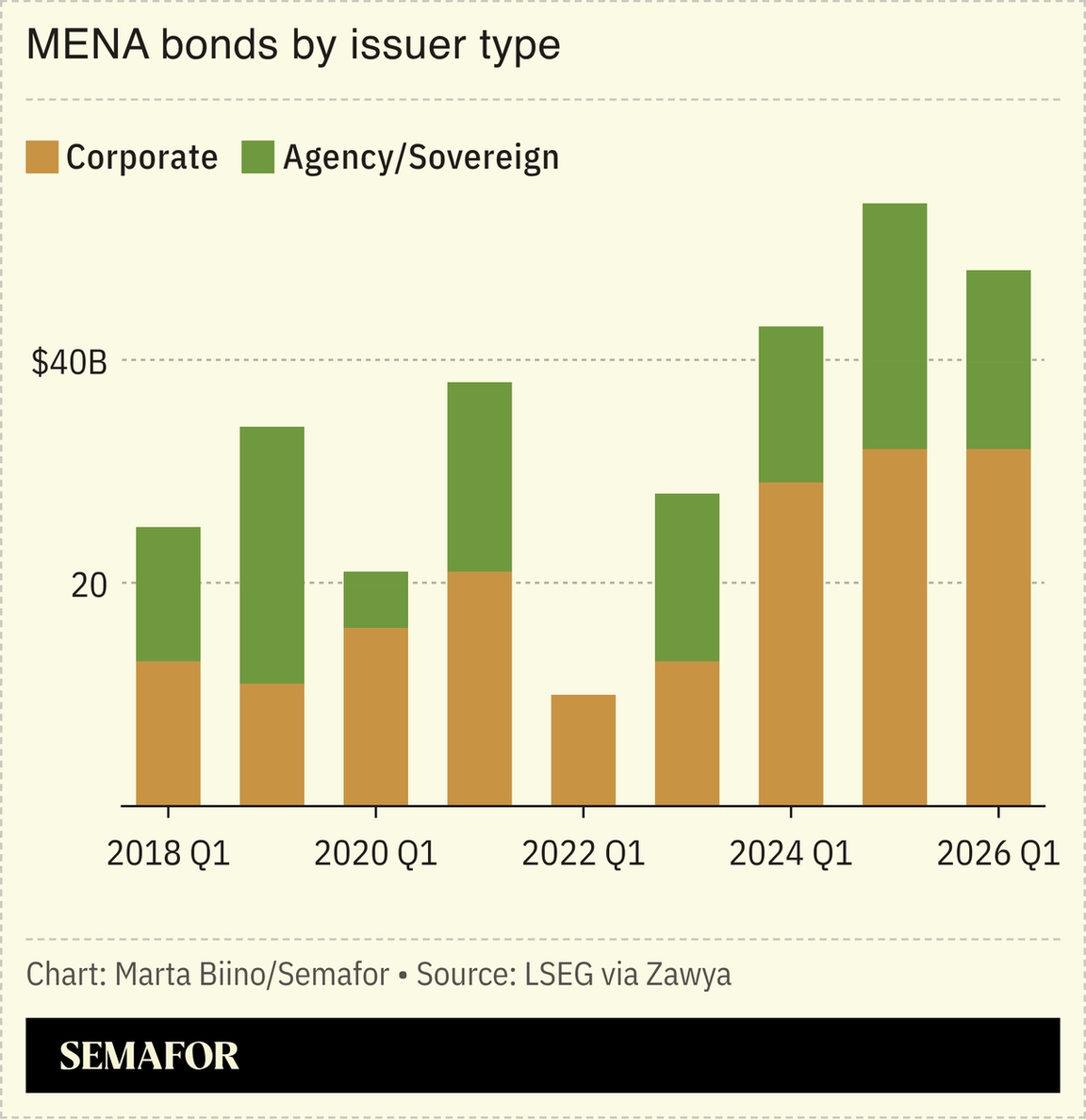 The Iran war disrupted a multiyear borrowing boom in the Gulf, which has been a crucial lever to finance gigaprojects in Saudi Arabia and non-oil growth in Abu Dhabi. Activity slowed significantly in March, with bond issuances in the Middle East and North Africa plunging 12% for the first quarter compared to the same period a year prior, according to LSEG data. The drop was even more pronounced in Islamic financing, which fell 17% year-on-year. Sharia-compliant bonds accounted for just under a third of total proceeds, their lowest share in three years. Bond markets could yet be a lifeline for governments, as budget deficits widen with oil and gas exports choked off by the Strait of Hormuz blockade. But lenders are expected to be cautious until there’s more clarity on how long the war might last. Still, Kuwait, Qatar, and the UAE have managed to borrow $10 billion via private placements from California asset manager Pimco since the conflict began, Bloomberg reported. |
|
Citi reaffirms Gulf commitment |
 Courtesy of DIFC Courtesy of DIFCCitigroup reaffirmed its commitment to the Gulf by poaching one of the region’s top investment bankers from HSBC to lead its Middle East and Africa business. The appointment of Karim Tannir is the latest sign of Wall Street looking to demonstrate support for a region which, before the Iran conflict, had been a major source of deals and financing, and where top officials remember who sticks by them in tough times. The risk for firms that visibly back away from the Gulf now is being shut out when things recover. Tannir, who also previously held senior roles at JPMorgan, will be based in Dubai, where the city’s financial center is still growing. The Dubai International Financial Centre reported adding 775 firms in the first quarter, including Arrowpoint Investment Partners and Janus Henderson. Over 250 firms established offices in the DIFC in March alone, even as the emirate battled an onslaught of Iranian missiles and drones. |
|
Abu Dhabi’s final frontier |
 Dado Ruvic/Reuters Dado Ruvic/ReutersAbu Dhabi-based space tech firm Orbitworks is planning to invest $1 billion to expand its satellite network over the next five years after securing its first deal with a European government, its chief executive told Semafor. The company, which is linked to Abu Dhabi National Security Adviser Sheikh Tahnoon bin Zayed’s International Holding Co., has signed a deal with France’s space agency to manufacture and launch satellites. It will launch its first satellite in October and aims to deploy nine more next year as it builds an artificial intelligence-powered Earth observation constellation. A further 40 satellites are planned within five years, CEO Hamdullah Mohib said. “Our ambition is to have a large satellite manufacturing base built in Abu Dhabi,” he added. Orbitworks’ expansion is the latest sign of Gulf states’ growing ambitions in the sector. The UAE is aiming to have one of the 10 largest space industries globally, and Saudi Arabia and Oman are also investing in commercial space firms. — Matthew Martin |
|
UAE, US, China combine for fraud crackdown |
 A damaged and abandoned scam operation in Cambodia. Chalinee Thirasupa/Reuters. A damaged and abandoned scam operation in Cambodia. Chalinee Thirasupa/Reuters.Dubai police led a major international operation with US and Chinese authorities combating “pig butchering” scam centers. The effort, in which 276 people were arrested, marked a rare instance of cooperation between the UAE, Washington, and Beijing, underscoring the threat posed by the online scams, which are largely carried out from Southeast Asia and involve grooming victims over long periods in order to steal their funds: China this year executed 11 ringleaders, while Washington has said Americans have lost $16.6 billion to the fraudsters. Experts warn, however, that the conditions that have helped “pig butchering” to proliferate — namely corruption and illicit trade in Southeast Asia, and lawlessness in parts of Myanmar in particular — mean it is unlikely to abate significantly. |
|
View: AI’s role in the UAE’s OPEC exit |
  Joey Pfeifer/Semafor Joey Pfeifer/SemaforFor more than five decades, Abu Dhabi helped shape global energy markets from within OPEC. When it leaves the group on May 1, it will be free to focus on the shifts in technology and security frameworks while addressing the effects of the inevitable decline of hydrocarbons, Judah Taub, managing partner of Israeli early-stage investor Hetz Ventures, writes in a column for Semafor. “Abu Dhabi will reap a windfall from crude exports,” Taub writes. “The associated natural gas that can be captured during production may be a bigger prize: The UAE has made an aggressive bet on becoming a leading global AI power — not merely as an investor, but as infrastructure — a goal requiring abundant, cheap energy at massive scale.” |
|
Jim Krane is the co-director of Rice University’s Middle East Energy Roundtable. 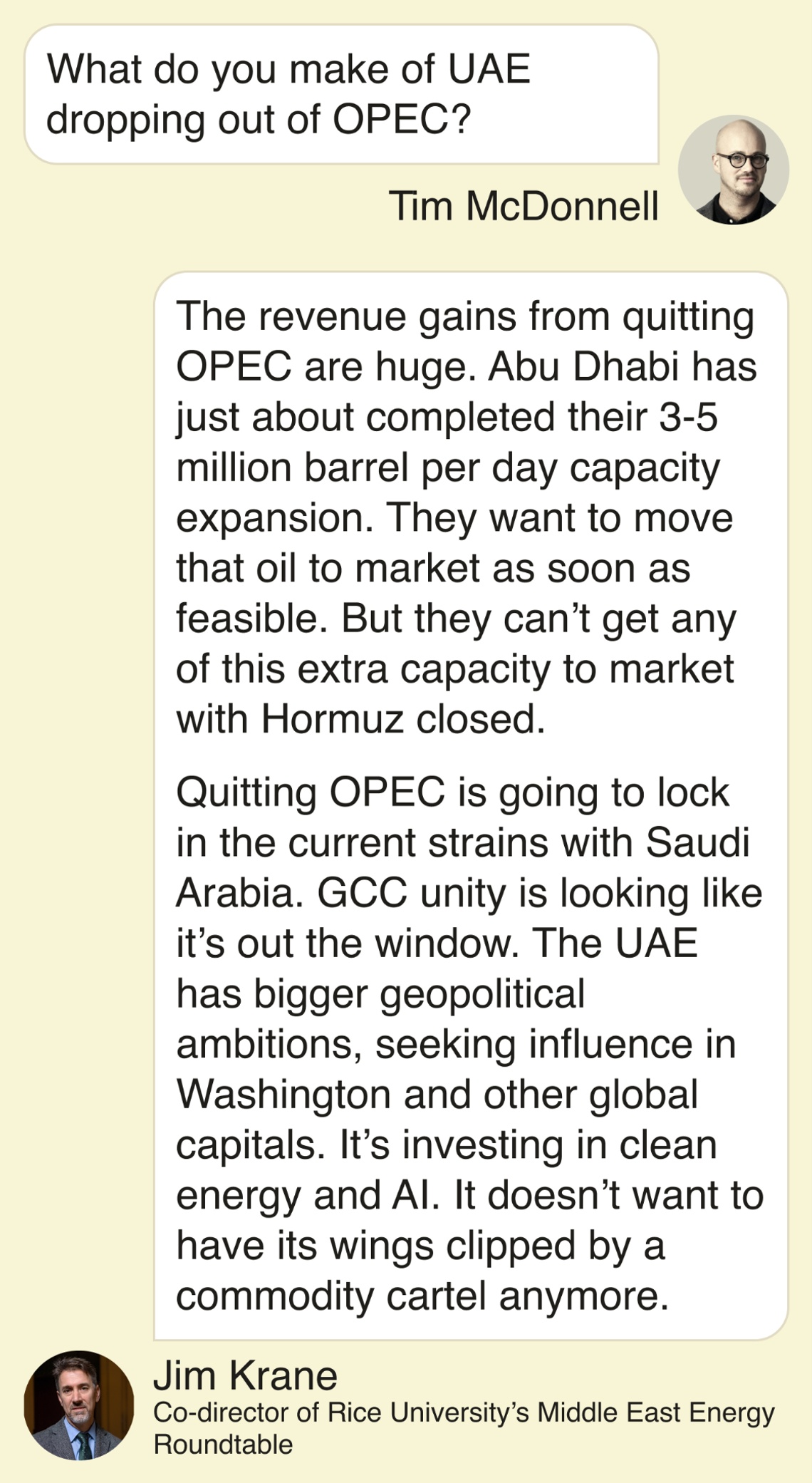 |
|
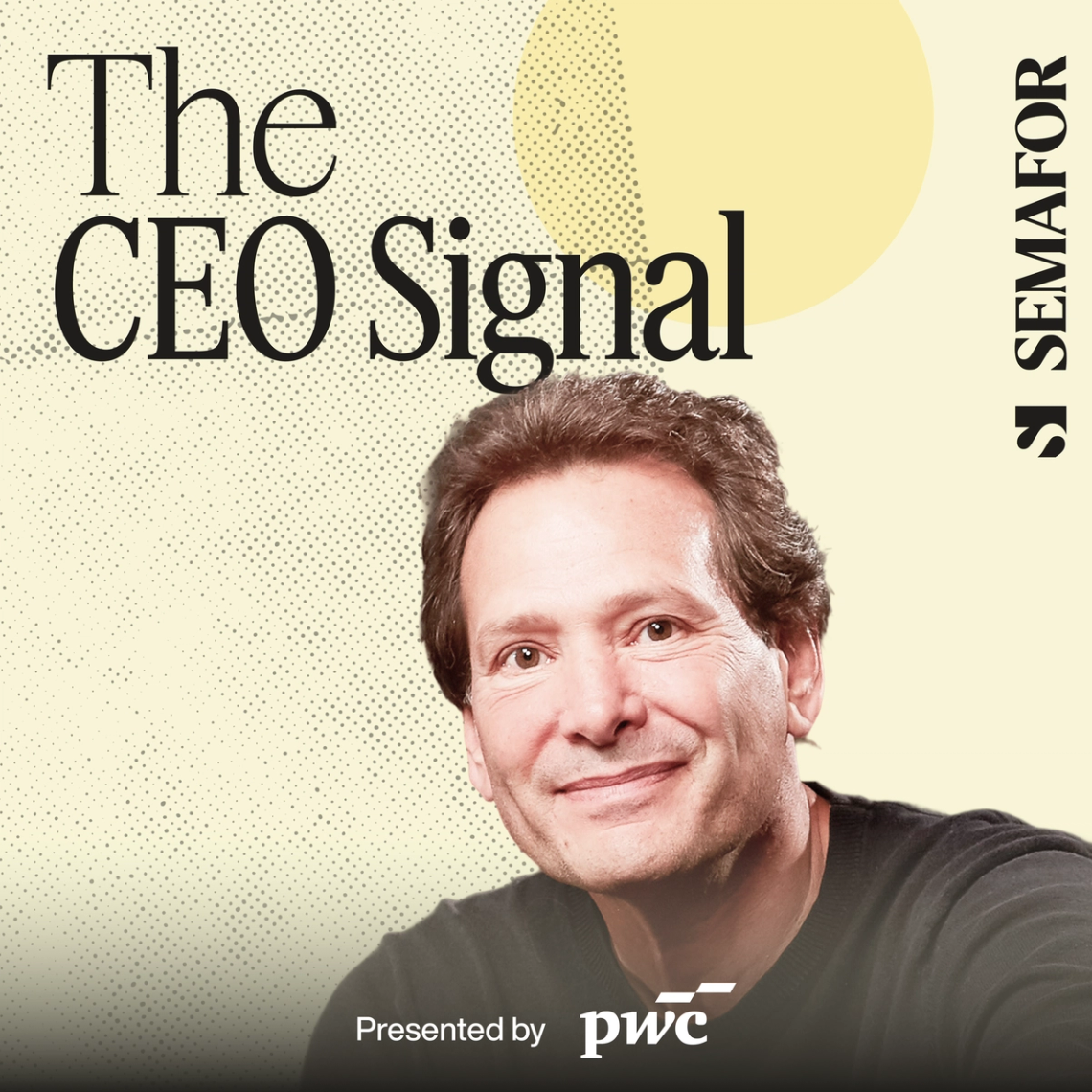 Verizon had spent years losing ground to its rivals. Dan Schulman came out of retirement last October to change that. On this week’s episode of The CEO Signal, presented by PwC, Penny Pritzker and Andrew Edgecliffe-Johnson ask him why he said yes to the CEO job after turning it down twice, and how he plans to lead Verizon back to growth. Leadership is about defining reality while inspiring hope, Schulman says, as he explains why he laid off thousands of employees but also felt a responsibility to invest in equipping them with AI skills. And the martial arts practitioner shares how he’s working to drive urgency and a competitive culture: “If somebody’s going to punch me, I’m going to punch back.” |
|
 Finance- JPMorgan and two Kuwaiti lenders are joining a $6 billion financing syndicate for buyers of a stake in Kuwait Petroleum Corporation’s pipeline network. The deal has been delayed by the Iran war and investors are seeking guarantees covering the risk of disruptions through the Strait of Hormuz. — Reuters
Logistics- Bahri, Saudi Arabia’s national shipping company, saw revenues jump 129% and net profit quadruple in the first quarter of 2026 as the war drove freight rates higher. Its fleet of 107 vessels kept sailing despite the Strait of Hormuz disruptions.
- Saudia Cargo, the freight arm of Saudi Arabia’s national airline, is cutting pharmaceutical shipping costs by up to 50% in a deal with the Saudi Food and Drug Authority aimed at keeping medicine supply chains flowing amid the war’s logistics disruption.
Politics- Bahrain’s King Hamad bin Isa Al Khalifa delayed parliamentary elections by a year, citing regional geopolitical turmoil. The next poll for the Council of Representatives — which has limited powers — had been due later this year, in line with the usual four-year cycle.
Sports- Saudi Arabia’s Public Investment Fund could confirm it is pulling funding from LIV Golf on Thursday, the latest sign of the kingdom’s financial retreat as the war squeezes the sovereign wealth fund that has bankrolled the tour since its $400 million launch in 2022. — The Wall Street Journal
- The Iran war wiped the Bahrain and Saudi races off the F1 calendar and the impossibility of racing in the Gulf summer heat means only one can realistically be rescheduled later in the year, leaving the sport nursing lost hosting fees as well as rising fuel and logistics costs. — Bloomberg
|
|
 - The term “petrodollar” has been misused for decades, often implying that pricing oil in dollars helped the US currency to dominate global reserves and transactions. But this ignores the role of the eurodollar system, which is larger and older than the oil trade boom that started in the 1970s, Brendan Greeley writes in the Financial Times.
- “Investors do not move money on fear alone,” but Singapore has a window to strengthen its policies and attract wealthy families fleeing the Gulf crisis after failing to compete with Dubai in recent years, financier Tan Bien Kiat writes in a column for The Business Times.
- Before the war, Qatar acted as a bridge between Tehran and its adversaries, a stance supported by Doha’s stable social contract with its own Shia minority. But Iranian attacks have fundamentally altered Qatari-Iranian relations and postwar engagement will be more constrained, write Giorgio Cafiero and Kristian Ulrichsen in The American Conservative.
|
|
| |