|
Hi 👋 |
Welcome back to The Lazy Reader, where we curate some of the best longform journalism from across the Web ✨ |
Full disclosure: I’m cramming this week’s edition and it’s down to the wire. I had a stupidly busy week at work so I couldn’t really carve out much time to assemble this newsletter. So this intro is going to be brief. |
A plus, though, is that I was able to read (listen) to a lot of good, dense articles last week. Those are coming your way below. |
If you missed last week’s email, here are some choice picks: |
|
As always, please let me know what you think of the list this week by voting in the poll below. |
Happy reading and see you again next Monday! |
|
|
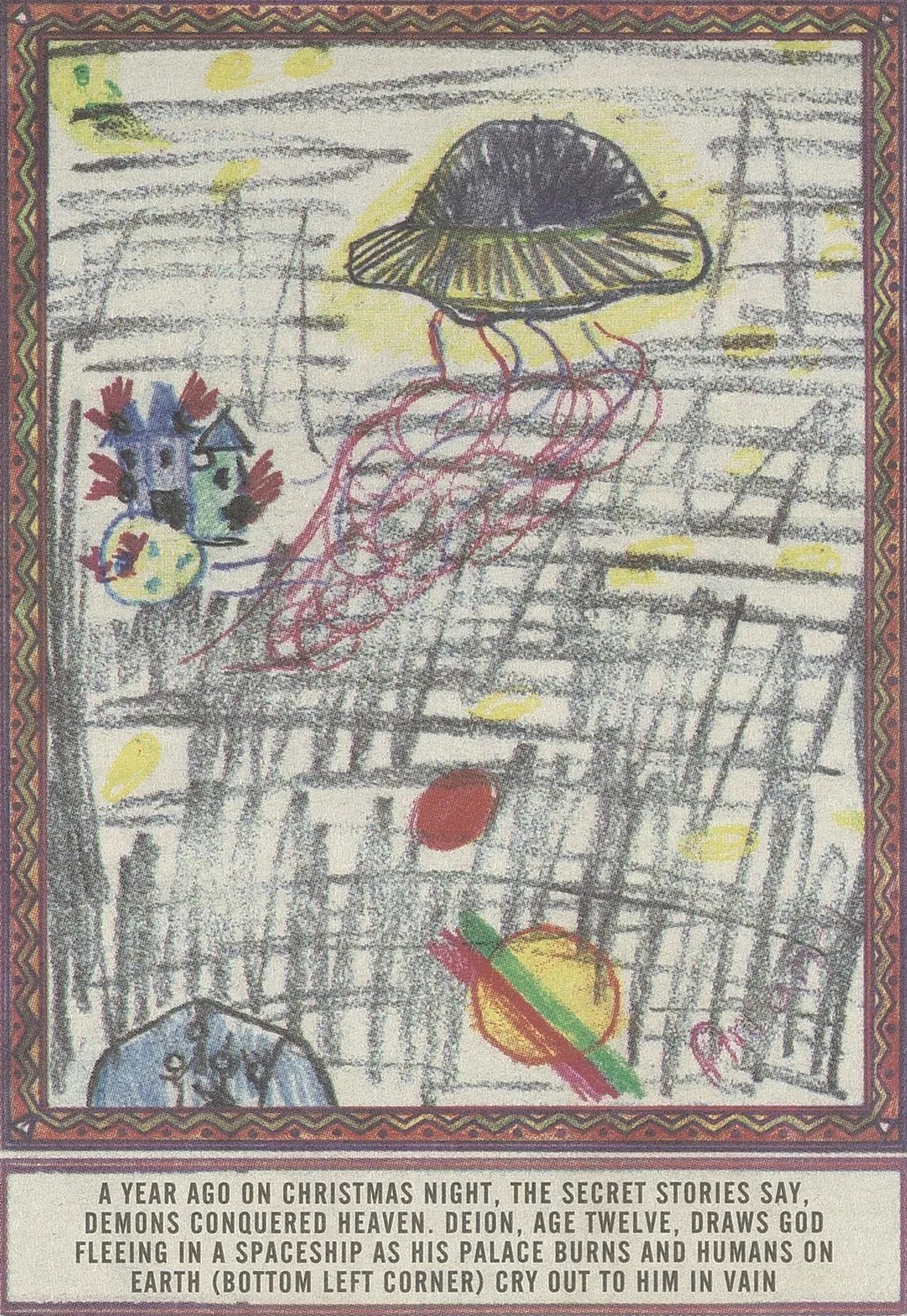
I’ve been enjoying quite a bit of magazine-length fiction lately, and this story scratches that itch. But this one is tinged with a dull color of sadness given how this is all true-to-life. |
This story follows the stories that poor, homeless children tell themselves—the tales that they use not just to keep themselves entertained, but also to explain their destitution. And you see in these myths how poverty warps a child’s brain and their perception of the world. How their desperation seeps through in the stories that they tell each other. |
How they look forward to the next life, because this life hadn’t been kind to them. |
Really an incredible concept for a story. This isn’t something journalism often bothers with. Telling local legends, much less those cooked up by children, which are by definition unverifiable and un-fact-check-able—most reporters aren’t interested in that. But I think in doing so, journalists miss a huge chunk of what makes us human. As this story perfectly shows, anchoring a journalistic piece in fiction can be a very effective way of painting social realities. |
|
A Sea Story | The Atlantic, $ |
Long time no Langewiesche! |
I think he is at his best when he tells these kinds of catastrophe stories (especially the maritime ones, for some reason). His genius shines through here, where he follows two distinct groups of people who claw their way to survival amid one of the most egregious cases of sinking ships I’ve ever read. This piece is crazy long but it’s also very action-packed and fast-paced. You won’t even realize that you’ve blazed through it. |
It’s also very tense and tragic. Langewiesche did a great job of making me care about all these people and then not telling me until the final moment whether they live or not. |
The Unflinching Courage of Taylor Cadle | Mother Jones, Free |
Content warning here: This story tackles sexual, physical and mental abuse head-on. Feel free to skip if those trigger you. And take extra care if you choose to read. |
This is one of those pieces that just draws so many strong emotions out of you. It follows the story of a young girl who was sexually abused by her adoptive father and, despite being strong enough to actually report the assault, was not just disbelieved by law enforcement, but was also belittled by the very people who should have been protecting her. She even gets the entire thing turned on her! I was seething throughout. |
I grew up with Alex Pretti | The Verge, Free |
Very, very painful. This isn’t a long essay, but it cuts very deep. The writer was in the midst of filling out The Verge’s coverage of the ICE protests and raids when she found out that her childhood best friend Alex Pretti, who has since become the symbol of all that is wrong with ICE, was shot and killed. Here she traces their shared history and paints a very human picture of who Alex is. What she doesn’t do is unpack the shock and grief. I suspect that’s not as simple as writing an essay. |
The Lost Girls of Panama: The Full Story | The Daily Beast, Free |
A nice investigative story about two girls who went hiking and never returned. Kudos to The Daily Beast for digging hard: They talked to new sources, found new documentary evidence, did their own legwork. I always appreciate that in a journalistic project that pegs itself as investigative. |
The writing was good, but I think it could have been better. My main issue with this piece is that, aside from the obvious tension at the heart of it, I struggled to connect with the story. I just couldn’t get myself to care for the mystery. That’s tempered a bit toward the end, when the writer finally does some solid character work on the two girls—their grit, their persistence—but I felt like it came much too late in the article. |
An American Void | The Washington Post, Free |
Interesting story. I remember all the Dylan Roof terror attack, and I remember the massive fallout from it. |
Most of my thoughts on this piece will be critical: I know much has been said and written about the families of the people killed by Roof. And there’s been a lot of debate surrounding the politics of his actions. And as a business, WaPo somehow needs to cut through the noise if they want to be noticed. But I just can’t seem to swallow the fact that one of the most powerful papers in the U.S. chose to focus on a group of white delinquents who were with Roof in the days leading up to the shooting. |
Much of the story itself turns out to be a profile of these people. Roof is in it, but only very tangentially. The heavy focus of the piece is how difficult life has been for the Meeks, how complicated they are as a unit, as people. And I don’t know—it just feels like a piece that tries to nuance its way out of the fact that these people knew in advance that Roof was planning a massacre and did nothing about it. |
|
How did you like this week's list? |
|
|
|
This one went absolutely crazy on all of my feeds last week. So much so that I felt certain I wouldn’t be sharing it here because you’re all sure to have seen it already. |
But then I read through it. And by god. It’s just too crazy not to share. So here we are. |
In this piece, the writer falls into this weird, tentative back-and-forth with an alleged whistleblower—Red Bull—who claims that he’s being held captive in a scam compound and being made to swindle unwitting people out of thousands of dollars. He was trafficked, so the claims went, and his passport was taken and is being kept from him. |
So the relationship went. All throughout, the writer finds himself slowly trusting Red Bull—but still skeptical: What if he himself has been made a scam target? What if this is an elaborate plot by Red Bull to take money from him? And those fears weren’t unfounded. Red Bull did, at some point, hint at needing money to pay off his captors and regain his freedom. |
I won’t spoil this story for you because I do think it’s very much worth a read, just based on how crazy the narrative alone is. |
That’s good, too, because the research and writing were good—but nothing special. In fact, that’s the major gripe I have. I can’t help but feel like this story landed on the writer’s lap and he didn’t have to do much but stick with it. Which isn’t inherently wrong, but it really does highlight (at least for me) the tension between the role of journalists—and the prestige and pay that they get when printing a piece—versus the informants, the whistleblowers, the stringers who put themselves in harm’s way to get the actual story. Who truly deserves the flowers? The byline? The portfolio piece? The job? |
But those are just my rambling thoughts. |
In any case, WIRED ran a second piece to go along with this entire Red Bull situation. (Much of it, again, came from first-hand sources that Red Bull took the risk to acquire.) |
|
|
Thanks for reading! Please, please reach out if you have feedback, suggestions, or questions. Alternatively, you can fill out this super quick survey form. I promise it won’t even take five minutes of your time, and it’ll be a HUGE help! |
|
ALSO: I know some of the stories I recommend might be behind paywalls, and maybe I can help you with access to those. Send me a message and let’s see what we can do 😊 |
Until next Monday! 👋 |