| | In this edition: The race to develop a new Ebola vaccine, Dangote IPO sparks excitement, and Amazon ͏ ͏ ͏ ͏ ͏ ͏ |
| |  | Africa |  |
| |
|
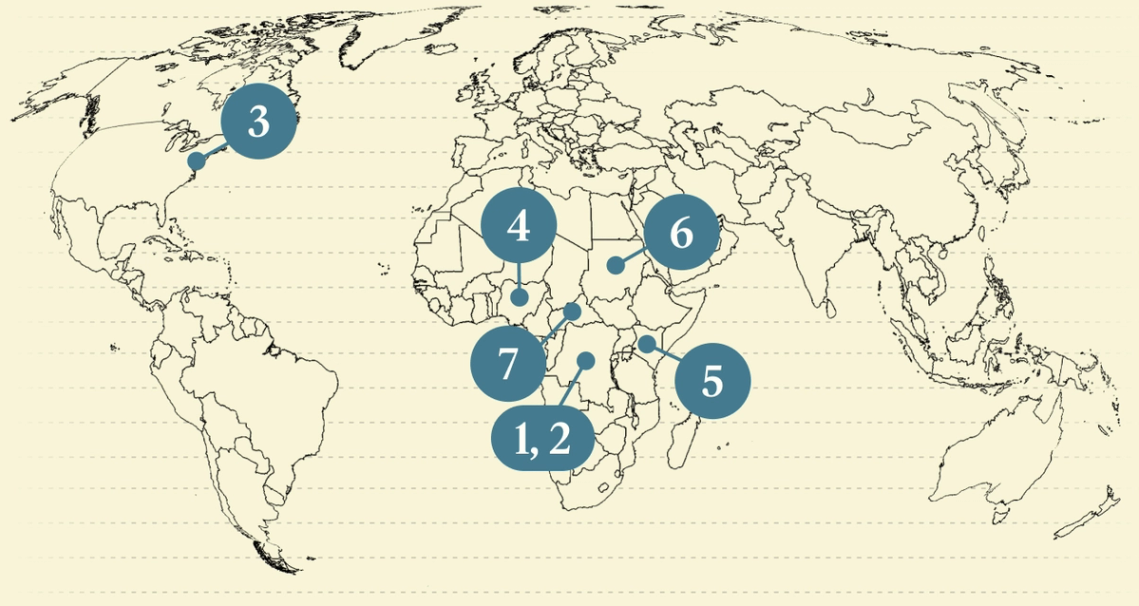 - Developing Ebola vaccines
- US defends Ebola response
- World Cup travel restrictions
- Dangote IPO sparks interest
- Amazon in satellite push
- Sudan sanction calls grow
- UAE ‘harbors conflict gold’
 Weekend Reads and Cabo Verde’s World Cup fairytale. |
|
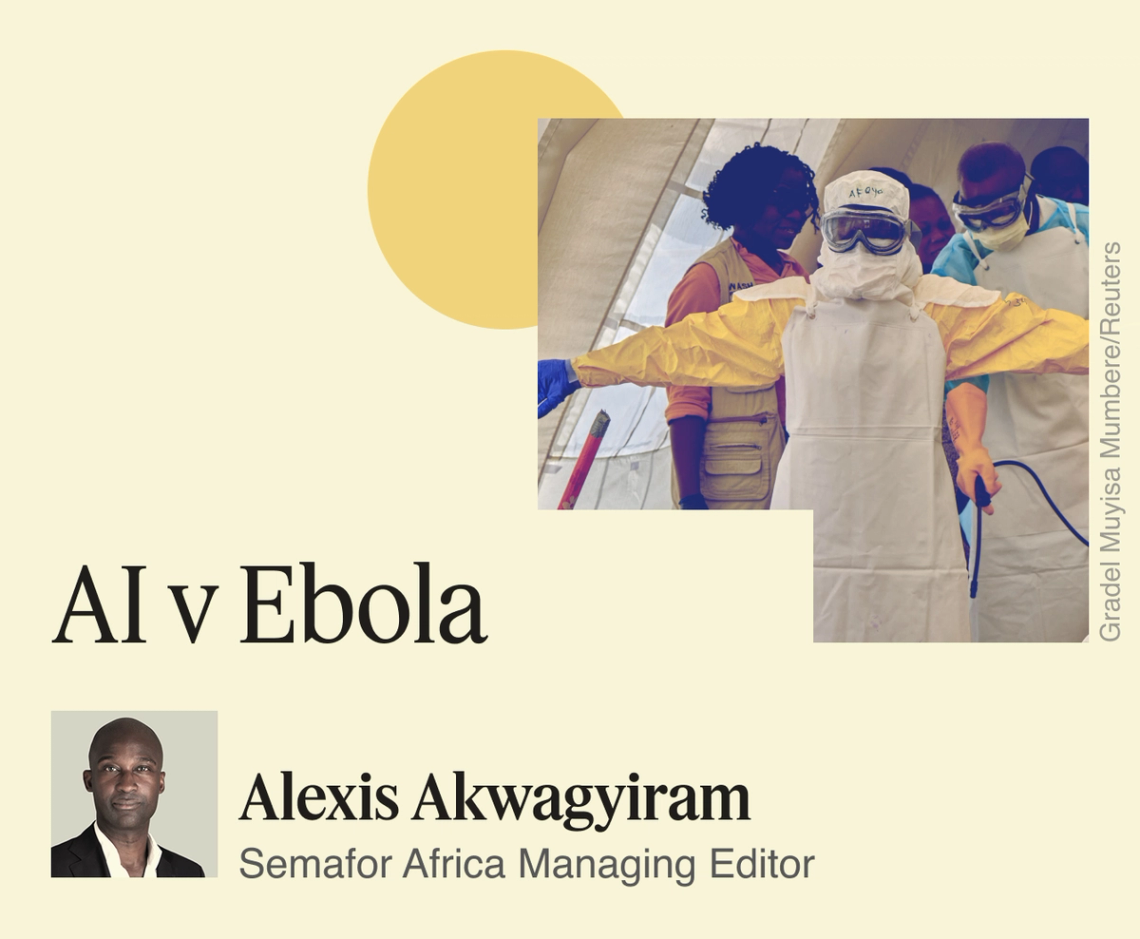 The Ebola outbreak unfolding in Central Africa is the 17th to hit the country since the virus was discovered in 1976 — but it’s the first since the artificial intelligence boom, and the technology is already showing its potential value. The biggest challenge posed by the latest outbreak is the lack of a vaccine. But there are many others: The epidemic cuts across a conflict zone and mining hub that sit beside porous borders. AI is helping epidemiologists make data-driven comparisons with previous outbreaks. Richard Hatchett, CEO of the Coalition for Epidemic Preparedness Innovations, told me that AI tools are being used to identify “where the cases are actually occurring and how that maps to different conflict areas,” which is crucial in a region where contact tracers could be at risk from armed groups. Much has been written about AI tools making it easier to create biological weapons, but their use in the fight against Ebola points to their value in combating public health emergencies. In March, the World Health Organization’s regional office in Africa announced the launch of an AI-driven early warning system for health threats. As well as compiling a risk profile of an area, the WHO said the platform includes a chatbot for health officials to question data in plain language. Of course, AI isn’t a silver bullet and there are many potential pitfalls. The danger of hallucinations means health officials must tread with caution, given the outsized impact that errors could have in the response to a public emergency. Use of the technology also raises potential privacy issues about the type of personal health data recorded and how the information is used. But AI does offer a cost-effective tool to augment healthcare across the continent in a way that could cushion the blow of deep cuts to Western aid budgets, and the closure of USAID in particular. That’s true of epidemics, but also applies to the day-to-day management of government-run health services. The technology is still in its infancy — “we’re kind of learning in real time,” Hatchett confessed — but it offers genuine hope. |
|
Scientists race to create Ebola vaccines |
| |  | Alexis Akwagyiram |
| |
 Gradel Muyisa Mumbere/Reuters Gradel Muyisa Mumbere/ReutersScientists are racing to develop four Ebola vaccines to tackle the outbreak in DR Congo, including two which could be ready for clinical trials in two months, the head of a global vaccine coalition told Semafor. More than 500 cases of the Bundibugyo strain, for which there is no proven vaccine, have been reported in the outbreak, which is concentrated in eastern DR Congo. Two of the experimental vaccines — one being developed by Oxford University scientists, and another by Moderna — harness technology used to create vaccines for COVID-19 and could be in trials by the end of August, said Richard Hatchett, CEO of the Coalition for Epidemic Preparedness Innovations. Still, Hatchett cautioned, even if a vaccine performed well in clinical trials, it would take at least two more months to move to further trials and regulatory approval. Emanuele Capobianco at global vaccine alliance GAVI, meanwhile, said a proven vaccine would be a “game changer,” but warned in an interview that it was likely “to take several months, potentially years” to end the outbreak. He compared it to a 2018 Ebola epidemic in eastern DR Congo which lasted two years, despite there being a vaccine. Health experts say the disease is likely to have circulated, undetected, for weeks in the northeastern Ituri province, where artisanal mining is an economic mainstay. |
|
US says its Ebola response beats China’s |
| | Shelby Talcott and Morgan Chalfant |
| |
 Monicah Mwangi/Reuters Monicah Mwangi/ReutersThe US response to the Ebola crisis in Africa has been better than China’s, an internal State Department memo reviewed by Semafor argued. The June 5 document states that the US “has become the single largest financial contributor to the Ebola response effort,” while China “only recently pledged assistance after previously issuing precautionary measures and general statements of intent.” It also asserts that the Chinese narrative “wrongly points out that they are on the ground when the United States is not.” Experts have criticized the US response to the crisis, particularly in the context of USAID cuts under President Donald Trump: The New York Times recently ran a story suggesting China could fill a void left by the US, while the South China Morning Post quoted experts saying Beijing already had done so.
|
|
World Cup travel restrictions criticized |
 IMAGN IMAGES via Reuters/Troy Taormina IMAGN IMAGES via Reuters/Troy TaorminaDR Congo’s sports minister said US Ebola travel restrictions were going “too far,” after they delayed his entry and disrupted the country’s first World Cup campaign in 52 years. Didier Budimbu told Semafor he was waiting in Europe to complete a 21-day quarantine before entering the US, while 11 members of the team’s technical staff underwent the same process before receiving visas in Belgium. “We have to comply with the laws of the countries hosting us,” Budimbu said, while noting that Kinshasa is more than 2,000 kilometers from the outbreak zone in eastern DR Congo and has recorded no Ebola cases. The restrictions have forced changes to the team’s preparations, including canceling a planned training camp in Kinshasa. DR Congo’s squad arrived in Houston from a European training base this week and was welcomed by US CDC officials. — Ruben Nyanguila |
|
Dangote IPO set to be Africa’s largest |
| |  | Alexander Onukwue |
| |
 Sodiq Adelakun/Reuters Sodiq Adelakun/ReutersAnticipation is growing for Africa’s largest-ever initial public offering by Nigeria’s Dangote Refinery, with the continent’s financial services giants and retail investors gearing up to get a piece of the action. The company wants to raise $5 billion in its debut on Nigeria’s stock exchange by September, which would value the oil refinery at $50 billion, according to reports. But the offer is currently being preceded by a push to raise $1 billion in debt from international investors, as well as a separate private sale of $1 billion worth of shares to high-net worth individuals and corporations. “We held an investor meet and greet in Ghana, and everyone’s interest was finding out how to participate in the Dangote IPO,” Richard Bassey, CEO of Bamboo, a Nigerian broker that operates a stock trading app with 1.7 million users, told Semafor. |
|
Amazon takes on Starlink in Kenya |
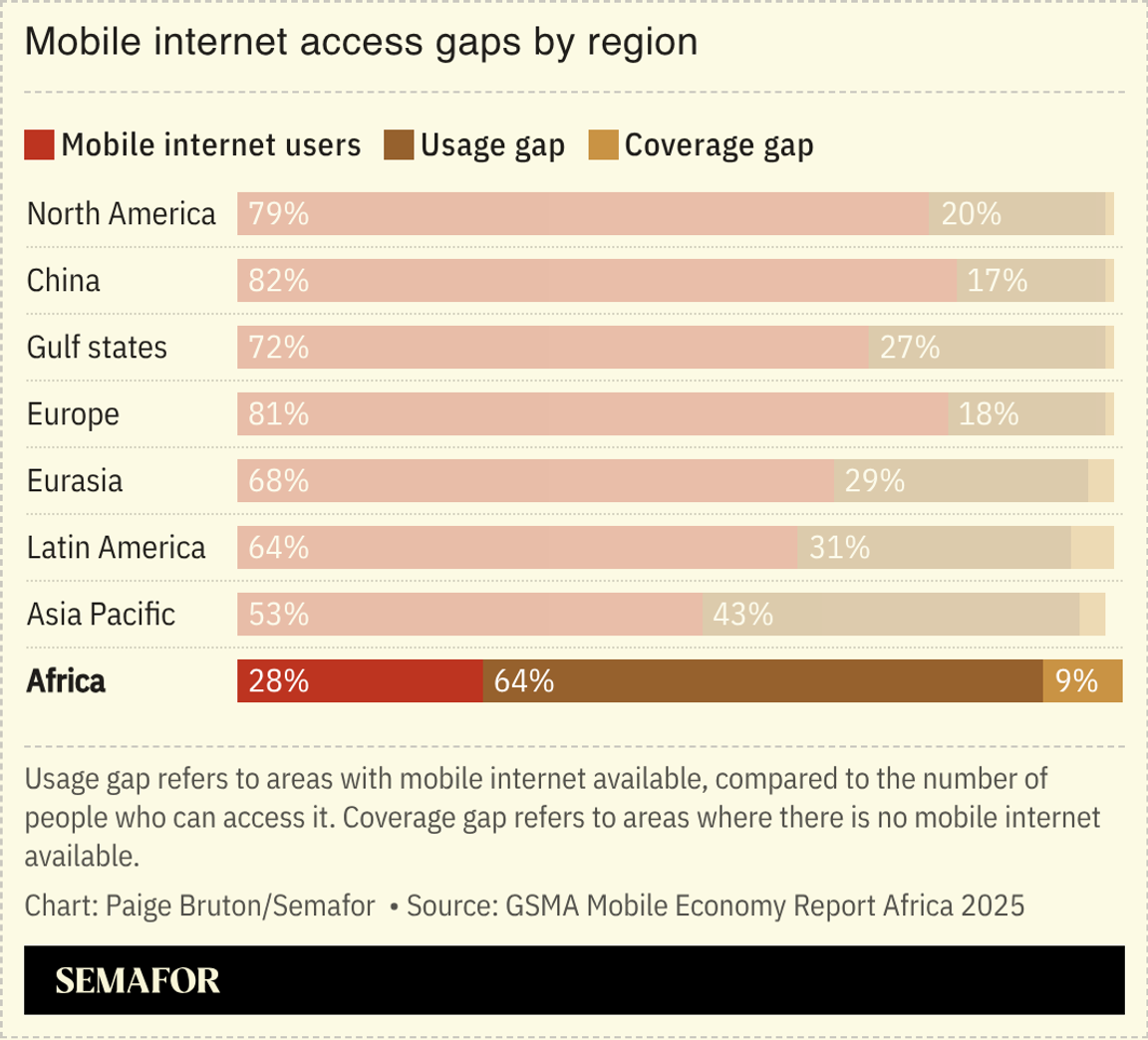 Amazon has applied for approval to build its first African satellite ground station in Kenya, putting it in competition with SpaceX as governments across the continent tighten their control over fast-growing satellite internet services. For global operators, Africa’s youthful population and patchy broadband networks offer a mix of scale and unmet demand. Amazon’s application lands at a time when SpaceX’s Starlink — the most widely used satellite internet service in Africa — is running into regulatory delays. Namibia and South Africa have prevented Starlink from entering their telecoms markets, enforcing local ownership rules that have become a point of contention for multinational firms operating in Africa. SpaceX is due to make its $75 billion stock market debut on Friday, potentially sharpening investor focus on regulatory approvals in Africa’s biggest markets. — Tiisetso Motsoeneng |
|
US builds momentum on Sudan sanctions |
 Amr Abdallah Dalsh/Reuters Amr Abdallah Dalsh/ReutersThe US Congress is stepping up pressure on Sudan’s warring factions as the country contends with one of the world’s worst humanitarian crises. The House Foreign Affairs Committee advanced bipartisan legislation on Tuesday authorizing sanctions on parties to the war, while Senate Foreign Relations Committee Chairman Jim Risch introduced a similar bipartisan bill a day later and said his panel could take it up next week. The House measure passed 34-5 after minor amendments. Supporters say it would strengthen the Trump administration’s leverage in negotiations with both sides by requiring an assessment of actors blocking aid deliveries, extending authorization for the vacant Special Envoy to Sudan post, and directing the State Department to impose sanctions on the Rapid Support Forces. — Adrian Elimian |
|
Dubai is CAR’s ‘conflict gold hub’ |
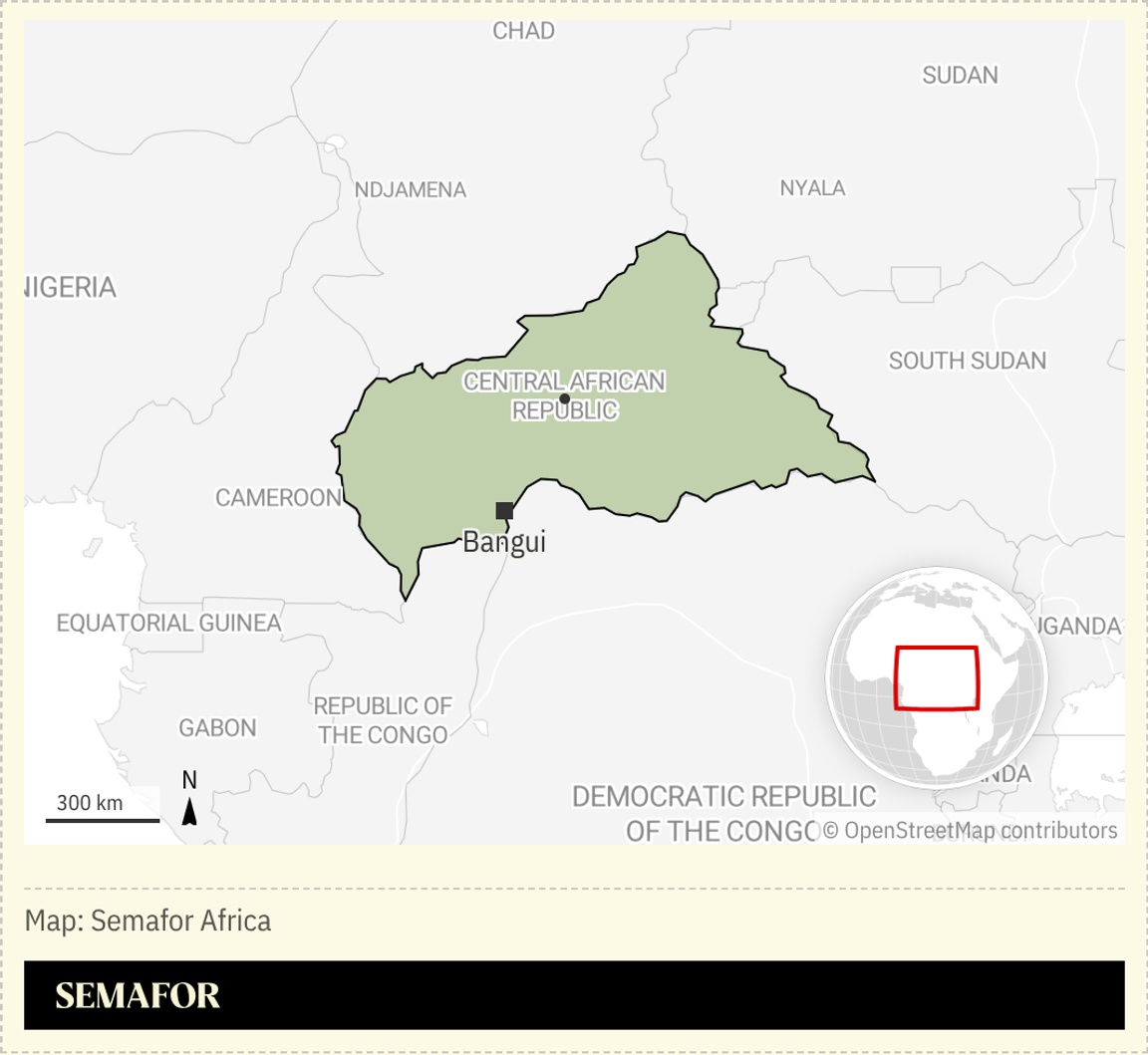 The United Arab Emirates has become the main destination for conflict minerals from the Central African Republic, placing Dubai at the center of a lucrative trade in gold and diamonds tied to armed groups and foreign smuggling networks, according to a new investigation. Almost all of CAR’s officially declared gold exports since 2023 have been destined for the UAE, the investigation found — a pattern which echoes UN findings in Sudan, where Dubai-based networks have been linked to gold flows financing the Rapid Support Forces. The latest report, from the Global Initiative Against Transnational Organized Crime, also traced how Russia and Rwanda have established economic and security footholds in CAR alongside UAE trading networks. At the center is Russia’s Africa Corps, formerly Wagner Group — a mercenary network that has propped up President Faustin-Archange Touadéra’s government since 2018. The report identifies the group as a major beneficiary of illicit gold, worth an estimated $180 million per year. — Yinka Adegoke |
|
 - Foreign aid money technically goes to Africa but functionally stays home — paying Western staff, funding consultants, and cycling back into donor economies, says Hollywood star Ben Affleck in an in-depth discussion on The Africa Program podcast with Washington analyst Mvemba Dizolele. Affleck, who co-founded Eastern Congo Initiative 16 years ago, says USAID, due to its paperwork burden, locked out the smallest organizations on the ground. But its dismantling, the actor argues, broke real contracts and stranded key projects: “There is not a constituency that cares enough about this work in the United States today,” Affleck says.
- Mexican cartels are no longer just moving drugs through Africa — they are producing them there. Writing in Al Jazeera, Qaanitah Hunter reports that four major meth labs linked to Mexican criminal networks have been uncovered on remote South African farms in just two years, with investigators pointing to a deliberate strategy of franchising production closer to consumers. The harder problem, analysts warn, isn’t border control — it’s the corruption enabling it. “It’s a game of whack-a-mole,” one researcher told Hunter.
- Rwanda has become a key conduit for conflict coltan smuggled from eastern DR Congo into global electronics supply chains, despite safeguards meant to keep such minerals out. A year-long investigation by Global Witness traced more than 2,000 tonnes of coltan from M23-controlled mines in Rubaya through Rwanda and into smelters in China and Kazakhstan, where it is processed into tantalum used in smartphones, laptops, cars, and other electronics. The group says at least five major Rwandan exporters bought conflict coltan and that minerals linked to the trade may have entered the supply chains of major companies including Apple, Microsoft, and Amazon.
- Why have some African countries industrialized while others remain trapped in commodity dependence? In a review of Joe Studwell’s new book How Africa Works — a follow-up to his influential study of East Asia’s economic rise — Georgetown political scientist Ken Opalo argues that the answer lies less in economics than in politics. Writing in his newsletter, Opalo praises the book’s focus on land reform, industrial policy, and export-led growth, but says its central lesson is that development depends on whether political elites can build coalitions capable of sustaining long-term economic transformation.
|
|
 Business & Macro🇿🇼 Zimbabwe is in discussions with the African Development Bank for $150 million to clear billions of dollars of debt arrears. 🇿🇦 South Africa’s current account surplus widened to 190.7 billion rand ($12 billion) in the first quarter from roughly 50 billion rand in the previous quarter, the widest since the third quarter of 2021. Climate & Energy🇳🇬 Nigeria’s oil and condensates production hit 1.7 million barrels per day in May, the highest output level since last July. Geopolitics & Policy🇳🇬 Nigeria repatriated 268 passengers out of Johannesburg in the first of a series of flights expected to move about 1,000 citizens away from South Africa following a spate of anti-migrant violence. 🇰🇪 Kenya awarded a $2.9 billion contract to China Communications Construction Co to expand and modernize Nairobi’s Jomo Kenyatta International Airport. Tech & Deals🇰🇪 Kenya’s capital markets regulator granted Nairobi-based Family Bank permission to list on the stock exchange. 🇳🇬 Swiss mobile payments company Blucode tapped former Nigerian deputy central bank governor Kingsley Moghalu to chair the advisory board of its Nigerian subsidiary. |
|
 Amr Abdallah Dalsh/File Photo/Reuters Amr Abdallah Dalsh/File Photo/ReutersCabo Verde’s first-ever qualification for the largest World Cup in the tournament’s history is partly a celebration of the country’s massive diaspora. With just over half a million people, the archipelago of 10 islands is one of the tiniest countries ever to qualify, and its geographically scattered football squad reflects a nation where more citizens live abroad than at home. That is also why the Trump administration’s visa restrictions and deportation campaigns have sat so awkwardly with some Cabo Verdeans, who view their team’s success as proof of what migration makes possible. “All of our story is about immigration — it always has been,” the national team’s coach told the Washington Post. Regardless of the political climate that surrounds the players, they have inspired a country and a diaspora. “With our qualification, the dreams of the young are very high,” the head of a prestigious youth soccer academy told NPR. |
|
| |