| | In this edition: Betting on AI in mining, Uganda crosses a US ‘red line,’ and reclaiming looted trea͏ ͏ ͏ ͏ ͏ ͏ |
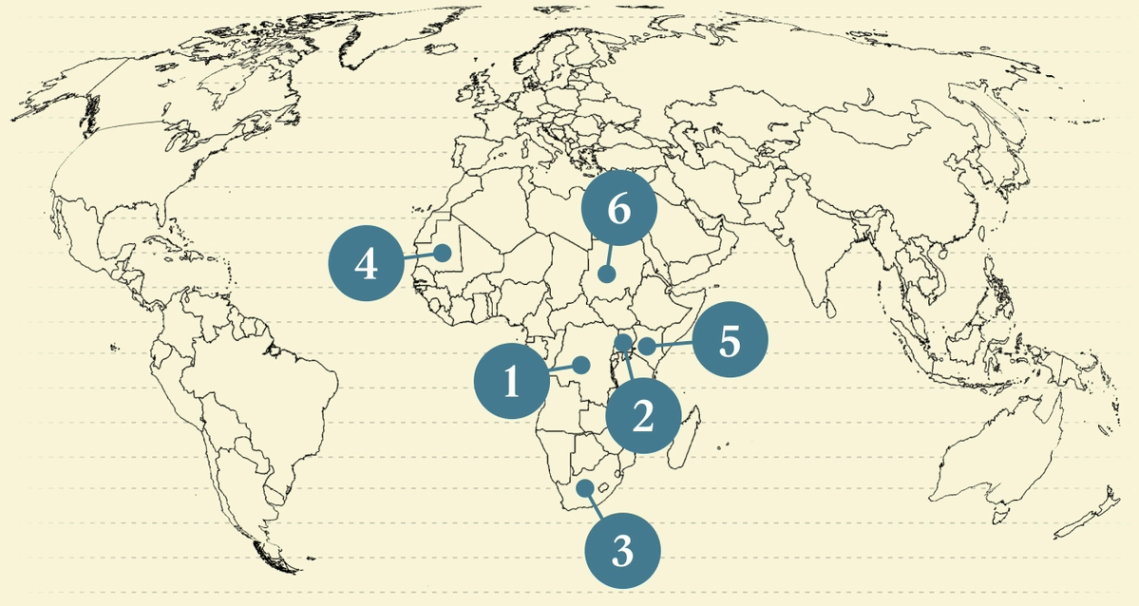
| |  Kinshasa Kinshasa |  Kampala Kampala | Khartoum |
 | Africa |  |
| |
|
 - Investors bet on AI mining
- US ‘red line’ for Uganda
- Eskom break-up progresses
- Threat to neglected diseases
- Soros backs startups
- Weekend Reads
 A video game that allows players to reclaim stolen treasures. |
|
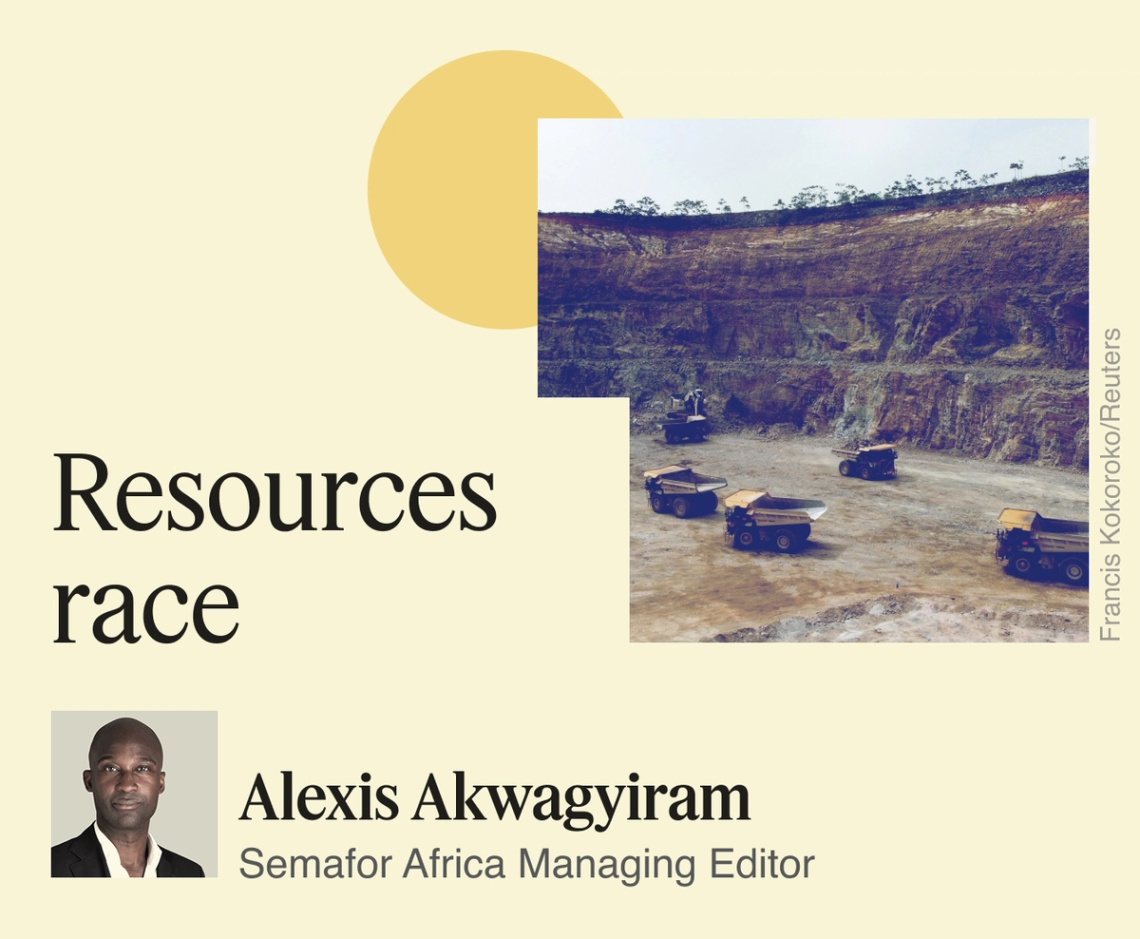 The push to mine Africa’s natural resources for the minerals that will drive the next industrial revolution is often described as a “race.” This suggests there will be winners and losers — framing that at times feels overly reductive. But this year’s Mining Indaba embodied that very idea, with all the drama that comes with it. Much of the talk was about Washington’s largest-ever official delegation at the event. Their notable presence in Cape Town, days after the White House hosted representatives of 54 governments to push its plan for a critical minerals trade zone, made clear the Trump administration’s determination to counter Chinese dominance of the global minerals supply chain. The US pursuit of bilateral deals was sobering for those falling behind: European delegates privately told me it highlighted the EU’s lack of progress in securing resources for the energy transition and AI technology. The most public sign of tension was the South African mining minister’s criticism of DR Congo for signing its recent minerals deal with Washington. Pretoria’s frustration is understandable: It wasn’t invited to the critical minerals trade zone talks and seems likely to be shut out of the arrangement, despite being Africa’s most industrialized economy and rich in minerals. Beyond the issue of who is vying for mineral access, the question of how to gain an advantage had a popular answer — artificial intelligence, as I report below. Ultimately, the danger for African nations is that they could easily lose out without cooperation on local processing and refining, as South Africa’s mining minister argued. He warned that they could find themselves in a very different contest — a “race to the bottom.” 🟡 Lastly, we just announced our first slate of speakers for the 2026 Annual Convening of Semafor World Economy, taking place April 13-17 in Washington, DC. Flutterwave Founder & CEO Olugbenga Agboola, Afrigen Biologics CEO Petro Terblanche, Africell CEO Ziad Dalloul, and more than 400 other top CEOs will convene for five days of on-stage conversations. See the first lineup of speakers here. |
|
Investors bet on AI mining |
| |  | Alexis Akwagyiram |
| |
 Philemon Barbier/AFP via Getty Images Philemon Barbier/AFP via Getty ImagesThe use of AI tools to supercharge the search for mineral deposits across Africa is picking up pace as investors seek an edge in an increasingly competitive landscape. Investors, executives, and government officials who spoke to Semafor at the Mining Indaba said the technology offered the promise of exposing the value that lies underground across a continent widely considered to be underexplored. Andrés Blanco, CEO of Xcalibur Smart Mapping, which uses aircraft to provide detailed maps of natural resources in 15 African countries — including Benin, DR Congo, Nigeria, Sierra Leone, and Zambia — said his company uses the technology to synthesize data from a range of sources. “About 85% of the continent is not explored, and that is difficult if you want to invest,” said Blanco. “AI is opening new business opportunities,” he said, adding that it could become a tool for African countries to issue financing. DR Congo this week signed a five-year agreement with US investment company Atlas Park, which will use AI software to examine historical data on the country’s mineral deposits and carry out new geological surveys to drive investment decisions.
|
|
US senator draws ‘red line’ for Uganda |
 Muhoozi Kainerugaba, son of Ugandan President Yoweri Museveni. Abubaker Lubowa/File Photo/Reuters. Muhoozi Kainerugaba, son of Ugandan President Yoweri Museveni. Abubaker Lubowa/File Photo/Reuters.Tensions between Washington and Kampala spiked after a series of inflammatory posts by Uganda’s army chief targeting the US embassy. Jim Risch, the Republican chair of the Senate Foreign Relations Committee, warned that Muhoozi Kainerugaba, who is also the Ugandan president’s son, “crossed a red line” with the posts and called for the US to reevaluate military ties with and sanctions against Uganda. A committee spokesperson told Semafor the posts went “beyond [Muhoozi’s] usual rhetoric” and noted committee staff privately warned Ugandan officials against threats to US personnel in 2024, after Muhoozi threatened to expel the American ambassador. Uganda appears to be trying to lower the temperature: Its Washington lobbyist told Semafor that Kampala “values its longstanding strategic partnership” with the US and remains committed to “open and constructive dialogue.” Muhoozi — known as the “tweeting general” for prior posts threatening journalists, opposition figures, and neighboring nations — initially accused the US of helping opposition leader Bobi Wine evade arrest and said he would suspend cooperation with the US embassy. He has since apologized. — Adrian Elimian |
|
Ramaphosa confirms Eskom break-up |
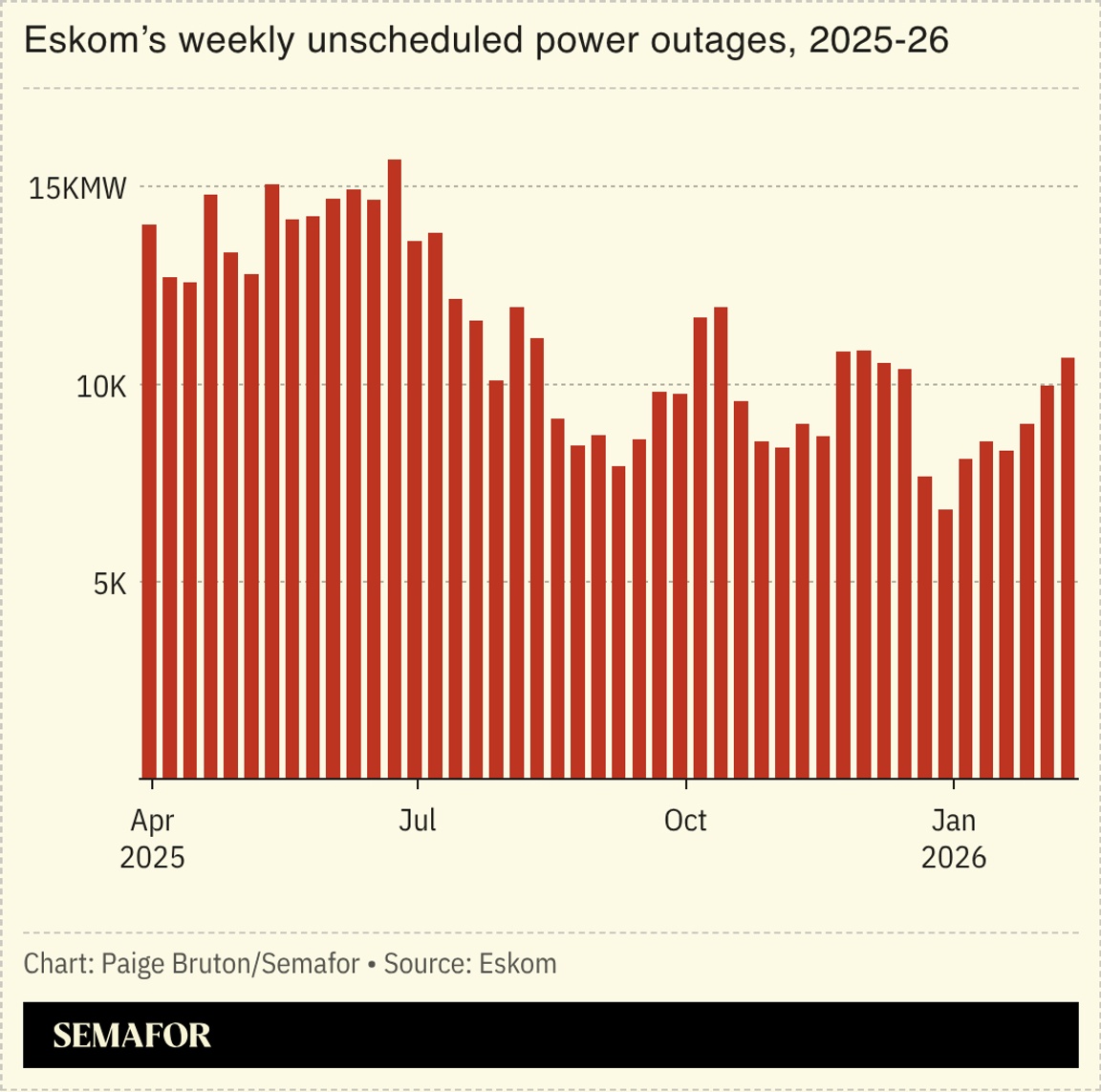 South Africa’s long troubled state-owned power utility moved a step closer to break-up. On Thursday President Cyril Ramaphosa said the government would move forward with dismantling Eskom in order to create a “fully independent” firm that “will have ownership and control of transmission assets” and be responsible for running the energy market. The move comes after mounting criticism from international investors following years of power outages and disruptions for businesses in Africa’s biggest economy. “Splitting the company is meant to attract private capital and build a more modern, reliable electricity system,” noted Reuters. However the new break-up plan diverges from an earlier promise where Ramaphosa said Eskom would be split into three standalone units, sparking uncertainty among some investors, noted South African newspaper Business Day. |
|
Opportunity and fallout for NTDs |
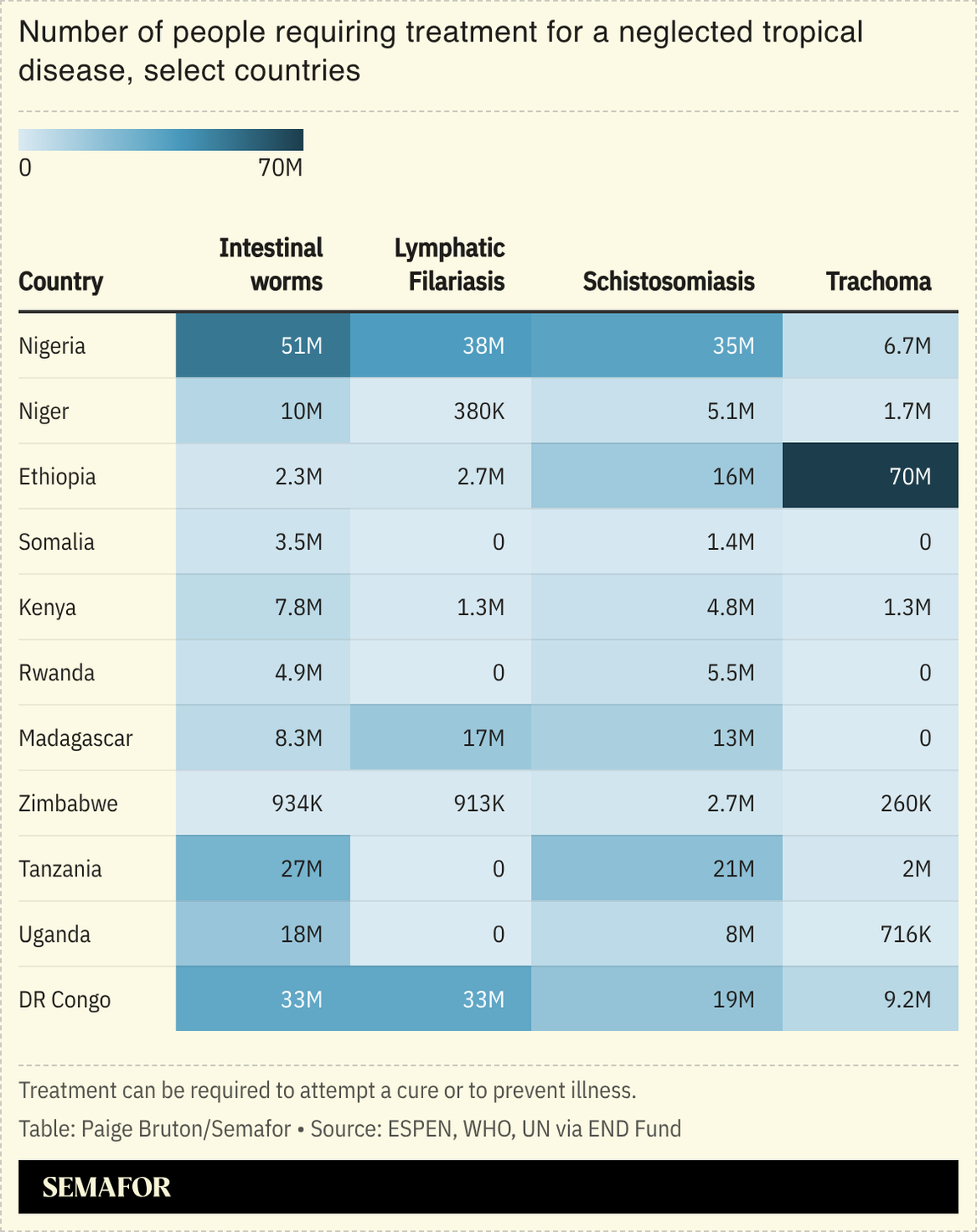 Nigeria could unlock $19 billion for the country’s economy by 2030 by eliminating neglected tropical diseases (NTDs), according to a new report, but foreign aid cuts threaten advancements. Nigeria carries the highest burden of NTDs in Africa — and the second globally: Some 51 million people require treatment for intestinal worms, and 38 million lack treatment for lymphatic filariasis, a parasitic disease that causes chronic swelling. But the launch of a mass drug administration program has allowed the country to treat around 100 million people for NTDs annually since 2019, The END Fund found, with the disease burden for some illnesses reducing by as much as 72%. Progress is being made in other parts of the continent too: Last year, Burundi, Mauritania, and Senegal announced they had eliminated trachoma, a bacterial infection that untreated can lead to blindness. But aid cuts could derail the gains: One study estimated that 23,000 additional people have died worldwide from an NTD since USAID was shuttered last year. Aid cuts are “inevitably leaving the most vulnerable – women, children, people with disabilities, and remote communities – left out as funding tightens,” END wrote. — Paige Bruton |
|
Soros backs a startup fund |
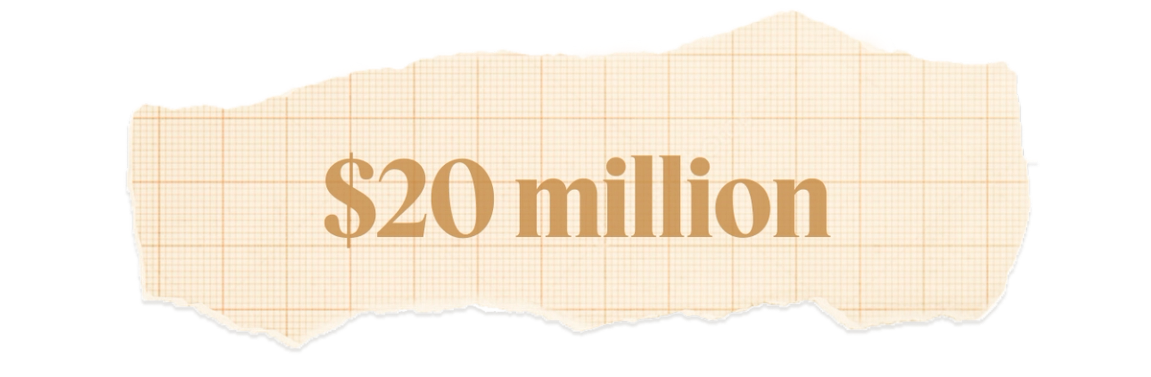 The size of a fund for African startups raised by a US venture capital firm backed by the philanthropist George Soros. Delta40, which operates out of Kenya and Nigeria, has already invested in 16 early-stage African companies since it launched in 2024. The company plans to invest up to half a million dollars in each startup it backs, focusing on those working in fintech, energy, mobility, and agriculture. As well as the Soros Economic Development Fund, Delta40’s fund is supported by investors including the Rockefeller Foundation, the Dutch development bank FMO, Germany’s development agency GIZ, and the Skoll Foundation. African startups secured $3.2 billion in funding last year, according to Africa: The Big Deal, a consultancy that tracks startup investment. |
|
 - Sudan’s catastrophic three-year war has reached a turning point: The battlefield has begun to stabilize with the Sudanese Army controlling the country’s eastern and central provinces, and the Rapid Support Forces paramilitary group controlling the west — effectively splitting the country in two. Now is the time to push for a ceasefire, Volker Perthes, the former head of a UN democratic transition mission in Sudan, argues in Foreign Affairs. The progress of a US-led peace plan and the promises of future foreign investments in Sudan could mark a tipping point.
- The agricultural practices of Rosebud, a major flower farm in Uganda that operates on the shores of Lake Victoria, have come under question, following an investigation by Musinguzi Blanshe and Annegina Randewijk for The Africa Report. The farm accounts for around 60% of the country’s flower exports, most of which supply the Netherlands. Rosebud has rapidly expanded in recent years, the investigation found, encroaching on land protected by UNESCO, and leaching toxic pesticides into the water. “There is a lot of rot in these farms,” one environmentalist says.
- US streamer IShowSpeed’s widely celebrated Africa tour, in which he visited 20 countries in 28 days, still leaves a lot to be desired in terms of the continent’s representation in Western media, Lee Nxumalo argues for Africa Is a Country. While the YouTuber garnered applause — particularly among the continent’s youth — for showing the “real” Africa to an international audience, IShowSpeed still plays on stereotypes, such as in his sexualized depictions of women. “He skims the surface, lightly touches on the impact of colonization, and has some curated interactions,” Nxumalo says.
- A massive cybercrime crackdown across the African continent last year saw law enforcement dismantle thousands of criminal networks, linked to 88,000 victims globally, Isabel Ravenna reports for New Lines Magazine. The operation, called Serengeti 2.0, was only the second major Interpol-led cybercrime mission on the continent, despite the fact that Africa has seen one of the world’s fastest online digital expansions. “Technology will continue to evolve and develop, and now that Africa is caught up, it must keep up,” Ravenna writes.
|
|
 Business & Macro🇲🇼 Malawi set a target to bring inflation below 21% this year. The country’s inflation rate is currently at 26%. Climate & Energy🇦🇴 Angola shipped its first exports of copper in January from a $250 million mine co-owned by a Chinese company and an Angolan state-owned company. 🇨🇩 US officials urged an executive of Australian miner AVZ Mineral to sell his firm’s interest in a lithium project in DR Congo to a US company, during a meeting in January. Geopolitics & Policy🇿🇦 South Africa will deploy the army to help the police fight criminal gangs and illegal mining, President Cyril Ramaphosa said in a national address. 🇰🇪 Kenya will reopen the Mandera Border Post that connects to Somalia after 15 years of it being closed to prevent militant attacks. Tech & Deals🇰🇪 Sitoyo Lopokoiyit will leave Safaricom, where he has overseen M-Pesa since 2021, to join Absa Bank Kenya’s personal and private banking division as chief executive. |
|
 Xbox/YouTube Xbox/YouTubeA new video game allows players to reclaim artefacts from Western museums that colonialists plundered from Africa. Relooted, created by South African gaming studio Nyamakop, is different from many heist games: The stakes are not defined by money or physical danger, but by the ever-changing goalposts of an imagined — and loophole-ridden — “Transatlantic Returns Treaty,” which makes it increasingly difficult for the characters to steal the more than 70 cultural objects hidden within the game. “Relooted illustrates the full breadth and scale of colonial plundering endured by African peoples that’s so often rendered through generalization or abstraction,” one reviewer wrote for PC Gamer. “But even as it recounts the depravities and depredations of the continent’s colonial history, Relooted is anything but a bummer. It’s refreshingly bright.” |
|
| |



