| | In this edition: Afreximbank’s Asia pivot, FirstRand to exit from UK, and Cape Town joins Airbnb bac͏ ͏ ͏ ͏ ͏ ͏ |
| |  | Africa |  |
| |
|
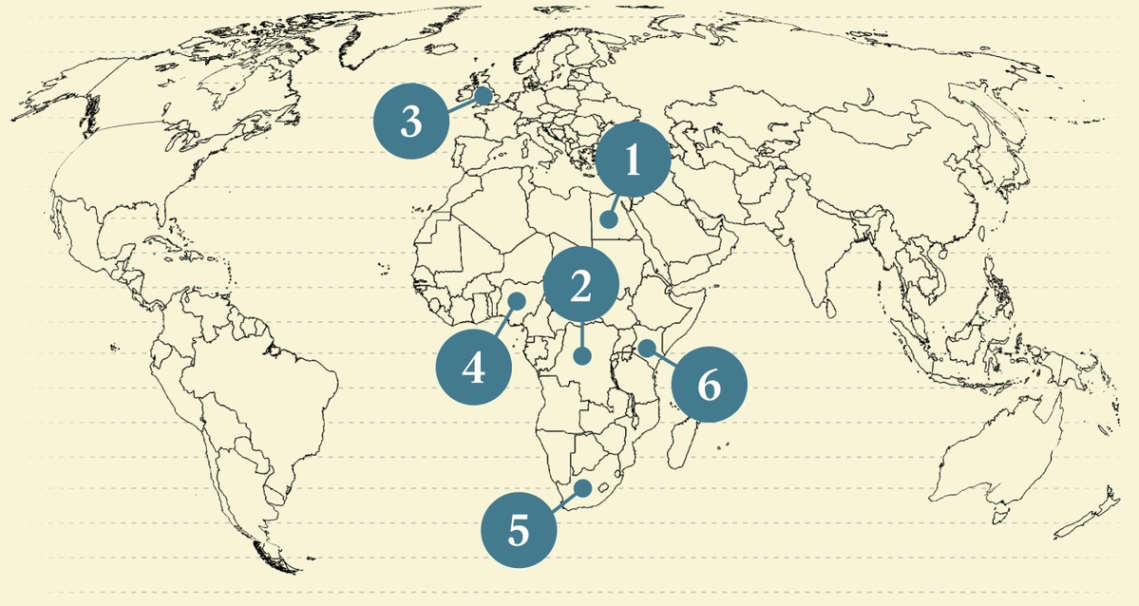 - Afreximbank’s Asian pivot
- DRC issues first Eurobond
- FirstRand exits UK
- US issues Nigeria warning
- Cape Town’s Airbnb backlash
- Weekend Reads
 A South African masterpiece inspired by Picasso. |
|
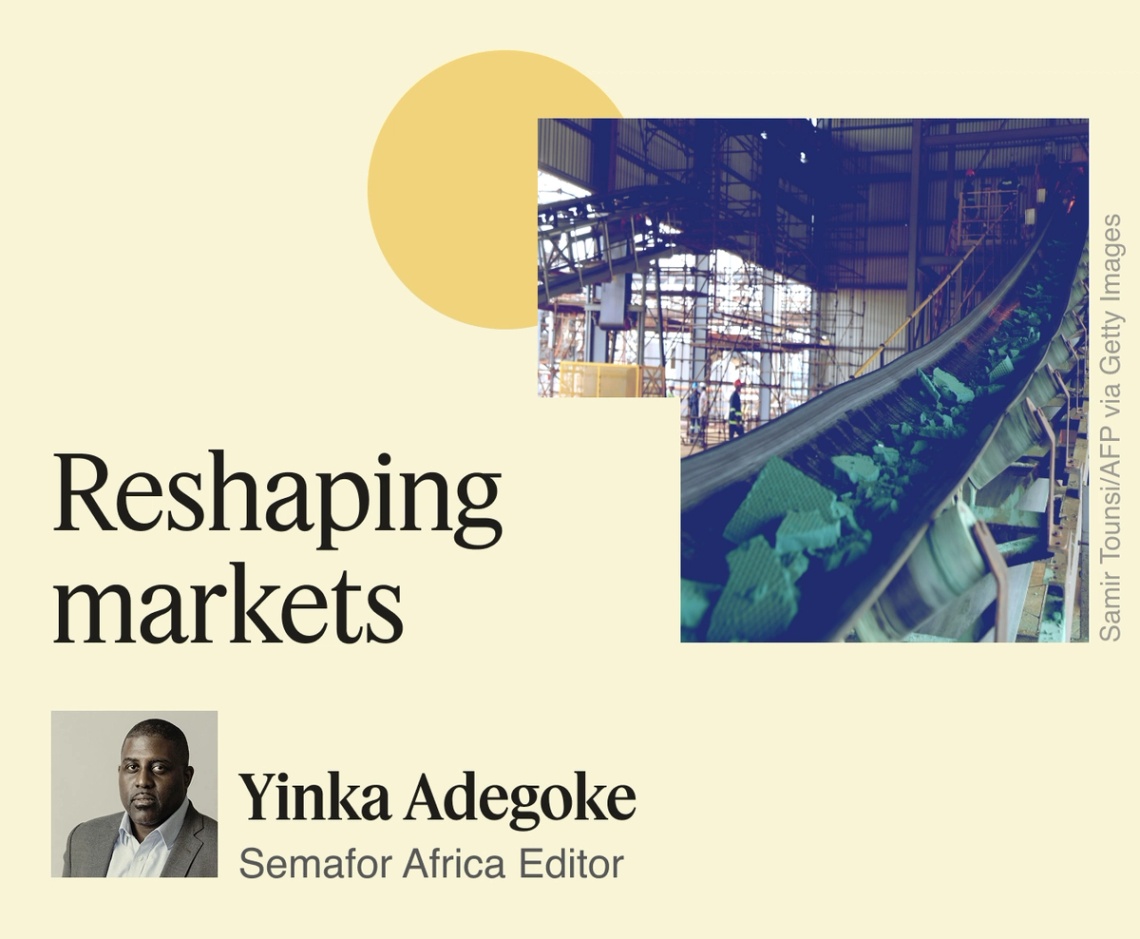 China’s state-owned enterprises aren’t just building roads and railways across Africa, they are reshaping markets and, increasingly, the policy environment itself. That was the central warning of a report last month by the US government-backed Africa Center for Strategic Studies. It landed even as Washington scrambles to catch up with its own state-backed push for strategic assets on the continent. The authors argue that Chinese operators function as instruments of state power, able to “blur the line between commercial and geopolitical goals” in ways no private US competitor can replicate. The evidence cited in DR Congo and Zambia is how Chinese firms dominate mining and power infrastructure, which they say is backed by opaque financing arrangements and loose regulatory oversight. In Kenya and Ethiopia, Chinese SOEs have financed, built, and in several cases continue to operate the railways and industrial parks that anchor regional trade. The report calls this “market capture.” Commercial dominance, held long enough, becomes political leverage. Washington is adapting, but awkwardly. The Trump administration has leaned into deal-making centered on critical minerals for example, with the US International Development Finance Corporation (DFC) taking on a bigger role. The tools and ambitions might be converging, but the structures and willingness are not. Corralling American businesses and private capital to bet on Africa is still a tough gig. The question isn’t whether the US will try to compete, but just how far it’s willing to go to support American players to step up on the continent. 🟡 We’ll be covering this and much more at the Semafor World Economy in Washington next week. Alexis and I will be sitting with Dangote Group founder Aliko Dangote, DFC CEO Ben Black, South African Reserve Bank Governor Lesetja Kganyago, DR Congo Finance Minister Doudou Fwamba Likunde, Standard Bank CEO Sim Tshabalala, and Flutterwave CEO Olugbenga ‘GB’ Agboola among many others. |
|
Afreximbank’s $800M answer to Fitch |
 Kazuhiro Nogi/AFP via Getty Images Kazuhiro Nogi/AFP via Getty ImagesAfreximbank leaned on Asian capital markets to keep lending on track after severing ties with ratings agency Fitch earlier this year. While the lender has previously accessed Asian capital markets, last year’s $800 million fundraising from Japan and China — via Samurai and Panda bond issuances — has taken a greater strategic weight. The bank, in a statement, cited its ability to raise the money as evidence that its credit profile is not in jeopardy, “contrary to concerns raised by some rating agencies.” Fitch downgraded Afreximbank last year over worries around the lender’s risk management policies, sparking a debate about the way Western ratings agencies perceive risk in Africa. In reaction, Afreximbank in January formally ended its relationship with one of the Big Three rating agencies, arguing that rating methodologies applied to states and multilateral institutions fail to reflect development mandates. The lender’s comments in its latest earnings report comes amid a broader dispute between African lenders and Western credit rating agencies over how African risk is assessed and priced. In November last year, South Africa’s G20 Africa Expert Panel demanded a full disclosure of ratings data and methodologies. — Tiisetso Motsoeneng |
|
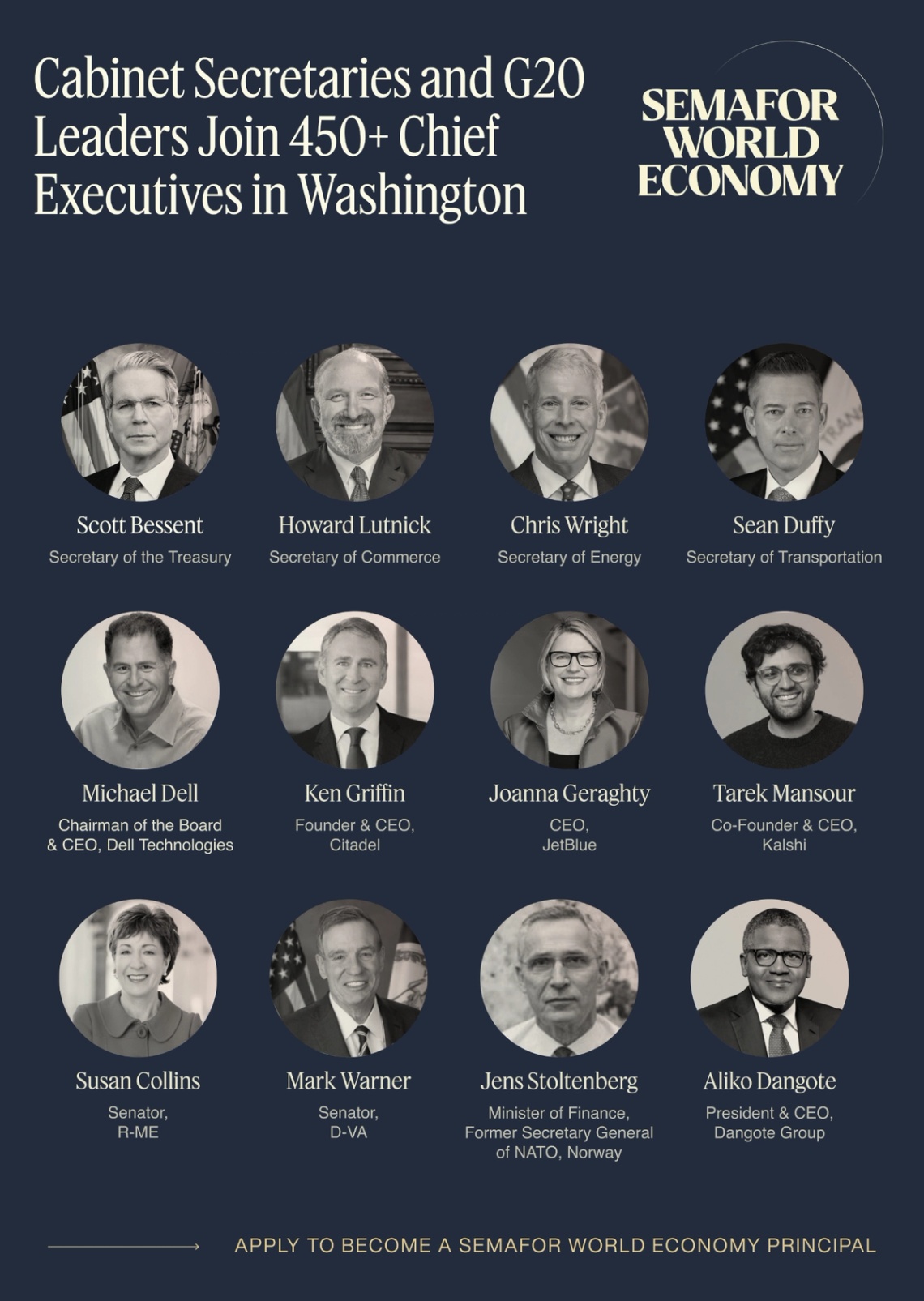 We’re so proud to be hosting a new kind of gathering in Washington, DC next week with Semafor World Economy, the single most important convening of economic leadership in the United States. Semafor World Economy comes at a moment when Washington increasingly sets the direction of the global economy, and we’ll bring together the leaders making key decisions, including US Cabinet Secretaries Scott Bessent, Chris Wright, Howard Lutnick, Doug Burgum, and Sean Duffy. Over five days, Semafor’s flagship live journalism platform will become a real-time stage for the conversations shaping markets, policy, and power, with a continuous run of high-level interviews and discussions featuring the world’s most influential policymakers and executives. We’ll be hosting leaders from more than 80 countries and over 500 global CEOs, and this is your last chance to join as an inaugural member of our cohort of Semafor World Economy Principals — apply here to join us in-person next week. |
|
DRC raises $1.25B from debut eurobond |
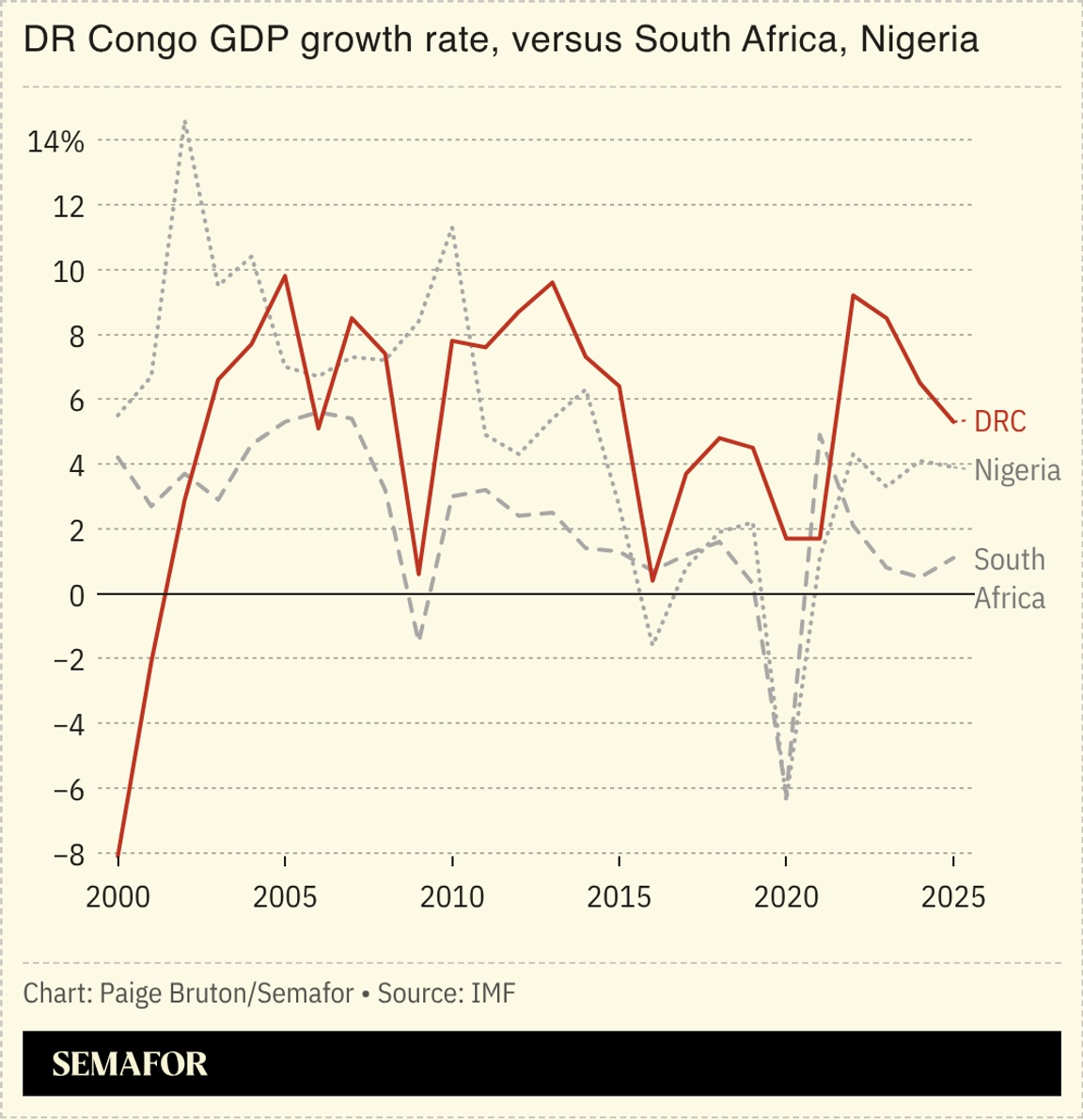 DR Congo raised $1.25 billion from its first sovereign eurobond in an oversubscribed deal that marked the country’s debut on global capital markets. Despite often being associated with the long-running conflict in its eastern region, Kinshasa was able to sell a stronger credit story than investors expected after presenting its recent critical minerals partnership with the US government and American business partners at investor roadshows in New York, London, and Paris. “I suspect many of these investors view the heavy investment of US companies into the DRC mining sector as significantly facilitating any claims in the event of a default,” said Mark Bohlund, a credit analyst at London-based REDD Intelligence. Investors also noted DR Congo’s low debt ratio and did not see the conflict as enough to define its sovereign credit story, Leo Morawiecki of Aberdeen Investments told Semafor. The government borrowed in two parts — one running to 2032 and another to 2037 — at borrowing costs of 8.75% and 9.50%, with Citigroup, Kinshasa-based Rawbank, and Standard Chartered managing the sale. — Ruben Nyanguila |
|
FirstRand exits UK business |
 John Keeble/Getty Images John Keeble/Getty ImagesFirstRand, South Africa’s largest bank by value, will exit the UK after a massive regulatory hit stemming from the industry-wide mis-selling of car finance. The lender said it will unwind its ownership of British challenger bank Aldermore, ending nearly two decades of auto finance expansions that have now turned loss-making. The UK’s Financial Conduct Authority this week announced a sweeping industry-wide clean up that requires UK auto-finance lenders to collectively pay £9.1 billion in compensation across 12.1 million eligible loans. FirstRand said the scale of the payout pushes the UK business outside of its risk appetite. The money set aside to cover its share stands at almost three times the profit extracted from the UK auto finance unit over more than a decade, underscoring the severity of the capital drag. FirstRand, which entered the UK in July 2006, was unusual in betting on the UK, whereas other South African lenders, such as Standard Bank and Absa, focused on expansion across Africa. FirstRand’s UK exit highlights the challenges found in highly regulated Western consumer finance markets where regulatory and legal hurdles can create liabilities that retroactively wipe out years of profit. — Tiisetso Motsoeneng |
|
US issues Nigeria travel warning |
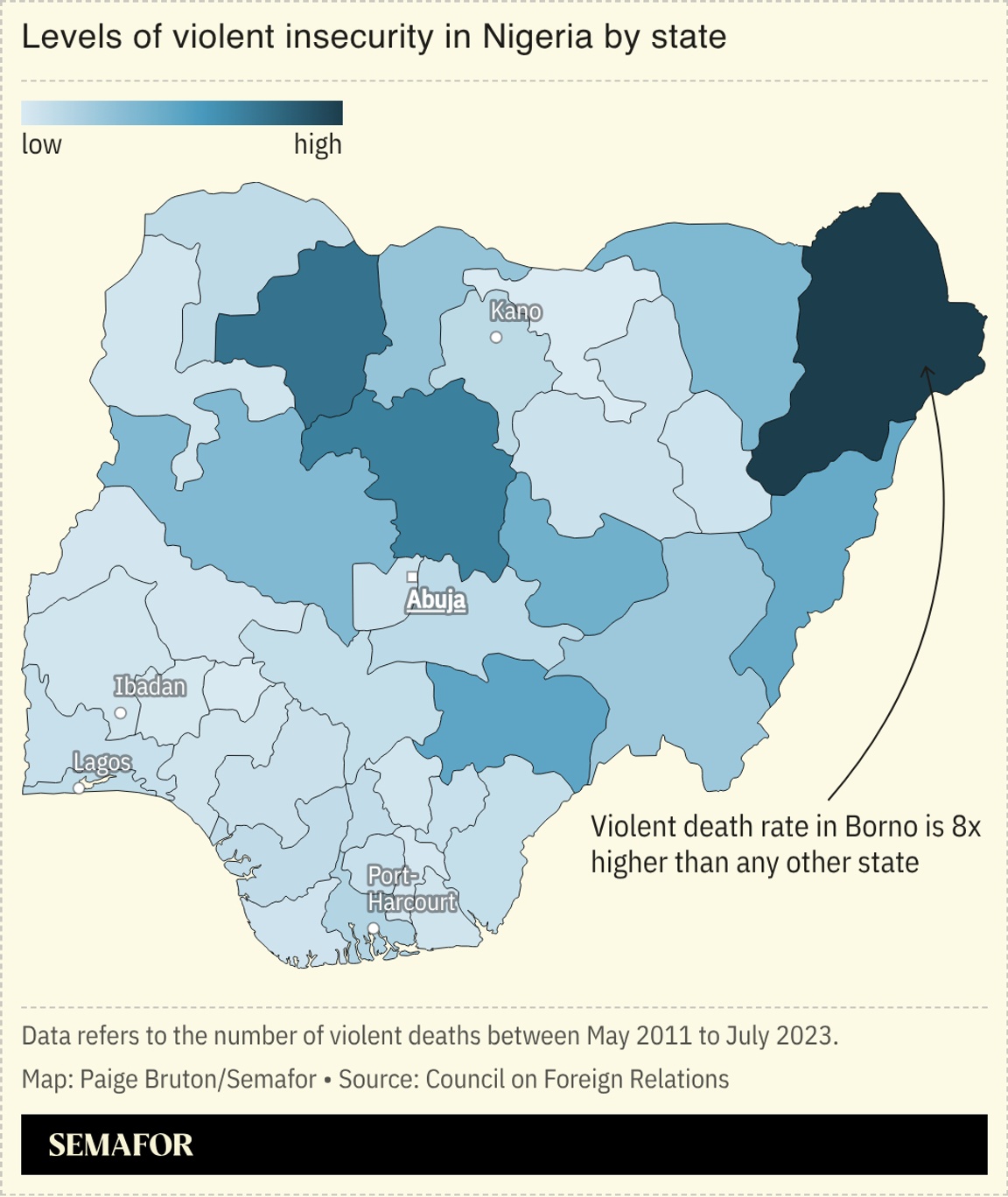 The US warned its citizens against traveling to Nigeria over terrorism, civil unrest, and kidnapping risks. In a Wednesday advisory, the State Department wrote that some regions now carry its highest “do not travel” designation. Washington also authorized the departure of non-emergency embassy staff and their families from Abuja, pointing to a deteriorating security environment. The move follows an uptick in deadly attacks across parts of the country, even as the US-Nigeria security partnership expands. The two countries have been cooperating in areas including counterterrorism, maritime security, intelligence sharing, and military training. US-supported surveillance systems and aircraft have also assisted Nigerian operations against insurgents and armed groups. |
|
Airbnb faces familiar battle in Cape Town |
 The share of residential accommodation in Cape Town’s central business district that city planners estimate is used for tourist stays rather than long-term housing. The figure, which includes units that are hotel-managed or listed on short-term rental platforms such as Airbnb, has become a proxy for how deeply tourism has penetrated the city center housing market. For Airbnb, the number marks a familiar danger zone: In cities where tourist rentals start to crowd out residents, regulators step in. New York now tightly limits listings and requires registration. Barcelona is phasing out all licenses for whole-home tourist apartments, removing roughly 10,000 short-term rentals by 2028. And Amsterdam caps short-term rentals at 30 nights per year. Cape Town, South Africa’s tourism hotspot, is heading down the same road. For Airbnb, that means high compliance costs, turning what looks like a housing debate into a profit margin question. |
|
 - The African Union’s plan for a high-speed rail network across the continent is underway, with 45,000 miles of tracks mapped out over the next 50 years. While Egypt began development of a route in 2022, connections between it and others could prove more difficult as pre-existing tracks across the continent are not standardized in their design, CNN reports. At the same time, rail could revolutionize the continent’s economies, with estimations that the network could cut transport costs by 40% and boost intra-African trade by 35%.
- Kenyan author Frank Njugi captures the human cost of climate change-induced flooding in East Africa in a personal essay for Africa is a Country. He recounts how his 60-year-old aunt lost her house to the rising waters of Lake Naivasha in Kenya’s Rift Valley, one of thousands who’ve seen their life savings swallowed up by the expanding lakes. He urges “a fundamental shift in how we understand our relationship to the water,” saying that the “lake has simply reclaimed its original shoreline.”
- The devastating war in Sudan has reached a geographical stalemate, with the Rapid Support Forces paramilitary group largely controlling the west, and the Sudanese army controlling the north and east. Both sides have begun setting up their own economies and schooling systems, suggesting that another partition of Sudan could be on the horizon. Francis M. Deng, a former Sudanese foreign minister, and Ahmed Kodouda, a technical adviser for development in conflict settings, suggest what can be learnt from South Sudan’s partition from Sudan in 2015, and why dividing the country is probably the wrong answer to the conflict.
- A group of female erotica writers in northern Nigeria has found success by publishing their work in WhatsApp channels. WhatsApp offers a way to monetize and evade the region’s religious censors, who have previously chastised writers for their risqué content, The New York Times reports. Subscribers pay for access to a channel, where they are fed new chapters until a cliffhanger is reached and a new paywall is dropped. “I see erotic writing as vital in society,” says Oum Hairan, who estimates 80,000 people read her first book across WhatsApp and Wattpad. “That’s what’s happening, so through the writing, people learn about it.”
|
|
 Business & Macro🇰🇪 Kenya’s central bank held its main interest rate at 8.75%, ending nearly two years of rates cuts. 🇿🇦 South Africa’s manufacturing output fell 2.8% year-on-year in February, official data showed. Climate & Energy🇿🇦 South Africa launched a review of its decades-old fuel pricing system as global oil prices and a weak rand currency push up pump prices. Geopolitics & Policy🇳🇬 Nigeria began prosecuting more than 500 terrorism suspects in one of the largest trials ever held in the country. 🇿🇦 The Democratic Alliance, the second-biggest party in South Africa’s coalition government, will hold its leadership contest this weekend, with Cape Town Mayor Geordin Hill-Lewis the strong favorite to succeed John Steenhuisen. 🇩🇯 Djibouti was set to hold an election on Friday in which President Ismail Omar Guelleh, 78, is widely expected to extend his 27-year rule. Tech & Deals🇿🇦 Endeavor South Africa, a nonprofit venture capital firm, closed its latest tech fund at $14 million, less than half its target, underscoring the constraints of the country’s start-up ecosystem. |
|
 African Guernica by Dumile Feni, just before it was installed at the Reina Sofía. museoreinasofia/Instagram. African Guernica by Dumile Feni, just before it was installed at the Reina Sofía. museoreinasofia/Instagram.An artwork by South African artist Dumile Feni is changing the way viewers understand Guernica, Pablo Picasso’s famous anti-war painting. African Guernica, which was drawn by Feni using charcoal and pencil in 1967, is part of a new series at the Reina Sofía museum in Madrid, and is on display directly opposite Picasso’s work. While there are many similarities between the pieces, including a mixture of contorted humans and animals depicted in black and white, the exhibition’s curator is keen to also highlight the differences between them. Picasso’s Guernica was an “anti-war cri de coeur” following the 1937 bombing of the Basque market town with which the painting shares its name, curator Tamar Garb told The Guardian. Meanwhile, Feni’s Guernica reflects “the violence, the slow violence, and the actual violence of racist tyranny,” in apartheid South Africa. |
|
| |