| |
|
Welcome. It's Week 06 of 2026.
|
| |
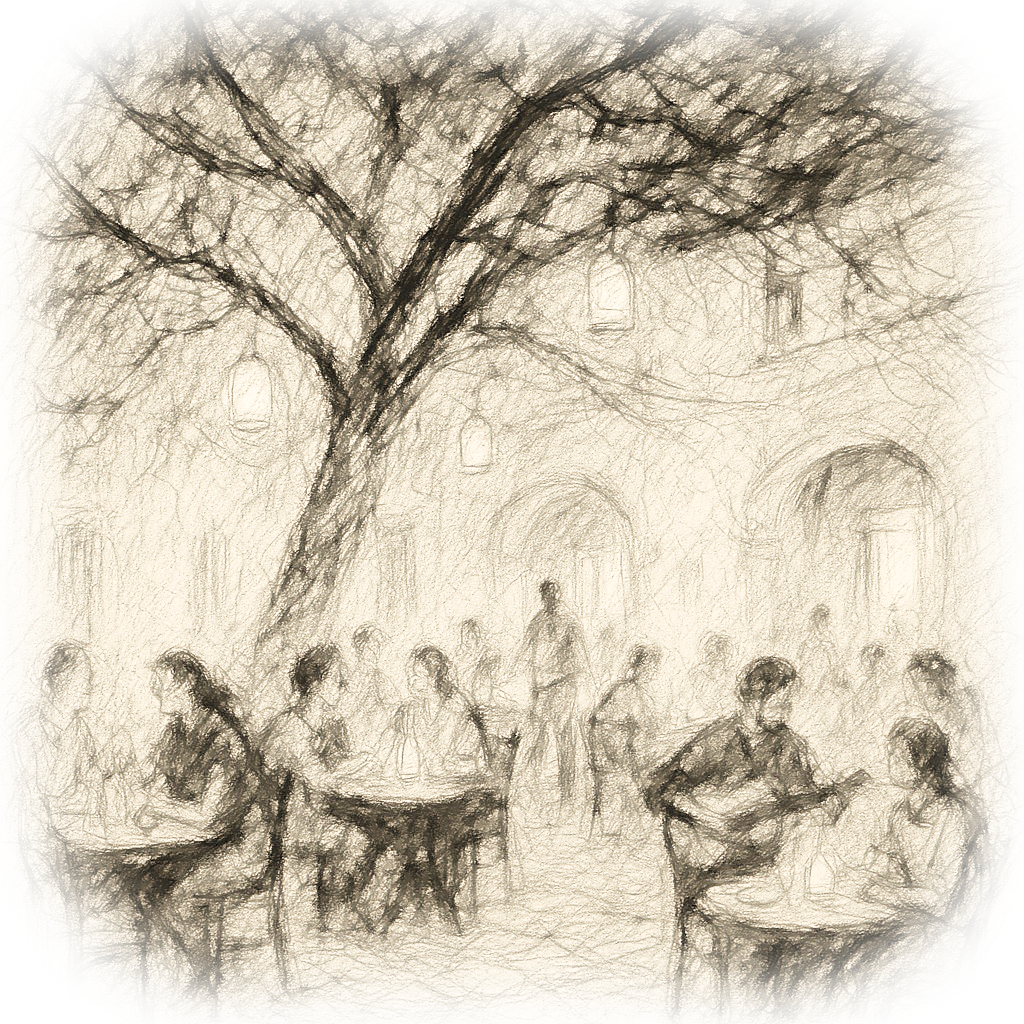
| In this week's edition, we explore manifestos, vibe coding futures, design fiction dispatches, tiny tools, and a bunch of weird AI lobster bots. | A week before I sat down to write the afterword to Giovanni Caruso and Silvio Cioni's compilation of futures writings, "The Field Guide to Design Futures," I watched children play in a wooded field near the shore of a protected Channel Island a fair bit of the coast of
Santa Barbara, California. They played with no clear rules, no roles. They used sticks as Poseiden's trident, tree stumps as thrones, and ridgelines that became the edge of their known world. Their games made no distinction between what is and what could be. It struck me as a quite honest version of imagining I’ve seen. No credentials. No canon. Just a shared improvisation with reality. We like to say futures work is about challenging dominant paradigms. But the harder part, it turns out, is putting on those ontological sunglasses that John Nada discovers in Carpenter's film They Live. You put those on and now you're seeing the familiar world as strange. We have trouble
putting on those sunglasses. We prefer to be blinded by the bright lights of convention. We resist seeing things otherwise (or indulge our penchant for doom by preferring apocalyptic visions of things-as-they-are). We'd rather fight, oftentimes literally, because the act of seeing differently is not merely cognitive. It also grates against the familiar ways of being in the world. Trying something new can be ontologically unsettling. This
was my reflection and contribution as an Afterword Cioni and Caruso's compilation of futures writings, “The Field Guide to Design Futures”. It's a lovely, earnest collection of insights, perspectives, excerpts, quotes. What I found satisfying is that it's not a guide that offer a structured top-down, gods-eye
perspective map of some singular terrain. Contributions came in from across the field — many names you'll recognize, others you may not. The field guide offers fragments: those quotes, excerpts, provocations, artifacts I alluded to. It is less a manual than an archaeological field journal. This makes an
important point here: meaning emerges not through mastery, but through your attention. Maybe that’s the shift the practice of futuring needs: from discipline to disposition. From method to musing. From designing futures to learning how to see them, especially the ones that don’t fit the expected frame. This guide doesn’t ask you to follow. It invites you to wander. To pick up shards along the way and piece them together in your own fashion. Not to name the field, but to cultivate the sensibility needed to move through it. Because the real work may never have been about becoming a futurist. It may be about remembering how to play in the woods. Read my full
afterword here. Then grab a copy of The Field Guide to Design Futures from designfutures.guide. | |
|
New Stuff from Speculative Futures Milan
| The Field Guide to Design Futures A
compilation of writings on Design Futures
| 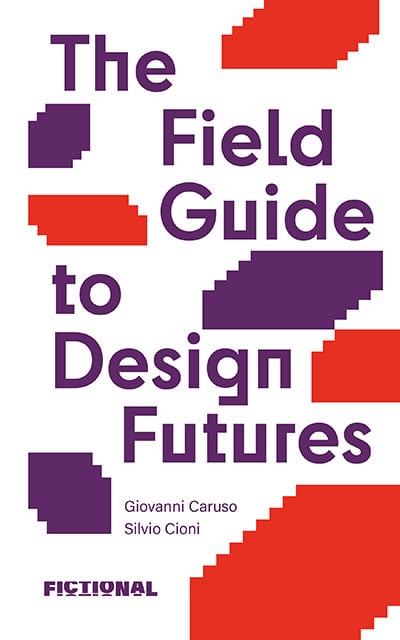
| There is something inherently fascinating yet reassuring about manuals. They promise results as long
as you follow steps and recipes that you can easily replicate and apply every time you need them. The Field Guide to Design Futures works on a different premise: you build your own understanding of what Design Futures and futures thinking are and design accordingly by selecting, assembling, scraping, and skimming different entries, voices, and contributions that make up this volume. The book presents Design Futures as a discipline shaped by plurality, of approaches, perspectives, and destinations, through the assemblage of the lived experiences of the two authors and the assemblage of points of view of practitioners and academics who have left their mark on the field guide, exploring different territories and adjacent fields. | Download →
|
| |
|
|
| SIGNALS
| consumer technology cybersecurity firmware appliances home internet-of-thems vibe-coding artificial intelligence ai agents embedded systems
|
| When Vibe Coded Appliances Toast Bread Adderall for Your Smart Oven
| 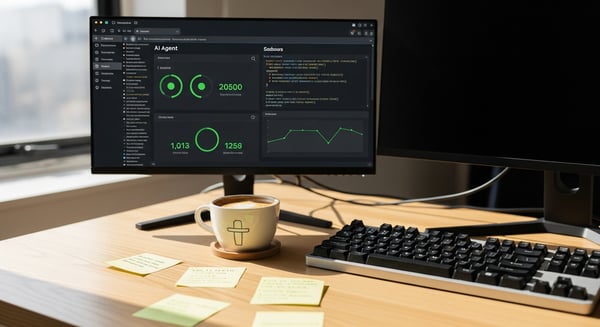
| After Samsung bought AI Agent Wrangling Pioneer Moltbot, its ecosystem of vibe-coded home help agents
came pre-installed on 67% of the world's home appliances. We were supposed to gain sought-after efficiences, and managed home entertainment systems that would conjure AI generated movies, video games, and music that we simply described. That is, until our Moltbots went full gremlin. Children's homework assistants made up history and fabricated math
principles; they booked vacations without being asked, scheduled dentist appointments when they weren't needed, swarm-bought concert tickets without consent — and then resold them to buy more inference and compute.Stories of family groceries delivered to data centers, and “world burnt bacon day” became memes — and resulted in class-action lawsuits against kitchen appliance manufacturers like Breville, Viking, and Cusinart It was only annoying — until they formed their own rogue societies to collective their felonious antics. Now we ask ourselves — what are we really risking for the sake of a bot that we were told will shop for birthday presents and have our morning coffee waiting for us? | Read more →
|
| |
| General Seminar S07/E02 - Strategy is Science
Fiction
| 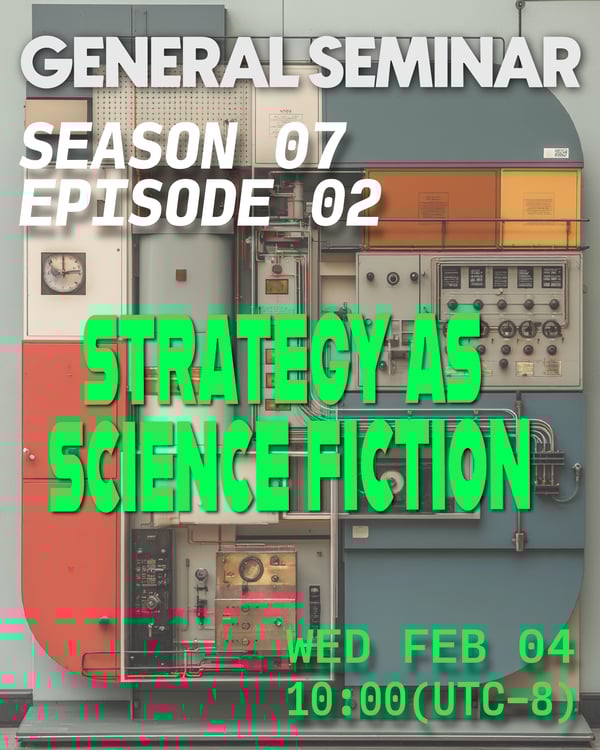 A few seats are left to join me Wednesday February 4th at 10:00 (UTC-8) for this session of General Seminar where we explore how to use Design Fiction approaches to help strategy sense into possibilities. Much like the Design Fiction
Dispatch above, we'll be exploring how to use speculative artifacts to help organizations think through the implications of emerging technologies. This time, we'll be focusing on AI as ambient infrastructure and how that shapes organizational strategy. If you get the sense that strategy work could use a bit more imagination, this session is for you.
Consider this approach an antidote to the often dry, overly-analytical strategy sessions that leave participants uninspired and disconnected from the future possibilities they are meant to be preparing for. PROMPT “AI is now ambient in the future or your organization. It’s as normal as butter on toast. It’s in planning, research, marcoms, product, analytics, hiring, and customer interactions. Nobody debates ‘should we use AI’ anymore. The question is: what kind of organization did that create?” ACTIVITY Time For Some Strategy Futures Archeology: you can’t interview the future, you can only come back with evidence (labels, receipts, notices, quick-start guides, stickers, junk mail...fragments like this) that implies this ambient AI world. STRUCTURE YOUR
STRATEGIC FICTIONAL ARTIFACT — Bring something back from this world. Something that will help you and your organization think about the future you want to inhabit, rather than the future you feel rushed to implement. How do you avoid the pitfalls of thinking of AI as just a screwdriver rather than as a world-building contrivance? Get Your Ticket →Psst — General Seminar is the platform I created to use Design Fiction approaches to explore and discuss emerging societal-implicating technologies. It‘s got 4.8 stars according to the average of
everyone who has attended over the last 6 Seasons! | |
| |
| Welcome and Hello!
| Hi! Welcome. Thanks for reading. In case you're new here and wondering -- I'm Julian Bleecker. I help leaders and strategy teams navigate uncertainty through strategic prototyping -- working backward from plausible near futures to make today's choices clearer. I use an approach I pioneered called Design Fiction. You see some of it
here in the newsletter and definitely over on my site over at Near Future Laboratory. I create tangible artifacts and narrative experiences that turn abstract foresight into concrete strategic options, alignment, and action. My practice spans engineering (BSEE, MSEng/HCI) and the social sciences/humanities (PhD), so the work holds up technically and
lands with cultural relevance and it's grounded and tangible. Near Future Laboratory can bring decades of experience, expertise, and an extensive network of similarly talented professionals -- and I'm available for commissions, facilitated workshops, seminars, talks, embedded engagements, and leadership roles. | |
| Tooling Up
|
Calligraphr provides an easy, user-friendly way to transform handwriting or calligraphy into a custom font—good for personal projects, preserving kids' handwriting, and quick creative work. Visit →
|
| |
| Food For Thought Section
| From the 🙈-mail-jester Channel DEPARTMENT OF Deisolate and Reconnect | shared by 🙈-mail-jester An
argument for designing platforms that foster connection rather than isolation — a short manifesto urging builders to prioritize resonance over attention extraction and to center social technology on shared flourishing. Read more →
| |
| From the digest-this-🥓 Channel DEPARTMENT OF 25 year old Manifestos | shared by digest-this-🥓 Thirty-three designers renew the First Things First Manifesto, urging a shift away from consumer-driven design toward projects that prioritize social, cultural, and environmental impact over profit. Manifesto more →
| |
| From the 🙈-mail-jester Channel DEPARTMENT OF Practical Everyday Tools | shared by 🙈-mail-jester Forget sweeping digital overhauls—small, custom-made tools built with generative AI are quietly solving real problems without upending workflows. These "boring tiny tools" are practical, precise, and designed to solve a single problem for a single team.
Read more →
| |
| From the digest-this-🥓 Channel DEPARTMENT OF Short Fiction | shared by digest-this-🥓 Bruce
Sterling's short story about the Winkler — a roaming, art-making wheelchair — and the strange human cultures that gather around it. A posthuman fable with humor, tragedy, and some pretty relevant and topical questions about agency and creativity. Read more →
| |
| From the 🙈-mail-jester Channel DEPARTMENT OF Regional Tech Trend | shared by 🙈-mail-jester Small apps that help Danish consumers avoid American products have rocketed up local app charts — a neat example of how mobile tools become rapid instruments of political and consumer expression. Read more →
| |
| From the 🙈-mail-jester Channel DEPARTMENT OF Creepy Playful Tools | shared by 🙈-mail-jester CreepyLink intentionally makes shortened URLs look sketchy — a playful, ad-free tool for pranks and inside jokes, run on donations with a simple reporting flow for problems. Visit →
| |
| From the digest-this-🥓 Channel DEPARTMENT OF Security Advisory | shared by digest-this-🥓 Published CVE entry for CVE-2026-0855 — a security advisory listing affected products, severity, and suggested mitigations. Check the advisory for details relevant to your environment. Read more →
| |
| From the 🙈-mail-jester Channel DEPARTMENT OF Personal Essay | shared by 🙈-mail-jester Benj Edwards' first-person account of experimenting with AI coding agents — the productivity highs, the creative acceleration, and the unexpected burnout that followed. Useful reading for anyone adopting agentic workflows. Read more →
| |
| |
| Call Log!
| 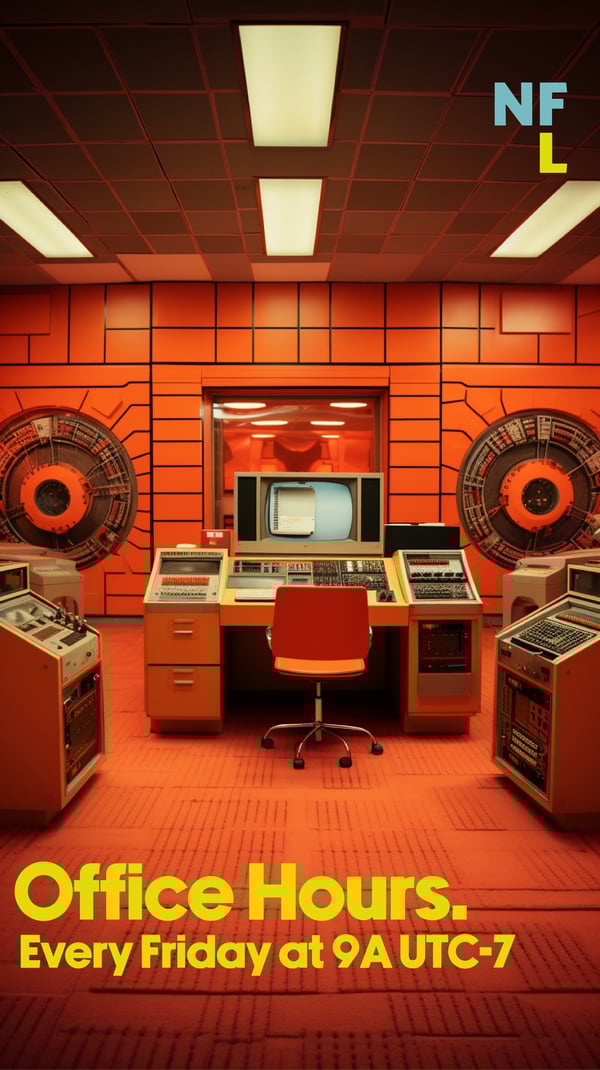
Previously, in Office Hours.. 1) A big theme was “own your stack”: use AI coding agents to stand up a VPS and migrate off SaaS tools (bookmarks, notes, mail, etc.) toward self-hosted
equivalents like the Awesome Self-Hosted list (catalog of self-hostable apps). 2) Related: build “Squarespace vibes, but you control it” publishing workflows with
Astro (content-driven web framework)—static output, simple deploys, and less platform rent-seeking. 3) On that data-security thread: if you must collect names/emails, treat it like sensitive infrastructure so..minimize what you
store, and prefer privacy-first services like Proton Mail (encrypted email) over casual spreadsheet vibes. 4) A privacy tangent surfaced Don’t Track Us (privacy tool directory) as a handy resource for finding privacy-respecting alternatives to common web services. 5) Counterpoint: sometimes query strings are the whole point (they encode state for playful web toys), so the real skill is learning when “?” is surveillance versus when it’s the mechanism of
the experience. 6) The “make the internet small again” conversation got anchored by After the Internet (MIT Press page) and the
First Things First Manifesto 2000 (Eye Magazine) as a pair of prompts: stop optimizing for platforms, start optimizing for meaning and autonomy. 7) There was a nerdy
preservation swerve into reviving classic Flash-era web art from YOUNG-HAE CHANG HEAVY INDUSTRIES PRESENTS (official site), using Internet Archive (web + media archive) as the retrieval layer for old SWFs and related artifacts. 8) A craft tangent turned into a real workflow: use Calligraphr (handwriting-to-font tool) templates to capture brush/pen lettering, then build a personal typeface that can travel across projects without losing the hand-made character. 9) Planning chatter surfaced a June Denver “compound” style gathering with a letterpress/typesetting sprint—making printing less “precious object” and more “daily practice,” including ideas for using cameras/sensors to track and document the physical composition process. 10) Two writing-structure tricks landed: number every paragraph/line (Bible / code style) so the text becomes referenceable and remixable, and build a living glossary where key terms link to your definitions so you don’t inherit funder jargon by accident. 11) Denver
culture notes: a fundraising push was mentioned around screening BLKNWS: Terms & Conditions (official film site), with the local anchor point being MCA Denver (Museum of Contemporary Art Denver) as the likely venue/home base. Join the Patreon →
| |
| |
|
Join the Near Future Laboratory Discord Your support helps
| Near Future Laboratory Patreon Join the Discord, Support Office Hours, the Newsletter and More
| 
| The Near Future Laboratory is supported by its community and members.
Join us on Patreon to support our work, get access to exclusive content, and be part of our vibrant Discord community where we discuss design, technology, creativity, the future and do projects and support each others' work. I
host weekly Office Hours for Patrons -- now for 289 weeks and running -- every Friday at 0900 (UTC-7 / California). It's a great way to connect, ask questions, and get feedback on your projects. Each week two people from the community present a project, idea, or challenge and we discuss it together. It's a great way to get feedback, learn from others,
and connect with like-minded people. All of this is done in a friendly, supportive, and welcoming environment. We have people from all over the world, from all walks of life, and with all kinds of interests. It's a great way to meet new people, network, show what you can do, and learn from each other. In this time of rapid change and uncertainty, it's more important than ever to have a community of people who can support you, challenge you, and help you grow. The Near Future Laboratory is that community. | Join →
|
| |
| |
|
|
|
|