Sharpen your predictions
| | | |
| | Brought to you by Alex Panas, global leader of industries, & Becca Coggins, global leader of functional practices and growth platforms
| | | | | | |
|
| | | | | |
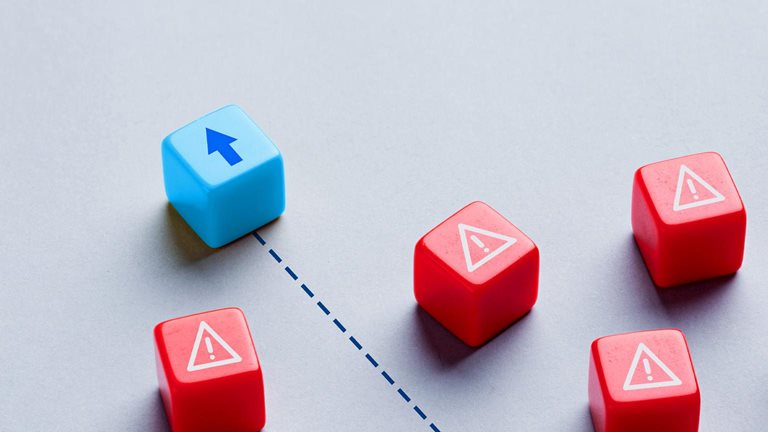
| | | Nobody can predict the future. But CEOs are often expected to. And with today’s companies facing no shortage of volatility and disruption, navigating the uncertainty—and developing a strategy accordingly—has never been more crucial. Executives don’t need a Magic 8 Ball, though, to prepare for what’s next. When faced with unexpected crises and unknown unknowns, scenarios are a CEO’s best friend.
When executed well, scenario planning offers several advantages for strategy setting. First, scenarios can expand your thinking. Past isn’t always prologue, and change happens both gradually and suddenly. Scenarios increase a company’s readiness for a range of futures, challenging assumptions and welcoming extreme possibilities. Second, scenarios help uncover predetermined outcomes—sure bets based on well-established trends. Finally, scenarios help protect against groupthink, providing a safe space for contrarian thinking.
Still, scenarios aren’t foolproof, and CEOs should be wary of certain telltale traps—among them, becoming paralyzed in the face of too many possible scenarios; allowing scenario planning to muddle communications and obscure a single, bold vision; and discarding scenarios too quickly (often the most valuable ones are those that seem the most far-fetched or outdated).
For more insights on scenario planning, including how best to present scenarios and why scenarios need catchy names, read our 2009 classic “The use and abuse of scenarios.”
| | | | |
| | | |
| Read our latest thinking on this classic topic
| | | |
|
| | | —Edited by Drew Holzfeind, senior editor, Chicago
| | |
| |
| Is there a classic business topic you’d like us to feature? Send us an email—we’d love to hear from you. | | |
| | | |
This email contains information about McKinsey's research, insights, services, or events. By opening our emails or clicking on links, you agree to our use of cookies and web tracking technology. For more information on how we use and protect your information, please review our privacy policy. |
|
You received this email because you subscribed to our McKinsey Classics newsletter. |
|
|
Copyright © 2026 | McKinsey & Company, 3 World Trade Center, 175 Greenwich Street, New York, NY 10007 |
|
|
|
|