
| |||
| |||
My brother Jay runs the "Status Kuo" Substack, focused on U.S. domestic politics. Every once in a while, he'll do some China-focused coverage and involves me. I am NOT, of course, an "expert." But these were my thoughts on the Trump-Xi summit, and happily answered Jay's questions. |



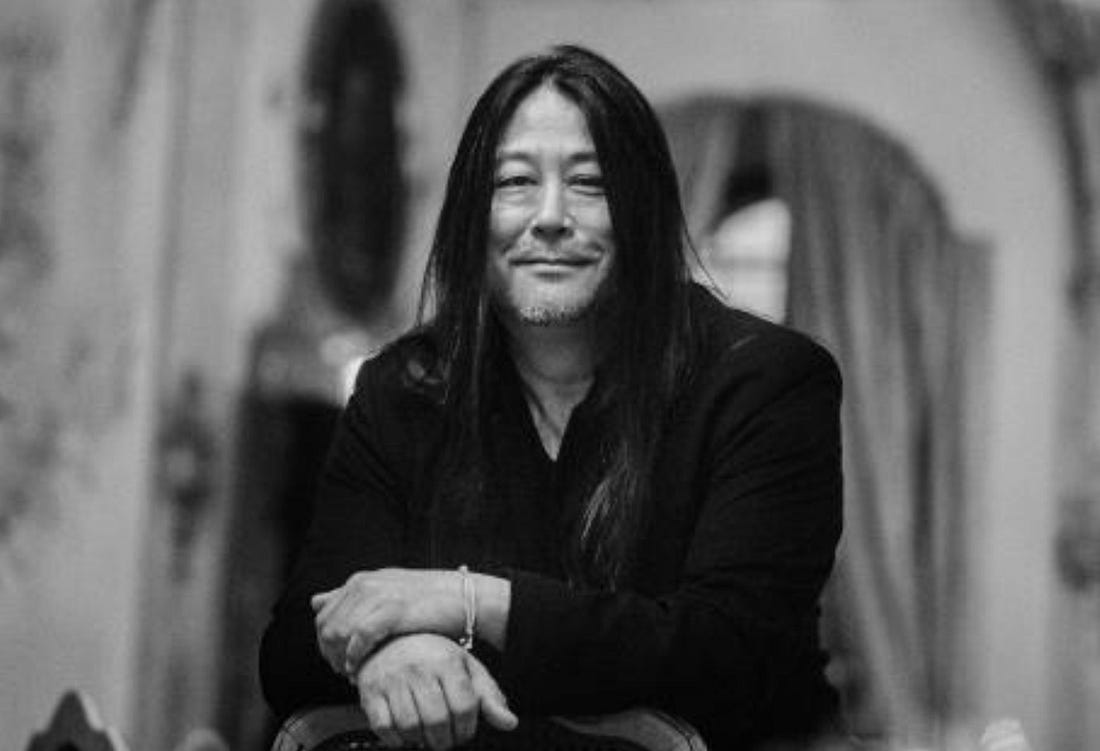 |
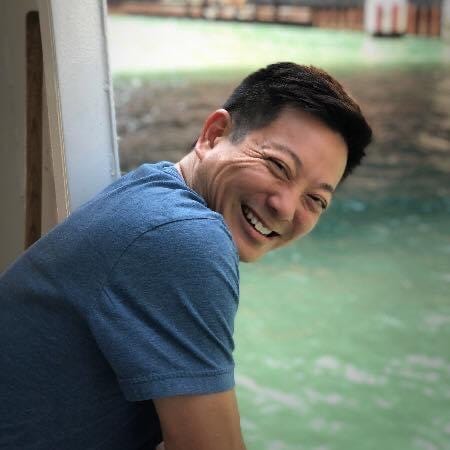
Kaiser Kuo is co-founder and host of the long-running Sinica Podcast, a weekly conversation on current affairs in China.
With the long-anticipated summit between the U.S. and China top of mind for much of the world, I thought we should hear from one of the leading experts on Sino-U.S. relations, Kaiser Kuo, who happens also to be my brother. I had lots of broad topics to cover, and he did not disappoint!

JAY: President Trump is headed to China for a much anticipated summit with President Xi Jinping. After enduring a period that’s seen a global tariff war and a regional U.S. war with Iran, it feels like there is a lot more than usual at stake. What’s your take on those stakes?
KAISER: There is indeed a lot at stake in the meeting, so much so that I don’t believe either side has the appetite for a risky gambit. The two presidents and the nations they lead are in a standoff that I like to describe as Mutually Assured Disruption — alas, not my coinage. Each has its hand on a vital chokepoint in the other’s supply chain: the U.S. still has leverage over inputs for the design and manufacture of high-end semiconductors, as well as some of the chips that power the most advanced AI systems. China, as we all know, controls the overwhelming majority of the refining and processing of rare earth elements, needed for a huge range of American industries — including for advanced weapons.
Both sides want, at a minimum, to buy time to address their respective vulnerabilities. Ever since American restrictions on China’s access to tech started in the first Trump administration, and especially when those restrictions expanded dramatically in the Biden years, China has been going all-out to create a supply chain for leading-edge silicon it controls entirely, free of U.S. intellectual property. While Beijing has made considerable progress, there’s still a sizable gap — especially in the chips needed to train frontier AI models.
Meanwhile, Beijing showed its ability to disrupt the U.S. with its near-monopoly on rare earth refining and processing in response to Washington’s move to massively expand its “Entity List” of sanctioned Chinese companies in late September of last year. That move forced Trump to back down and accept a truce in Busan, Korea: industry panicked and markets tanked as the full extent of the rare earth export controls sank in, and Trump had little choice but to withdraw the expansion of the Entity List. Ever since, the U.S. has been moving more urgently to stand up its own (or allied) rare earths processing capabilities. Most of the experts I’ve heard discussing American progress on rare earths have noted the offtake agreements and price floors that should provide some incentive for firms to get into the rare earths processing business, but still see meaningful levels of production anywhere from two to five years away.
In any case, this is not a stable equilibrium. My sense is that Beijing believes it can meaningfully address its chip-related vulnerabilities before the U.S. can address its rare earth problem, given the Trump administration’s (and America’s) penchant for distraction and its own progress to date on even some notoriously difficult technologies, like extreme ultraviolet (EUV) lithography. But I also think Trump and those around him are confident that the U.S. can close the gap in rare earth mining and processing if it sets its mind to it, in another Operation Warp Speed.
Whatever the case, the real stakes are higher still, and even wildly optimistic hopes for this summit in Beijing don’t foresee a breakthrough in, say, climate cooperation, or pandemic preparedness, or addressing the huge issues around AI governance and safety. The best we can hope for is that Mutually Assured Disruption endures long enough for the baseline temperature to come down, for all the connections of business, education, and for people-to-people exchange that once constituted meaningful ballast in the relationship to be reconstituted.
Meanwhile, the rest of the world, from the E.U. to the U.S.’s beleaguered allies in both Europe and Asia, from Moscow to the Gulf States, and across the so-called Global South, will be watching with bated breath. Few states want to see Great Power rivalry intensify; adjusting to the “rupture” Canadian PM Mark Carney described in Davor, and hedging between the U.S. and China by middle powers is difficult enough as it is. Nor do they want to see the kind of “G2” world that Trump seems to prefer, where the fate of smaller nations is decided by Beijing and Washington. There’s much at stake for everyone.
JAY: I do feel for the ”middle powers” like Canada that are just trying to make it through this era.
Given how badly things are going at home and in his disastrous war of choice, it feels like Trump desperately needs some kind of foreign policy win. Is there anything you sense he is hoping to achieve through this meeting, and what’s the likelihood he actually gets it? We’ve heard very little about what the goal is, and the expectations appear to be set fairly low.
KAISER: Yes, the expectations are low, and not only within the U.S. punditry and its so-called “China-watchers,” but in China as well. It’s possible that Trump plans some kind of upside surprise, but neither of the likely candidates for such a surprise — a breakthrough in Iran or some kind of deal on Taiwan — is likely to be seen domestically as any unequivocal “foreign policy win.”
The Iran War is weighing on both economies, and there’s an opportunity for Beijing to play a bigger role. It’s clearly something the U.S. side wants: Scott Bessent has called on China to “step up,” and President Trump has reportedly raised the issue in preliminary discussions on more than one occasion. As I’ll get into later, there’s a lot of skepticism that Beijing can be persuaded to meaningfully advance the peace process, but I actually think China’s interests will be better served, both in terms of its domestic economy and its international clout, if it does try to play more of a role. It’s hard for me to imagine a better time.
Even if the summit does expedite the opening of Hormuz and a durable peace, I don’t think Trump will be able to spin it as much of a win. All the people who advanced 5D chess arguments about how Iran (and Venezuela) were about China all along will be miffed if Beijing proves instrumental in the peace and Gulf hydrocarbons start heading toward Chinese refineries again. For the rest of us, it will only underscore the pointlessness of the whole endeavor.
There’s been a lot of chatter on both sides of the Pacific over a potential deal involving Taiwan, sometimes involving a “grand bargain,” other times mooting the possibility of the U.S. side changing the language it uses on Taiwan (e.g., from “The U.S. does not support Taiwan independence” to “The U.S. opposes Taiwan independence”). My gut says no, but given Trump’s utter unpredictability, I don’t trust my gut when it comes to the American president. He has clearly cooled on Taiwan: after the failure of the first tranche of the ruling Democratic Progressive Party’s (DPP’s) efforts to bring down even one of the dozens of opposition (Kuomintang) legislators the DPP targeted in a massive recall vote last summer, Trump canceled Taiwanese President Lai Ching-te’s scheduled transit through the U.S., as well as a planned meeting between U.S. and Taiwanese defense officials. He has been openly critical of Taiwan’s trade surplus with the U.S., imposed initial 34% tariffs on the island’s exports to the States (later lowered to 15%), and perhaps most importantly de-prioritized deterring conflict over Taiwan in the National Security Strategy.
It’s possible that the Chinese side will push Taiwan toward the center of the agenda during the presidential meetings. Reports on pre-summit negotiations indicate that Chinese diplomats are still underscoring the centrality of Taiwan. But Xi will likely manage his expectations. Maintaining some bilateral stability will be the priority, and Chinese “America-watchers” understand that pushing too hard on the Taiwan issue will hurt Trump at home and may stoke anti-PRC flames in America just at a time when the polls show they’re beginning to die down. Beijing will count anything that meaningfully extends the ceasefire from Busan as a win.
JAY: Trump is unpredictable, I’ll grant that. Self-interest is pretty much the only thing we can count on him serving.
On the flip side, what does Xi Jinping hope to achieve through direct in-person talks? Is he facing the kinds of domestic or international pressures to show progress, or is this a chance for him to show dominance over the U.S.?
KAISER: I think Xi knows very well what optics play well for his domestic audience, and he will have been briefed that the same playbook — projecting nonchalance, coherence, confidence, reason, and stability — plays equally well to an international audience just for the contrast with Trump if nothing else. The power shift from the last time Trump came, in 2017 on the eve of the first trade war, is not lost on Chinese audiences. They’re all very aware that Beijing’s push to ready itself for an inevitable second trade war has paid off handsomely, and that China alone among major economies stood its ground after Trump’s so-called reciprocal tariffs were announced on April 2, 2025. They’ve watched as China has punched back hard with each new round, and how Trump dined on TACOs each time. “Trump Always Chickens Out” was especially true when it came to China.
In the last few months, since the beginning of the Iran War, China’s confidence has been further inflated, and it’s telling that before I left Beijing on April 21, I heard a lot of concern among my Chinese interlocutors over the potential for overconfidence and even hubris: We shouldn’t count America out, we mustn’t rest on our laurels, we should resist gloating. I personally thought that Beijing’s refusal to confirm that Trump was actually going to travel to China until only four days before his trip seemed rather gratuitous. But I don’t expect any deliberate snubs or provocations. I think Beijing still assesses him to be the same man: a narcissist who is susceptible to flattery and irreducibly transactional.
JAY: Xi has always had Trump’s number when it comes to sizing him up or facing him down. It’s been the same dynamic from the get-go.
The summit was originally scheduled before Trump launched his ill-fated war with Iran. That has scrambled the picture considerably, with questions over whether Iran can and will continue to be able to supply China with the oil it needs, and whether other Asian nations’ economies are vulnerable to supply disruptions of everything from LPG to fertilizer to helium for semiconductor manufacturing. How do you see the chaos and uncertainty of Iran War factoring into the summit?
KAISER: It’s such a pity that the original meeting was rescheduled because of the Iran War. It would have put Trump in Beijing from March 31 to April 2 — and the optics of Trump being in Beijing, leaving the Chinese capital on the one-year anniversary of “Liberation Day,” would have been delicious. A very clever Chinese planner might have arranged for him to sample Peking Duck on that day, and someone might have told him, “Mr. President, this is a Chinese taco.”
JAY: Okay, that’s funny.
KAISER: On the Iran War, it’s really generated two distinct narratives in the U.S., neither of which I think gets it right. The first, which you hear more from people who want to justify not only Iran but potentially Venezuela as well, says this was all ultimately about China. It was about dislodging it somehow from Latin America, in the case of Venezuela, and from the Middle East, in the case of Iran. The argument leans heavily on China’s dependence on imported oil, which makes superficial sense: Just in the case of Iran, roughly 45% of China’s imported oil was transiting the Strait of Hormuz before the war.
The second narrative says, no, China has actually come out ahead because of the Iran War. China sells more photovoltaic solar panels and more electric vehicles, as countries try to limit their exposure to oil and gas price shocks. China sits on enormous strategic petroleum reserves. China watches the United States burn through very expensive stockpiles of interceptor missiles. And China watches the so-called Pivot to Asia — which three successive presidencies have insisted was really, actually, seriously happening this time — get frustrated yet again. Meanwhile, it’s cleaning up diplomatically as the U.S. alienates its allies and China wins plaudits across the developing world.
What’s clear to me is that China would much rather none of this had happened at all. It’s not happy about burning through its petroleum reserve, or about gas that was $5 a gallon in Beijing when I was last there in late April, or shortages of the helium that’s needed for its all-important semiconductor industry. This is an important part of why, especially given China’s economic difficulties, I’m inclined to think Beijing will be open to leveraging its relationship with Tehran to speed along an end to the conflict.
JAY: We can all only hope that’s true. Whatever it takes to end this madness.
Looking back over the past year, whenever the U.S. attacks another country without international go-ahead, there’s inevitably a discussion of whether this gives China permission to attack Taiwan. Is that framing misguided? Should we be worried that China will leverage the current situation to make a move against the island?
KAISER: Yes, this was true with Russia and Ukraine in 2022: it’s not just the U.S. But China’s calculation on when or if it makes an aggressive move against Taiwan has very little to do with “permission,” or a perceived loss of American moral standing. Whether Xi Jinping is able at a given moment to point toward Washington and decry its hypocrisy for its naked transgressions of international law will not tip the balance one way or another. This framing focuses on a minor factor in China’s calculus. Compared, say, to the depletion in interceptors (and the low stocks of artillery and missiles because of American commitments to Ukraine), it hardly rates.
But even then, it’s highly unlikely we’ll see China make a move on Taiwan in the coming several years. Xi Jinping has absolutely gutted the PLA’s top brass, removing nearly all the other members of the Central Military Commission on corruption charges. This doesn’t strike me as something one does if one plans on undertaking the single diciest and central mission that the Chinese armed forces have been preparing for for many years. And this may strike many of your readers as counterintuitive, but I actually think that the fact that Xi Jinping has amassed as much power as he has during the 13 years of his rule serves not as a goad to military adventurism but actually as a curb on it. Yes, he does think about his legacy — but he knows that if he continues to build China into a wealthy, powerful, confident, technologically advanced nation without any major disruptions, that legacy is secure. He has no legitimacy deficit to address as far as Chinese nationalists are concerned. His reputation won’t suffer because he failed in his term in office to take Taiwan. But if, on the other hand, he gambles on Taiwan — risking intervention by the U.S., Japan, and Australia; a global depression once the world’s source of advanced semiconductors is under assault; and pariah status at least in the West — he bets it all, and for what? Even a bloody nose could prove politically fatal. The Russia example in Ukraine is anything but encouraging.
JAY: I feel better already! But I agree, Xi is shrewd and in no hurry, and Taiwan is far more valuable as a point of leverage than a point of conflict.
In past summits, the question of China’s human rights record has come up. Is that off the table this time, given the U.S.’s own horrifying record lately? Does the Chinese government have a freer hand to crack down as a result?
KAISER: It’s not like there was a time over the last 50-odd years where China felt constrained in its actions because it viewed the American record on human rights as spotless. Beijing has always had something it can point to, whether we believe those counterclaims to be valid criticisms or merely bad faith whataboutism. I’m sure that the Chinese side — spokespeople, the state media, pundits, perhaps Xi himself — has been primed with talking points should Trump or one of his entourage raise human rights issues. Knowing as they surely do that in light of Iran and especially Gaza, Trump will not likely win over international opinion (especially in the Global South) should he bring up human rights, Beijing might just be smart enough not to clap back and to leave the opprobrium to the global audience that will be watching, rapt.
And no, this doesn’t give the Chinese government a freer hand to crack down. As with Taiwan, I think this framing is more about American comfort levels with hypocrisy than about actual Chinese calculus.
JAY: Given inflation pressures in America, the existing tariffs only make things pricier, especially given how much comes from China to U.S. markets. Meanwhile, American farmers are eager to rebuild their lost markets in agricultural products. Is there any hope for a breakthrough on trade? What might that look like?
KAISER: I don’t hold out much hope that tariffs will be negotiated downward. China can live with current tariff levels. Exports to the U.S. dropped dramatically in 2025 after the April “Liberation Day” announcements, but China enjoyed a record trade surplus of $1.2 trillion for the year, and exports have grown way above expectations in the first months of 2026. Much of China’s exports were redirected toward developing nations, but also to Europe, where trade issues are nearing a breaking point. If you’re the Trump administration, that’s good news: You can continue to browbeat and insult your European allies, and they can’t all go running to China.
But I do expect that there will be some low-hanging fruit with big numbers attached: soybeans, as we saw in the Phase 1 trade deal in 2018 and again in Trump’s meeting with Xi in Busan last year, are likely to figure into this. China pledged to buy 25 million metric tons of soybeans annually for the next several years, and this figure might rise.
My most optimistic hope still within the realm of reason would be for a major investment agreement, similar in some ways to the $550 billion investment pledge that Trump wrested out of Tokyo. To be meaningful, it would probably need to be 11 digits — in the hundreds of billions of dollars — and would likely center on battery production in the U.S., with agreements on local hire numbers, commitments for union jobs, and of course technology transfer agreements. I don’t think this is likely, and I’m not holding my breath, but I expect something along these lines is coming down the pipe, if not in this meeting then perhaps in the year-end meeting in Washington that they now have planned.
JAY: Aside from areas of competition and tension, what are the areas of real cooperation that the two countries could work on?
KAISER: I have a long list of areas for real cooperation, many of them urgent, but almost none of them feasible under this administration. Almost anything environmental is a non-starter for the president who pulled out twice from the Paris Climate Agreement. Cooperation on pandemic prevention is, tragically, another non-starter. We seem to have learned all the wrong lessons from COVID: legally banning, rather than strengthening, collaboration between U.S. and Chinese researchers; pulling out of the WHO; defunding NIH and other centers of scientific research.
Though I’m not some kind of AI doomer, I’m far from cavalier about the risks, and given that the U.S. and China are the two countries in the world far, far ahead of the rest in their capabilities in AI (and in all the technologies of the Fourth Industrial Revolution), a U.S.-China agreement on AI governance would have practically global impact. This, too, is likely to be frustrated by the fact that so many of the tech bros who have Trump’s ear regard the main goal of “AI governance” to be simply preventing China from catching up in the “AI race.”
And then there’s the nuclear arms race, now gaining speed. Trump fancied himself at one point an expert on nuclear arms reduction, and given the expansion and modernization of both the U.S. and Chinese nuclear arsenals now underway, I’d love to see the U.S. president rediscover and exercise that particular competency.
JAY: China is seen as a chief competitor of the U.S. In what areas is China truly pulling ahead of us, and where should we work to catch up?
KAISER: China is ahead in advanced robotics including humanoid robotics, in electric vehicles and batteries, in new battery chemistries, in ultrahigh voltage (UHV) electrical transmission, in manufacture of solar panels, in wind turbines including offshore wind, in high-speed railroad (with 50,000 km of high-speed rail line operating in China today), in 5G communications infrastructure, in shipbuilding, in consumer drones, and in the low-altitude economy (e.g., delivery drones and the eVTOL “flying taxi” solutions). China is also pulling ahead in nuclear power, with new safe nuclear power technologies like thorium or molten salt reactors and pebble-bed reactors.
JAY: So now I think we’re toast.
KAISER: You’ll notice how many of these are related to the energy grid and to renewables. Many people are already talking about China’s emergence as an “electrostate,” and the case can certainly be made: with its robust grid and continent-scale UHV transmission, its fast deployment of renewable energy, and its generally high capacity in electrical generation, China is in an enviable position and won’t face the same bottleneck the U.S. already faces in providing sufficient, affordable power for the datacenters that both countries are building out at scale.
China’s advantage is not in technology innovation itself, as most Americans understand it: It’s in its ability to diffuse technology and push for its adoption in enterprise, and of course in the sheer scale of its manufacturing, as well as its control of supply chains, and its ability to drive down costs through scale. We’re starting to come around to the idea that certain forms of industrial policy, deliberate vertical integration (as China has done by basically linking EVs to batteries and robotics) can really amplify these strengths. We tend in America to fetishize that ex nihilo, 0-to-1 innovation rather than the 1 to 100 scaling. That’s something we should really try to learn from China.
JAY: Sounds like we have a lot we could learn. Thanks for coming by to chat! I always learn a lot in our discussions. And folks, if you want to keep up to date on all things China, you can subscribe to Kaiser’s Sinica Podcast at the link in the blurb below.
Kaiser Kuo is the co-founder and host of the Sinica Podcast, the leading English-language current affairs show on China, and contributes to the World Economic Forum and to numerous publications. He has lived in China for over 20 years, and recently moved back to Beijing after 10 years in Chapel Hill, North Carolina. He is the guitarist of the band Chunqiu (Spring & Autumn).
| ||||||||||
| ||||||||||

| |||||
| |||||
The Status Kuo provides accessible political and legal analysis with a dose of humor. In crazy times, a little clarity goes a long way! Subscribe to receive my email in your inbox. All paid support is voluntary but deeply appreciated |


