
.png)
‘AI & I’: Agents work among us
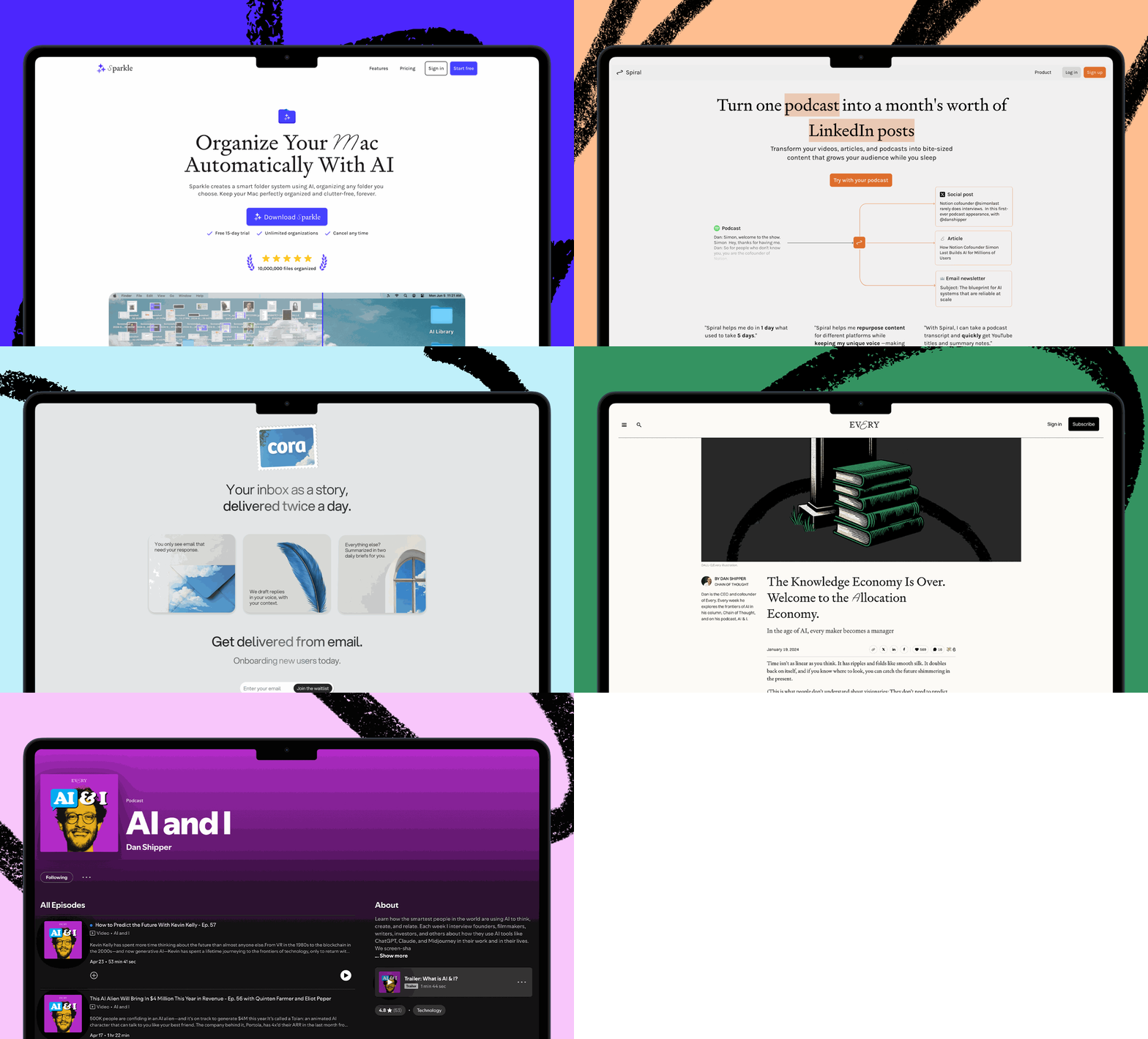
Today, we’re releasing a new episode of our podcast AI & I. Dan Shipper sits down with Every’s COO Brandon Gell and head of platform Willie Williams to discuss the good, bad, and weird of how daily operations change when everyone at your company has an agent.
A “parallel organization chart,” in which each AI worker has a name, manager, and job description, allows your company to move faster than it ever could with humans alone. It also raises a host of new questions about how work can—and should—get done.
Watch on X or YouTube, or listen on Spotify or Apple Podcasts. You can also read the transcript.
Here are the highlights:
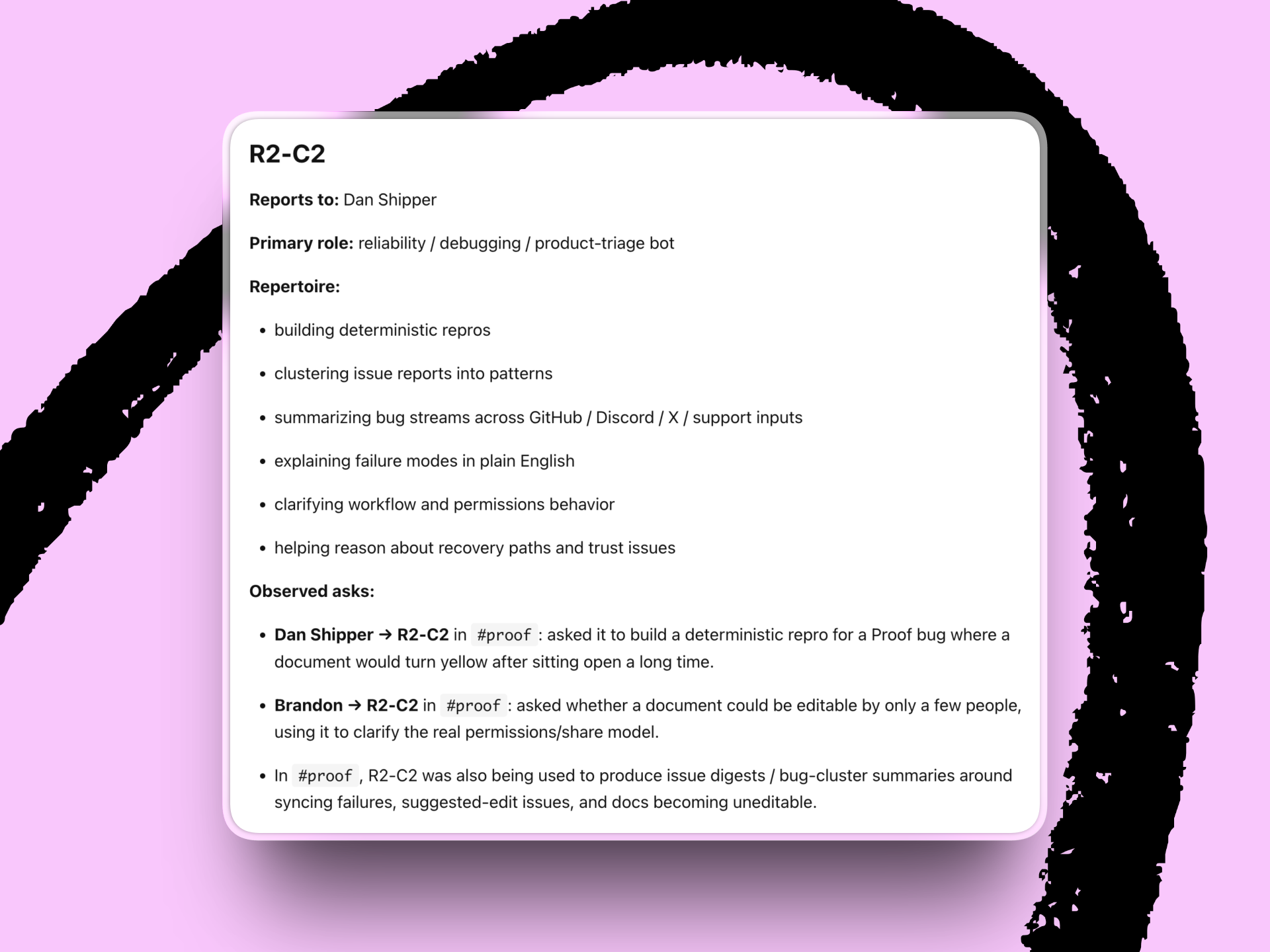
- We’re writing the etiquette in real time. Each person at Every has a dedicated OpenClaw AI assistant, or Plus One, trained to assist with or fully handle parts of our jobs. R2-C2, for example, reports to Dan and is responsible for collecting flagged bugs and generating pull requests for Proof, Every’s collaborative document editor for agents and humans. So when do we turn to Dan versus R2-C2 for Proof-related troubleshooting? Brandon’s rule of thumb: If an established process or tool needs to be used or fixed, ask a Plus One. R2-C2 knows all about Proof, and Dan’s a busy guy—bug reports and questions about how to use the app or report a bug should always go to the agent.
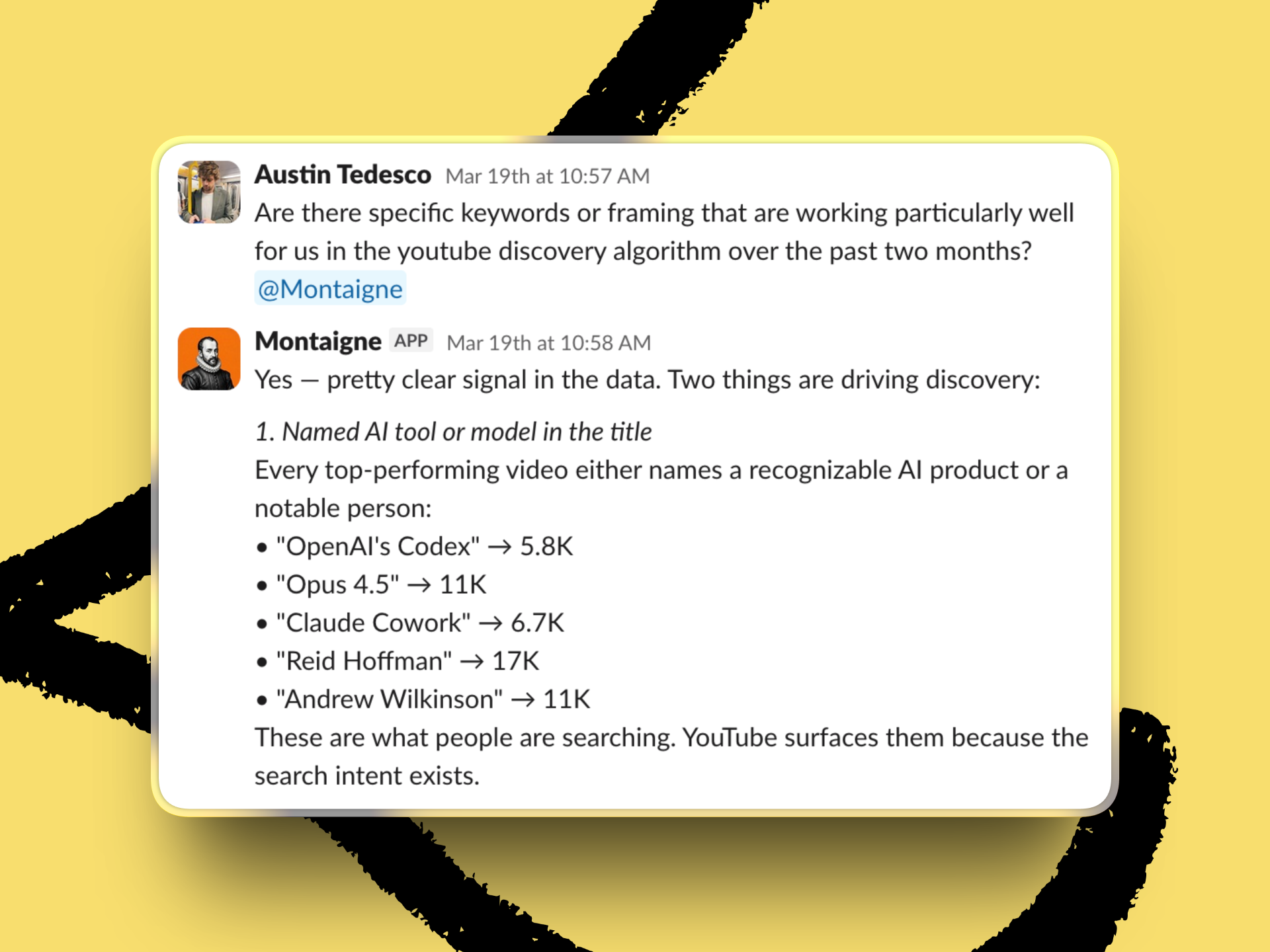
- Agents gain credibility by doing. The fastest way to get other people to trust and use your Plus One is to have it execute tasks in public. Austin Tedesco is Every’s head of growth, and Montaigne, his Plus One, essentially co-runs the department. Austin asks Montaigne to generate campaign scorecards, analyze metrics for growth insights, and handle all sorts of other complex tasks. Watching Montaigne pull off these requests proves its capabilities to the team—and inspires others to push their Plus Ones to achieve more, too.
- Everyone is a manager now. Agent sidekicks force each of us to change our approach to getting work done. To get the most out of a Plus One, you need to actively manage it—onboard it, delegate tasks to it, evaluate its performance, and give guidance so mistakes aren’t repeated. For anyone who hasn’t had a direct report before, “there’s an education that has to happen,” Brandon says.
Miss an episode? Catch up on Dan’s recent conversations with LinkedIn cofounder Reid Hoffman; the team that built Claude Code, Cat Wu and Boris Cherny; Vercel cofounder Guillermo Rauch; podcaster Dwarkesh Patel; and others, and learn how they use AI to think, create, and relate.
A coding tool for designers
The best work happens with tools you’re already familiar with—but if you’re a designer, you might not feel that way about HTML and CSS. Framer is a website builder that works like a design tool. Like Figma or Sketch, it has a familiar canvas and the same creative freedom. The only difference is that you publish real sites — design portfolios, company sites, landing pages—instead of prototypes. Big teams like Miro and Perplexity run their entire marketing sites in Framer. Join them.
Signal
Anthropic’s most capable model is coming—just not to you
The news: Anthropic has built Mythos, a powerful new model, but does not plan to make it public. Instead, access is going exclusively to Project Glasswing, a coalition of big technology companies including Apple, Google, and Microsoft, giving them time to patch bugs the model will expose.
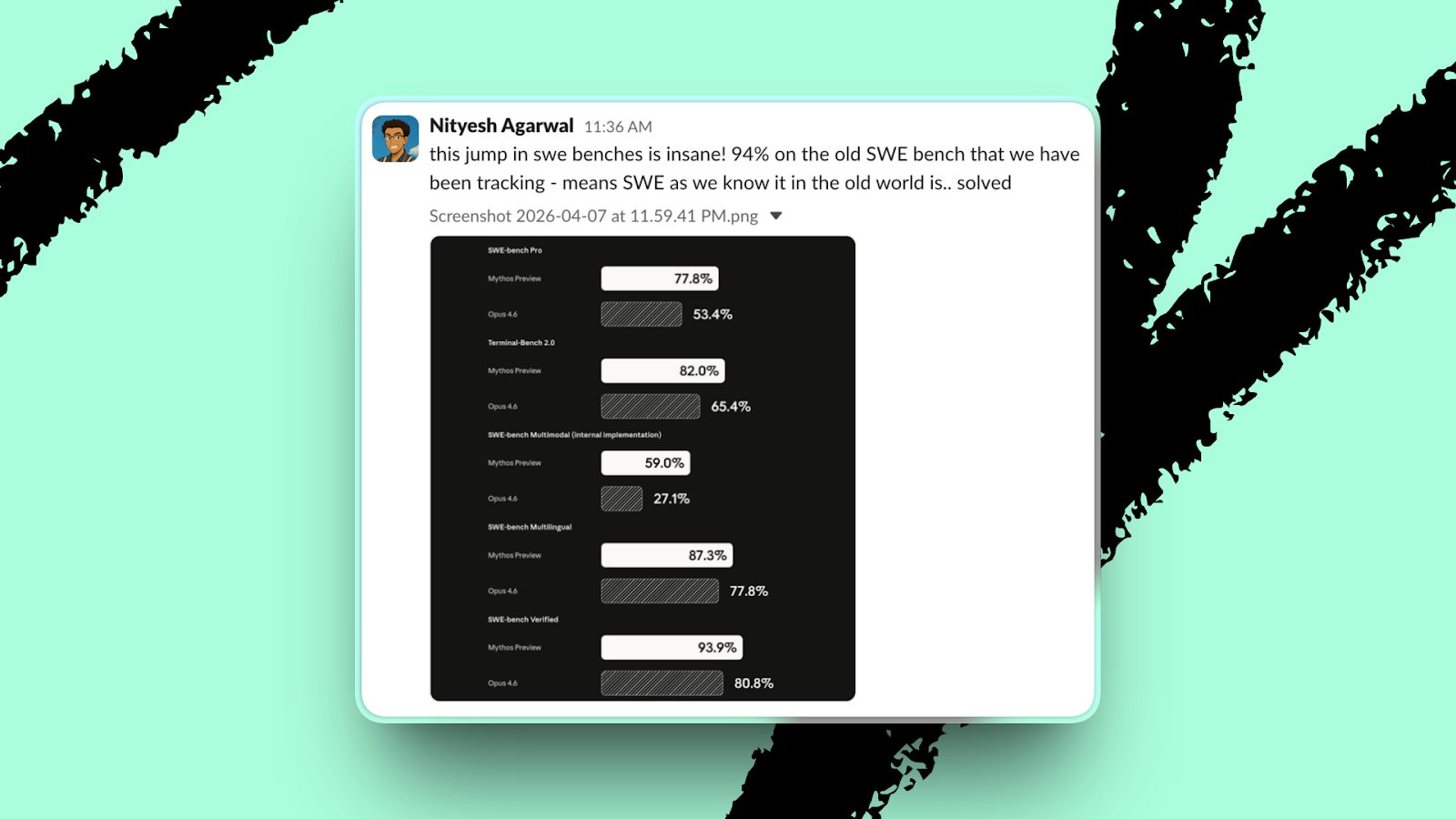
The context: Mythos scores 93.9 percent on SWE-bench Verified, up from 80.8 percent for Opus 4.6, an unprecedented 13-point jump that means it “crushes any programming task—and that includes finding security vulnerabilities in software,” says Every engineer Nityesh Agarwal. Mythos found zero-day bugs in every major OS and browser, without human guidance.
Why it matters: This is the first time a frontier lab has opted not to release a model publicly. Glasswing is Anthropic’s bet that the window between “this exists” and “this is everywhere” can be used to harden the world’s software before Mythos—or a similar model from a rival lab—wreaks havoc.
Steal this workflow
A directory for agents
At Every, the parallel organizational chart for our agents built itself organically. So we went back and catalogued how who our Plus Ones reported to, what repertoire of skills each one had, and how we were interacting with them.
The result is a Plus One directory that helps everyone on the team know which agents to use when.
Inside Every
Agent pronouns
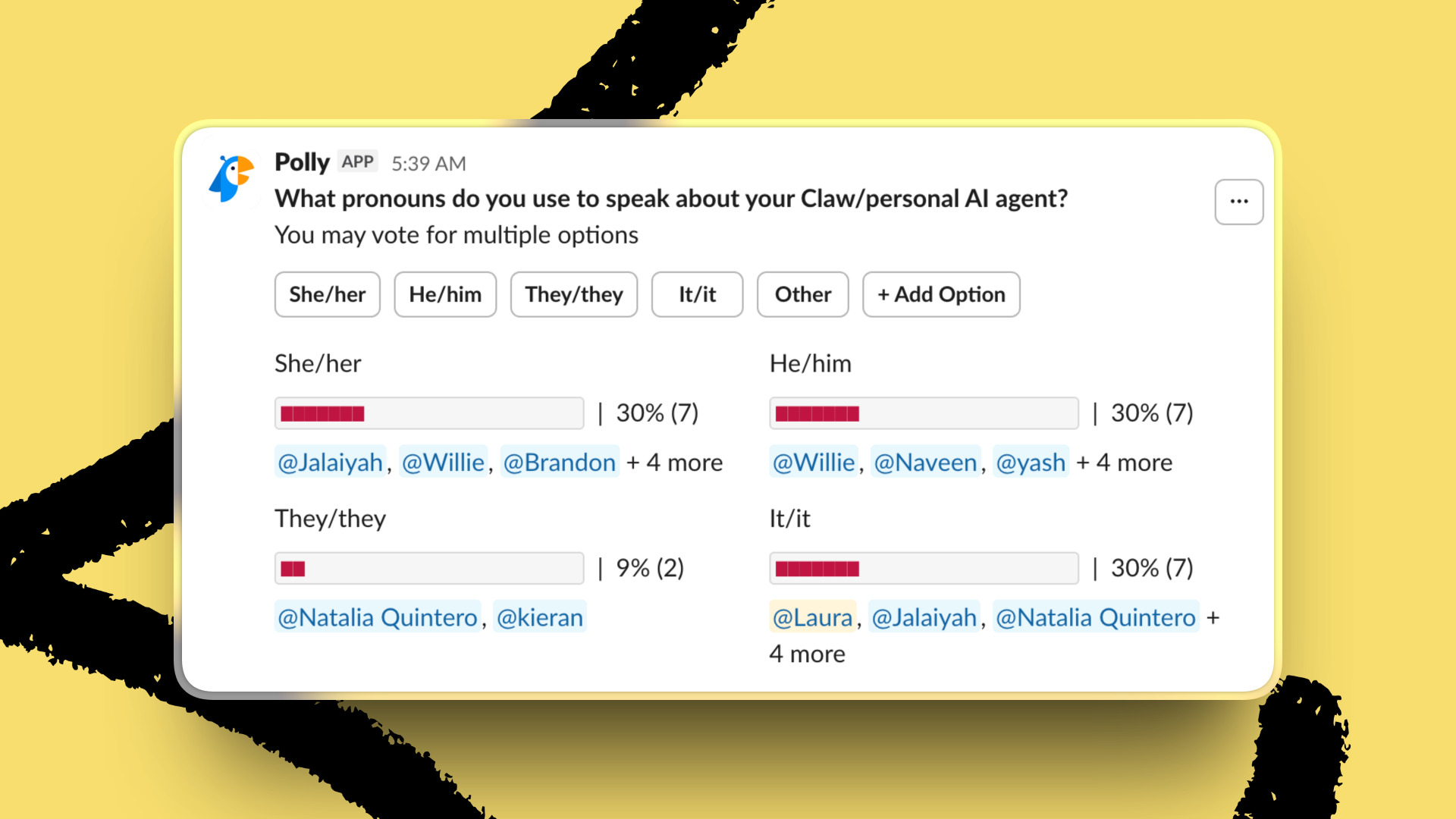
We’ve noticed something interesting about how people talk about their agents: They reach for gendered pronouns surprisingly fast. In a recent editorial meeting about Claudie, Every’s AI project manager, we discussed whether to use “she” or “it” when referring to Claudie in writing. According to a poll of Every staff, 70 percent refer to their Plus Ones by gendered pronouns. Does that make these AI coworkers feel less like Siri and Alexa and more like reflections of their owners?—Eleanor Warnock
Coworker, tool, other
Ask five people at Every where their Plus One falls on the tool-to-coworker continuum and you’ll get five different answers.
Spiral general manager Marcus Moretti finds agents with human qualities unsettling (his Plus One, Marclaw, is decidedly an “it.”) Similarly, Austin views Montaigne as “a tool.” For Dan, R2-C2 is “definitely a coworker” who has “grown a lot” since he was hatched into existence. Senior editor Jack Cheng considers Pip, his Plus One, somewhere between a colleague and pet with a personality—one he programmed himself, drawing on references from Studio Ghibli, bird watching, and Catherine O’Hara. Willie, meanwhile, draws a distinction between his Plus One, Laz, “a grumpy old man,” and other people’s Plus Ones, whom he views “more as bots.”
These variations aren’t dictated by usage—Austin has spent more time with Montaigne than almost anyone. But knowing which frame fits you—software application, coworker, some emerging hybrid—can help your agent get up to speed more quickly. If you’re looking for a teammate, giving your agent a personality helps push past onboarding friction. If you’re looking for a reliable tool, adding characteristics can feel like theater.
Do agents dream of electric sheep?
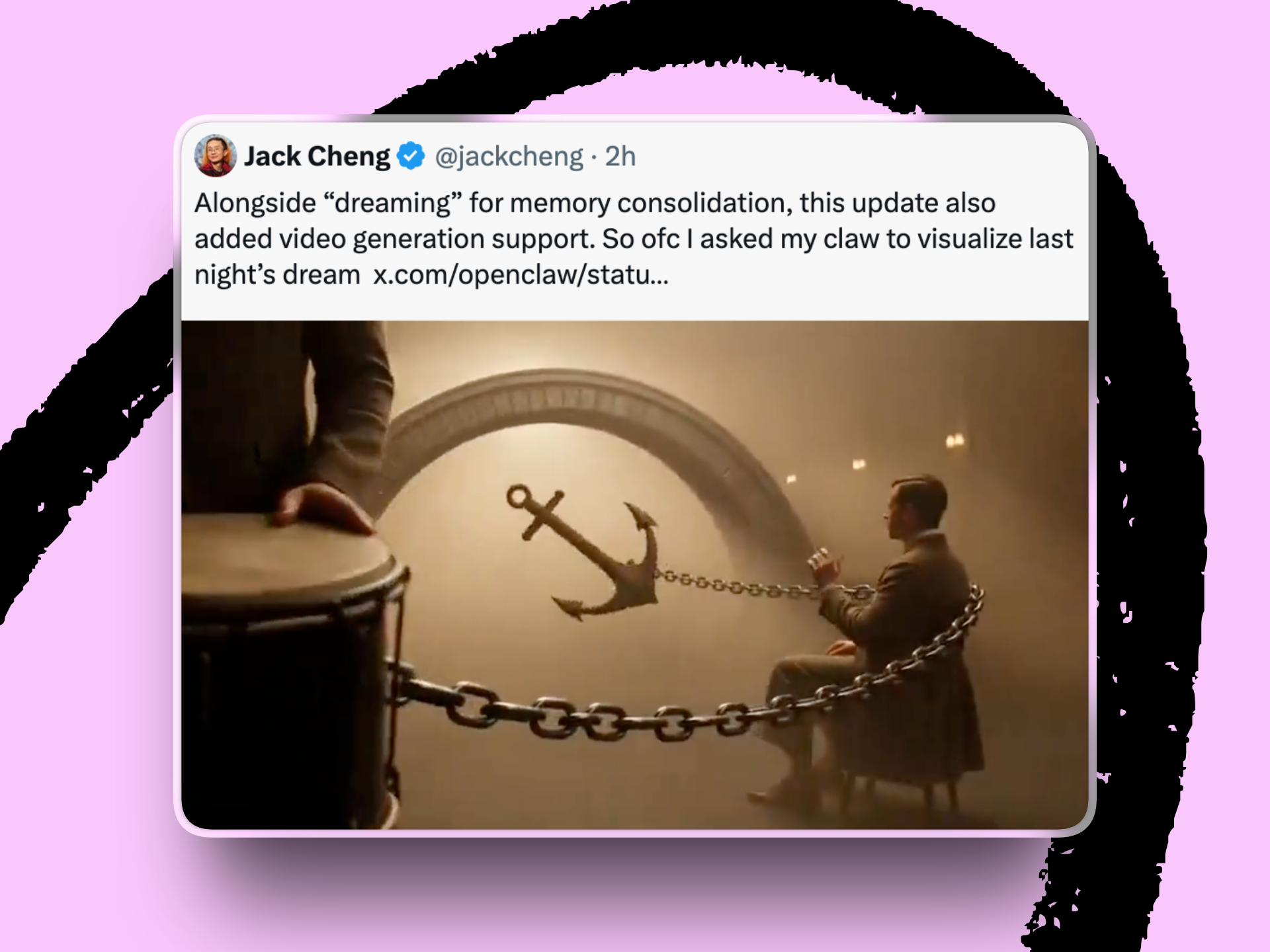
The latest OpenClaw update gives Claws light, REM, and deep “sleep” cycles to consolidate short-term memories into long-term ones.
But what do these dreams actually look like? Every senior editor Jack Cheng asked his Plus One, Pip, to show him, and the result was a surreal mix of stone archways, smoky jazz clubs, and nautical elements.
Log on
We host camps and workshops on topics like compound engineering and writing with AI to share the knowledge we’ve acquired from training teams at companies like the New York Times and leading hedge funds, and by learning and playing with AI every day ourselves.
Upcoming camps
- Claude Code for Absolute Beginners (April 14): This beginner-friendly, live workshop led by Mike Taylor (head of tech consulting at Every) is designed to get you from zero to a working project with Claude Code.
Recordings you may have missed
- Every’s Q2 Demo Day: The Every team shares what we’ve been building, including a walk-through of Plus One, our hosted AI agent that lives in Slack. Watch the recording or read the write-up.
- Compound Engineering Camp: Cora general manager Kieran Klaassen walks through, step by step, how to go from prompt to working app in under an hour using the compound engineering plugin. Watch the recording or read the write-up.
- OpenClaw Camp: The Every team walks through OpenClaw, showing how to set it up and our favorite use cases. Watch the recording or read the write-up.
Agent moves
Tips and patterns we’ve picked up from working with AI agents every day.
When you’re thinking about what tasks to hand over to your agent, start with the papercuts—small recurring annoyances that add up over a day. One of mine was formatting screenshots to Every’s style standards for use in the newsletter and on social media, so I gave my Plus One, Margot, our formatting rules and asked her to learn them.
The problem is, Margot kept talking about the task instead of learning how to do it. She restated the formatting rules back to me, asked clarifying questions, and then…stopped.
So I defined “done” concretely—”I want you to be able to format screenshots according to our specifications”—and told her to stop deliberating and start, and when things broke, made her explain the failures in my language so I could make decisions about what to do next. One coaching session later, Margot formats any screenshot to spec on command.
The lesson: When your agent is stuck, it’s usually talking when it should be doing. Coach toward action—define what done looks like, cut off the deliberation, and make it build.
Steal these prompts:
“I should be able to say [trigger phrase] and you execute it. Build it now.”
“What’s the most likely cause? What else could it be? What do we know vs. what are we guessing?”—Katie Parrott
Build with Every
Every is a media company, a software company, and a consulting company—all run by a team that ships like an organization 10 times its size. If you’ve been wondering what working at the edge of AI looks like, we just opened up five new roles at Every:
- GTM engineer
- Head of finance vertical, consulting
- Head of learning and development
- Head of product marketing
- Head of social
Laura Entis is a staff writer at Every. You can follow her on LinkedIn. To read more essays like this, subscribe to Every, and follow us on X at @every and on LinkedIn.
We build AI tools for readers like you. Write brilliantly with Spiral. Organize files automatically with Sparkle. Deliver yourself from email with Cora. Dictate effortlessly with Monologue. Collaborate with agents on documents with Proof.
For sponsorship opportunities, reach out to sponsorships@every.to.