


TL;DR: Today, we’re releasing a new episode of our podcast AI & I, where Dan Shipper sits down with Andrew Wilkinson, the cofounder of Tiny, a holding company that buys profitable businesses and focuses on holding them for the long term. Watch on X or YouTube, or listen on Spotify or Apple Podcasts.
Plus: We’re hosting an all-day livestream tomorrow with the best vibe coders in the world, showcasing what’s now possible that wasn’t two months ago. Join us on X. On Friday, we’re hosting a free camp for paid subscribers about how agent-native architecture works and how to use it effectively.
Entrepreneur Andrew Wilkinson used to sleep nine hours a night. Now he wakes up at 4 a.m. and goes straight to work—because he can’t wait to keep building with Anthropic’s latest model, Opus 4.5.
Two years ago, Wilkinson was obsessed with vibe coding on AI software development platform Replit. It was thrilling to describe something in plain English and watch an app appear, less thrilling when the apps were always broken in some way, often full of maddening bugs. So he set his app creation ambitions aside until technology caught up with them.
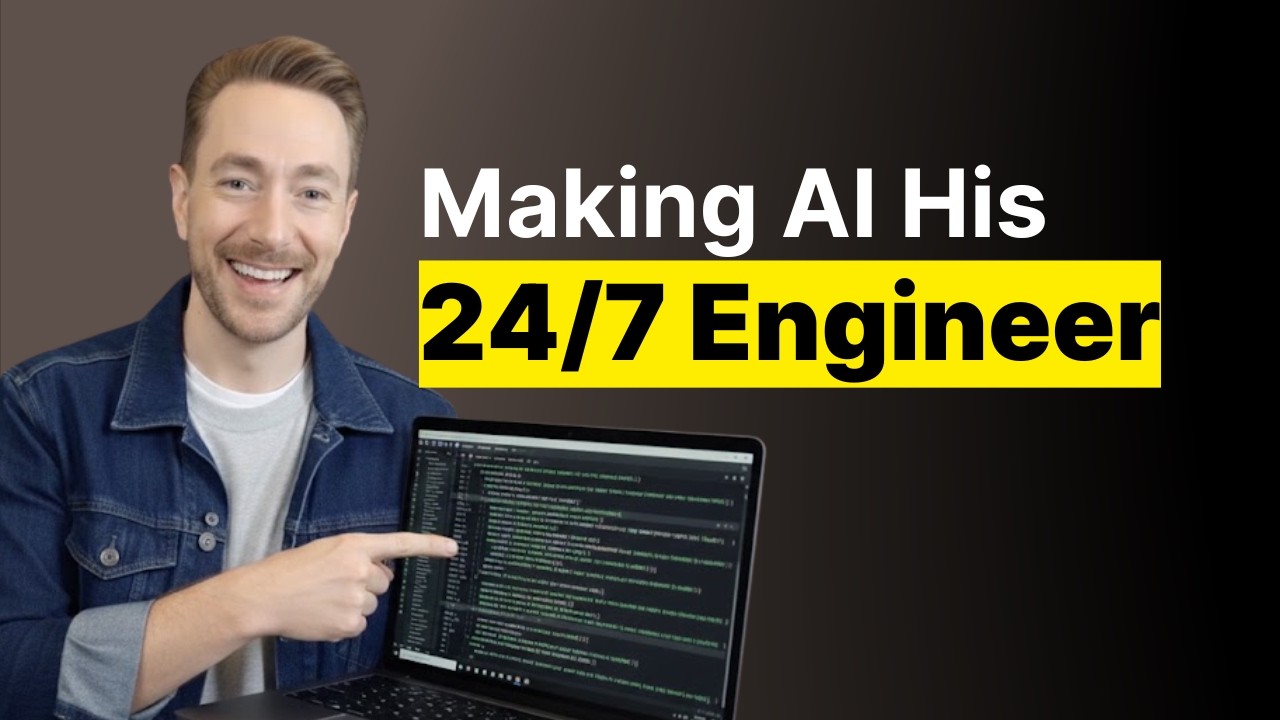
Then, a few weeks ago, he started playing with Claude Code and Opus 4.5. It felt, he says, like having a “$100,000-a-month payroll of engineers” working for him around the clock.
Wilkinson is the cofounder of Tiny, a company that buys profitable businesses and holds them for the long term. The Tiny portfolio includes the AeroPress coffee maker and Dribbble, a platform where designers can share their work and find jobs. Dan Shipper had him on AI & I to talk about the automations Wilkinson has built for his work and personal life, including an AI relationship counselor, a custom email client, and a system that texts him outfit recommendations each morning. Wilkinson revealed how all of this individual exploration has changed the way he thinks about buying software companies at Tiny.
Here is a link to the episode transcript.
You can check out their full conversation:

Here are some of the themes they touch on:
How Wilkinson uses AI in his work and personal life
Wilkinson has wired AI into nearly every corner of his day. Here’s what that looks like:
An AI that knows your relationship inside out—and predicts your fights
After talking with his girlfriend about how nice it would be to have a GPT trained on their relationship, Wilkinson used Claude Code to build Deep Personality, a web app that functions as an AI relationship counselor and personality analyzer.
He started by asking AI what a therapist would want to know to get a complete picture of a couple. The response was a list of roughly 20 clinically validated tests and personality inventories—the kind typically gated by paywalls, and sometimes only known to therapists. He then used Claude Code to build a simple interface that consolidates all these tests into a 40-minute multiple-choice assessment. Claude even wrote the website copy—which impressed Dan, no small feat—after Wilkinson referenced 37signals cofounder Jason Fried and Made to Stick, a book premised on the idea that you have just one shot to capture someone’s attention, in his prompt. The whole site, he estimates, took about two hours to build.
After an individual completes the assessment, Deep Personality delivers a 45-page analysis that covers personality traits (including nuances like attachment style), relationship dynamics, ideal jobs, and personal challenges. It also generates custom prompts users can feed into ChatGPT or Claude to create a personalized virtual therapist, plus “cards” summarizing how to best work with them, useful to share with a partner, your boss, or colleagues.
When both partners complete the assessment, the app can analyze them together, generating a “relationship blueprint” that maps compatibility and predicted conflicts. “We were reading it out together and just laughing our heads off,” Wilkinson says, “because it was all the things we fight about perfectly laid out.” He’s since used it during actual disagreements to surface the deeper emotional triggers beneath surface-level arguments, helping build empathy by articulating what’s really at stake for each person.
Build a custom email client with Claude Code
Wilkinson receives 200 to 300 emails a day. Managing his inbox used to require one full-time assistant, sometimes two, plus hours of his own time. He likens the experience to the classic scene from the sitcom I Love Lucy, where the protagonist, Lucy, scrambles to keep up with the flow of chocolates on a conveyor belt in a factory. In other words, Wilkinson felt overwhelmed, like he was always playing catch-up.
He’d already built an automation using Lindy, a platform for creating AI agents, that helped: Every incoming email gets processed based on its content—sales and marketing messages get archived automatically, and relevant emails get forwarded to the right person on his team. That alone cut his email load by about 50 percent. The system also generated choose-your-own-adventure responses: If someone emailed asking to meet, the agent would summarize who they were and what they wanted, then give Wilkinson options to pick from. After he picked one, the agent would send out a friendly, fully-written response on his behalf.
But edge cases kept tripping him up. He wanted more intricate control, like the ability to tweak drafts, and handle more complex emails himself. Finally, he turned to Claude Code: “I just said, ‘Here’s my Gmail credentials, I want you to build an email triager, here’s how I want it to work.’”
What came back was a simple, web-based email client. It surfaces emails that require a response, ranks them by priority and sender, and offers two modes: multiple choice for quick replies, or an interface for complex emails that asks Wilkinson a series of questions before drafting a response. Within a week, he was using it daily. “Anyone who’s technical knows how astounding that is,” he says, “and how frustrating it is to build an email client. It blows my freaking mind.”
The same automation handles a different kind of inbox overwhelm: school emails. Any parent knows the deluge of field trips, permission slips, special lunch days, and early dismissals that inundate their inboxes. Wilkinson’s system ingests all of it and texts him what he actually needs to know: “Heads up, Peter needs a packed lunch tomorrow,” along with, say, a link to sign the field trip form. Relevant dates also get added to his parenting calendar automatically.
An AI that watches your back in meetings
Wilkinson has also built himself something like an AI referee for the complicated human dynamics at play at work. It’s a custom Lindy agent that records his meetings and produces notes, but the feature he cares about most is a kind of psychological pattern detection.
After each meeting, his agent analyzes the transcript and texts him if it finds any red flags in the interaction. For example, he recently had a tense call with a contractor who’d missed a deadline. Wilkinson held him accountable, calmly, but the contractor flipped the script—accusing him of being rude, which made him feel like the problem. Wilkinson left the call doubting himself. A moment later, his phone buzzed: The agent had detected the contractor using manipulative tactics like gaslighting.
When Dan pushes him on AI’s tendency to agree with whatever you signal in your prompt, Wilkinson says the key is being careful not to inject your opinion into the prompt and defining a high bar for the AI ahead of time. The threshold for Wilkinson’s agent is: “You have to analyze every single word in this thing, and you only flag it if it reaches a critical point.” Wilkinson compares the practice to reading body language—useful data, but only in context, and never the whole picture. “I probably wouldn’t make a hire or fire decision entirely on that,” he says, “but it will often confirm a feeling.”
Your personal stylist is a prompt away
Like a lot of guys, Wilkinson says, he wanted to dress well but didn’t understand color theory or what looked good on him. His solution was to build an AI version of the computer used by the protagonist in the 1995 movie Clueless that automatically matches her outfits.
Every morning at 7 a.m., his automation checks the weather in Victoria, British Columbia, where he lives, and pulls from a Google Sheet called “Andrew’s Wardrobe”—a spreadsheet he created by photographing all his clothes and having Claude convert it into a CSV. The system generates four outfit recommendations, renders them using Google DeepMind’s image generator Nano Banana, and texts him the results via communications tool Twilio. It tells him what to wear, right down to which watch he should accessorize with. He’s also built a custom GPT he can query on the fly—snap a photo of some jeans and ask what goes with them, or get advice like “French tuck that shirt.”
Why you need to find a moat that isn’t code
As much as Wilkinson loves building with AI, it’s changed how he thinks about buying businesses, and Tiny has slowed the pace of its acquisitions
His analogy: Imagine someone invents a machine that makes incredible pizza, and anyone can buy it, which means that anyone can make great pizza. Consumers benefit from better, cheaper pizza everywhere, but business owners will get squeezed as their margins collapse. They have no way to compete when everyone can make the same quality. According to him, this dynamic is currently playing out in software. The old moat in software was that programming was hard to learn, slow to master, and expensive to hire for. Now that AI has made it easy for non-coders to build, your moat has to come from somewhere else, like brand, distribution, or hardware. Otherwise, you’re selling pizza in a town where everyone has that magical machine—not a recipe for long-term success.
What do you use AI for? Have you found any interesting or surprising use cases? We want to hear from you—and we might even interview you.
Timestamps
- Introduction: 00:01:07
- Why Opus 4.5 feels like the iPhone moment for vibe coding: 00:02:48
- Why designers have a unique advantage with AI: 00:08:31
- How Andrew built a custom email client with Claude Code: 00:14:10
- An AI trained on your relationship that predicts your fights: 00:18:13
- Using AI meeting notes to make your life better: 00:30:40
- Don’t inject your opinion into prompts: 00:35:11
- Andrew’s Claude Code tips and workflows: 00:40:21
- Your personal stylist is a prompt away: 00:47:59
- How AI is changing the way Andrew invests in software: 00:53:17
You can check out the episode on X, Spotify, Apple Podcasts, or YouTube. Links are below:
- Watch on X
- Watch on YouTube
- Listen on Spotify (make sure to follow to help us rank!)
- Listen on Apple Podcasts
Miss an episode? Catch up on Dan’s recent conversations with founding executive editor of Wired Kevin Kelly, star podcaster Dwarkesh Patel, LinkedIn cofounder Reid Hoffman, ChatPRD founder Claire Vo, economist Tyler Cowen, writer and entrepreneur David Perell, founder and newsletter operator Ben Tossell, and others, and learn how they use AI to think, create, and relate.
If you’re enjoying the podcast, here are a few things I recommend:
- Subscribe to Every
- Follow Dan on X
- Subscribe to Every’s YouTube channel
Rhea Purohit is a contributing writer for Every focused on research-driven storytelling in tech. You can follow her on X at @RheaPurohit1 and on LinkedIn, and Every on X at @every and on LinkedIn.
We build AI tools for readers like you. Write brilliantly with Spiral. Organize files automatically with Sparkle. Deliver yourself from email with Cora. Dictate effortlessly with Monologue.
We also do AI training, adoption, and innovation for companies. Work with us to bring AI into your organization.
Get paid for sharing Every with your friends. Join our referral program.
For sponsorship opportunities, reach out to sponsorships@every.to.
Help us scale the only subscription you need to stay at the edge of AI. Explore open roles at Every.