

Was this newsletter forwarded to you? Sign up to get it in your inbox.
Software used to be built by armies of engineers. Now, with AI, Every runs all five of its products with single-person engineering teams.
When I started building Cora, our AI email assistant, from scratch, I wanted to see how much I could enable myself with AI. I knew it was possible for one person to ship like five. All I had to do was build the right systems and the right productivity hacks.
This evolved into a systematic approach to AI-assisted development that I call compound engineering. It now has 7,000 stars on GitHub, which confirms my belief that this will become the default for how software gets built.
The philosophy
The core philosophy of compound engineering is that each unit of engineering work should make subsequent units easier—not harder.
Most codebases get harder to work with over time because each feature you add injects more complexity. After 10 years, teams spend more time fighting their system than building on it because each new feature is a negotiation with the old ones. Over time, the codebase becomes harder to understand, harder to modify, and harder to trust.
Compound engineering flips this on its head. Instead of features adding complexity and fragility, they teach the system new capabilities. Bug fixes eliminate entire categories of future bugs. When they are codified, patterns become tools for future work. Over time, the codebase becomes easier to understand, easier to modify, and easier to trust.
The complete guide to compound engineering
Today, we’re publishing a complete guide to compound engineering on Every.
It has everything from a high-level breakdown of compound-engineering principles to low-level implementation details. If you—or your agent—want to become an expert, you should read it:
If you want to start using compound engineering in your work, download our plugin from GitHub.
Kieran Klaassen is the general manager of Cora, Every’s email product. Follow him on X at @kieranklaassen or on LinkedIn.
To read more essays like this, subscribe to Every, and follow us on X at @every and on LinkedIn.
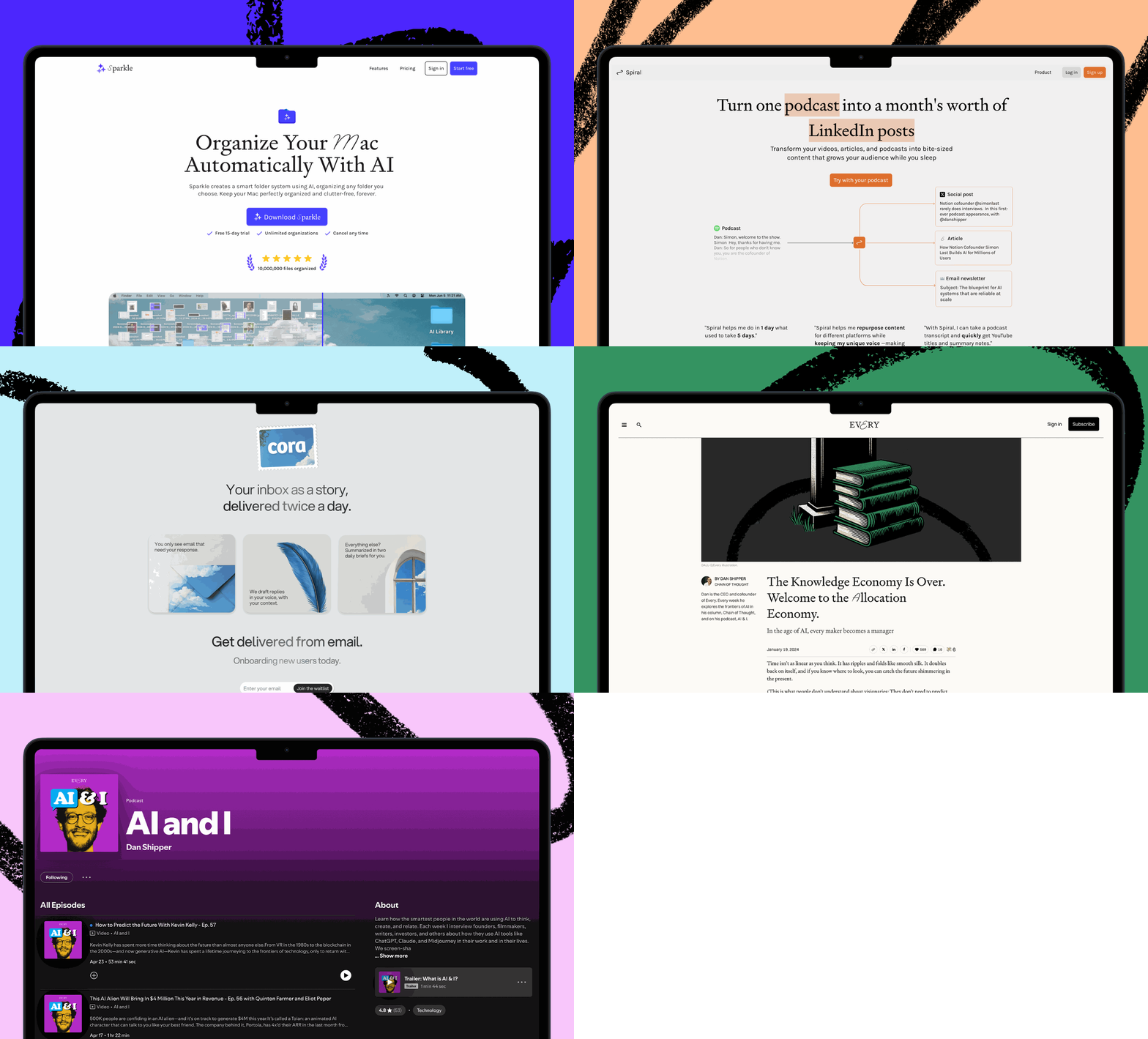
We build AI tools for readers like you. Write brilliantly with Spiral. Organize files automatically with Sparkle. Deliver yourself from email with Cora. Dictate effortlessly with Monologue.
We also do AI training, adoption, and innovation for companies. Work with us to bring AI into your organization.
Get paid for sharing Every with your friends. Join our referral program.
For sponsorship opportunities, reach out to sponsorships@every.to.
Help us scale the only subscription you need to stay at the edge of AI. Explore open roles at Every.