| Read in browser | ||||||||||||||
 US President Donald Trump reversed himself again, this time on repeated statements that he was unlikely to approve an extension of the ceasefire in the US-Israel war with Iran. On Tuesday, the 79-year-old Republican did just that, as he continues to look for a way out of a deeply unpopular conflict that’s driven up gas prices while driving down his poll numbers. Earlier, Vice President JD Vance’s planned trip to Pakistan for peace negotiations was put off because Iranian officials refused to attend, citing what they said were unreasonable US demands. Iran’s semi-official Tasnim news agency said there is currently no prospect of Iran participating in negotiations. Top Iranian officials didn’t immediately comment on Trump’s latest pronouncement. Tasnim reported Iran didn’t request an extension of the ceasefire, citing unidentified sources. It also said the country won’t reopen the Strait of Hormuz as long as the American naval blockade continues, which Trump has pledged to keep in place. Before Trump’s latest turnabout, the world’s top oil traders warned that the ongoing closure of the strait is increasing the risk of a global recession. While international forecasters already acknowledge the conflict is sapping economic growth and oil demand, merchants including Vitol, Gunvor and Trafigura cautioned the situation will get even worse if the strait doesn’t open soon. —Jordan Parker Erb Coming soon: Get the AI Today newsletter — chronicling the disruptions and threats of AI on businesses, workers, governments and economies with analysis from Bloomberg’s global newsroom. What You Need to Know Today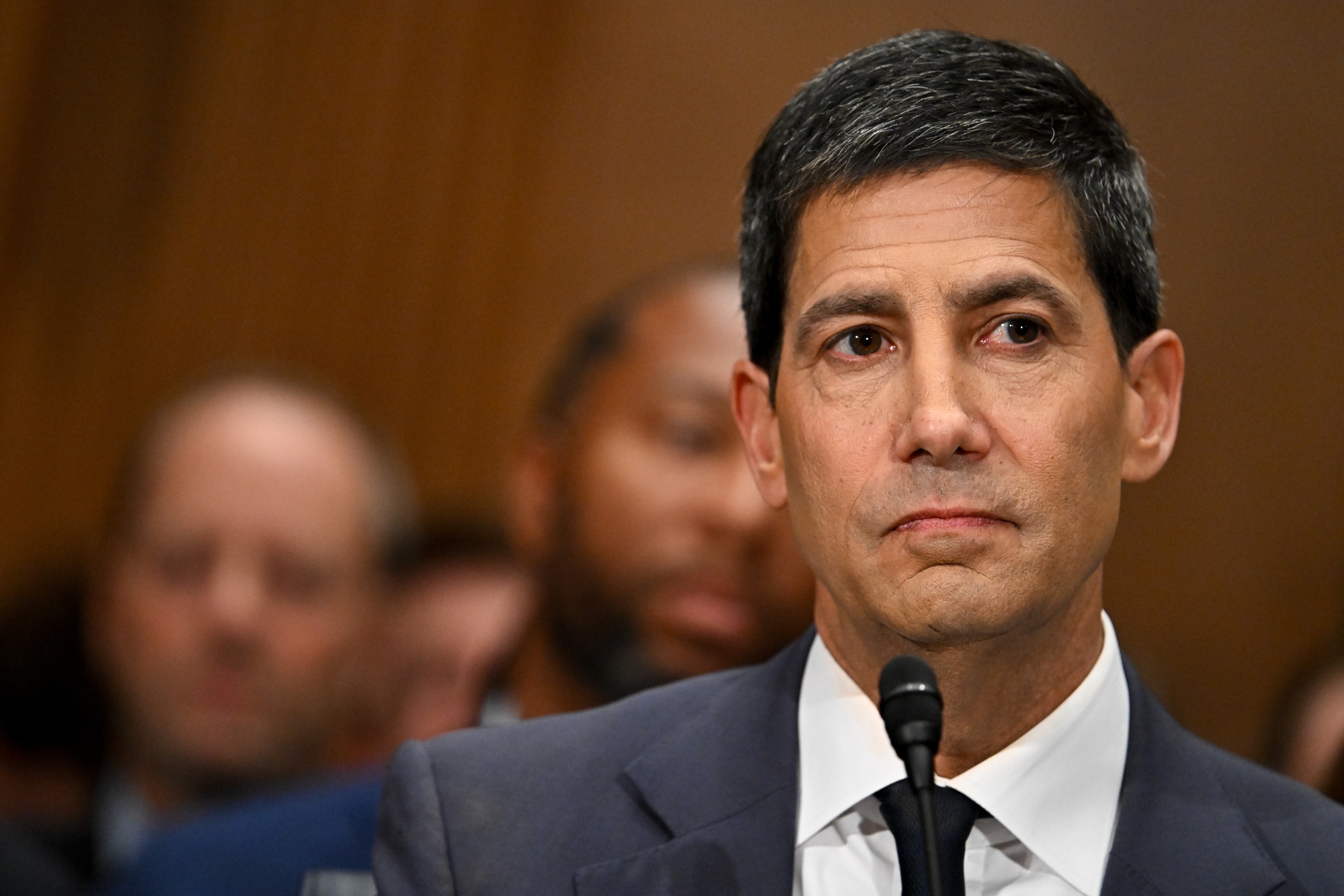 Kevin Warsh Photographer: Graeme Sloan/Bloomberg Kevin Warsh, Trump’s nominee to chair the Federal Reserve, appeared before the Senate Banking Committee for his confirmation hearing on Tuesday. Warsh responded to repeated questions from Democratic lawmakers over Trump’s demands for drastically lower interest rates by pledging to act independently, and rejecting the notion that he’d be Trump’s “sock puppet.” He also said the central bank needed a new framework for dealing with persistent inflation, without offering more specifics. According to data released by the Trump administration Tuesday, US retail sales soared in March by the most in a year, suggesting consumers continued to spend on a wide array of merchandise despite a surge in gasoline prices sparked by the Iran war. The value of overall retail purchases increased 1.7% following a revised 0.7% gain in February, according to the Commerce Department. The data are not, however, adjusted for inflation. 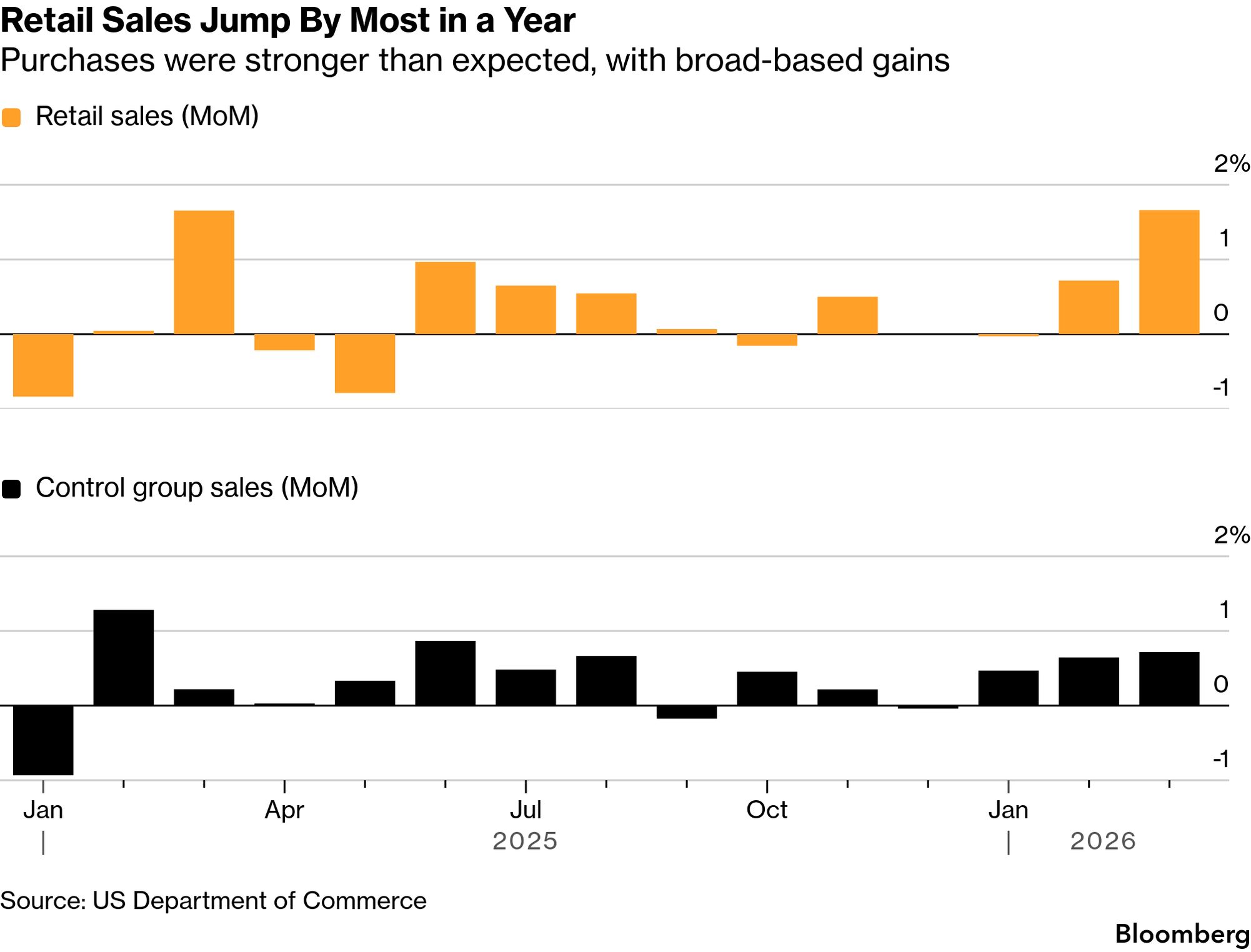 A lot of that consumer spending was on gasoline, the price of which has spiked since the war began. But while the March increase was led by a record jump in spending on fuel, almost every category in the report—from furniture to electronics to general merchandise—also posted increases. Pending sales of previously owned US homes climbed for a second month in March as a pickup in inventory helped mitigate higher borrowing costs. An index of contract signings increased by 1.5% to a four-month high of 73.7, according to National Association of Realtors data released Tuesday. The median forecast of economists surveyed by Bloomberg was for a 0.5% advance. The average 30-year mortgage rate jumped to more than 6.5% by the end of the month, the highest since August, as rising energy costs caused by the Iran war sparked concerns about inflation. Deutsche Telekom is said to be considering a full combination with T-Mobile, a move that would create a multinational telecom group and rank as the largest-ever public M&A deal. Deutsche Telekom is already T-Mobile’s biggest shareholder with a roughly 53% stake. The potential deal would create a single, simplified corporate group that controls the operations of Deutsche Telekom and T-Mobile and would be jointly owned by the two companies’ current investors. Combining the two companies could give the merged group greater heft to potentially pursue acquisitions. It would also create the world’s biggest wireless operator by market capitalization, surpassing China Mobile, which is valued at about $235 billion. Members of the US armed services will no longer be required to get an annual flu shot, reversing a longstanding policy aimed at force readiness. It’s the latest move by an administration that includes vaccine skeptics at its highest levels who have implemented policies contradicted by established science. The US Army was the original trailblazer in developing a flu vaccine, primarily because of concern the virus could impact military effectiveness after the Spanish influenza pandemic killed an estimated 50,000 service members. What You’ll Need to Know TomorrowFor Your CommuteBloomberg.com subscribers are invited to nominate candidates for the inaugural VivaTech x Bloomberg Rising Star Award, to be presented in Paris on June 18. Chosen by the Bloomberg subscriber community, the Rising Star Award honors an emerging founder, technologist, academic or creator whose work is already demonstrating meaningful early impact. It celebrates individuals whose ideas, innovation and leadership are helping shape the future of technology. Submit a nomination here. More from BloombergEnjoying Evening Briefing Americas? Get more news and analysis with our regional editions for Asia and Europe. Check out these newsletters, too:
Explore all newsletters at Bloomberg.com. We’re improving your newsletter experience and we’d love your feedback. If something looks off, help us fine-tune your experience by reporting it here. Follow Us
You received this message because you are subscribed to Bloomberg’s Evening Briefing Americas newsletter. If a friend forwarded you this message, sign up here to get it in your inbox.
|