| Read in browser | ||||||||||||||
 Canada edged into a technical recession as weak business and government spending drove a slight contraction in the first quarter, pointing to persistent slack in the economy amid the US trade war. Real gross domestic product fell by 0.1% on an annualized basis during the first three months of the year. That follows a 1% contraction in the fourth quarter, a downward revision from a previously reported 0.6% decrease. 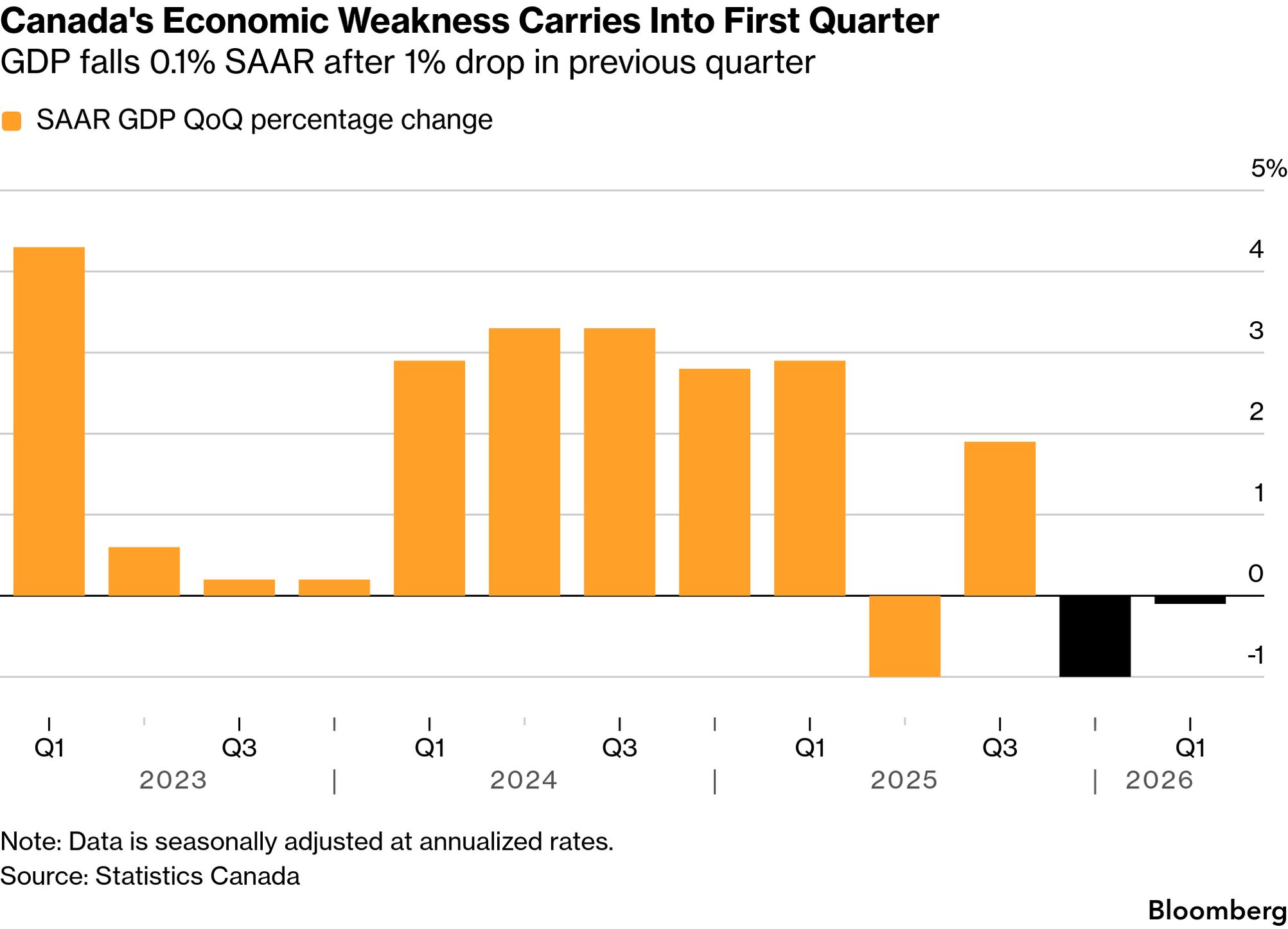 The weaker-than-expected GDP data coincides with a weaker job market as well, painting a sobering picture of the Canadian economy as US President Donald Trump’s tariffs squeeze Canadian businesses. Business capital investment in the first quarter posted a fifth consecutive decline, shrinking 3% on an annualized basis, driven by lower spending on engineering structures. The “surprising” first quarter data means Canada has seen growth only in one of the last four quarters, noted Charles St-Arnaud, chief economist at Servus Credit Union. The last time Canada recorded two consecutive quarters of negative growth was in 2020 during the Covid-19 pandemic. Before that, it was in 2015 amid low oil prices. What You Need to Know TodayThe cycle of hope for winding down the Iran war — followed by disappointment — continued Friday. Weeks of claims by Trump of a near-sealed deal (and at least one from Iran) continued to yield only dissonance. Trump tweeted Friday he would decide the fate of a proposed interim accord, and Tehran poured water on reports a deal was even near, disputing its supposed terms and especially those regarding its nuclear program. While the situation could change over the weekend, with Pakistan Foreign Minister Ishaq Dar in Washington in his role as a mediator, the lack of progress may be especially disappointing to those who cheered Wall Street predictions a deal was near, and with it an expected relief rally. New numbers showing war- and tariff-induced US inflation at its highest level in three years. A fresh exchange of strikes in the Persian Gulf. Hardening expectations that Fed rate cuts are not in the cards this year. All of these would arguably induce caution among investors. 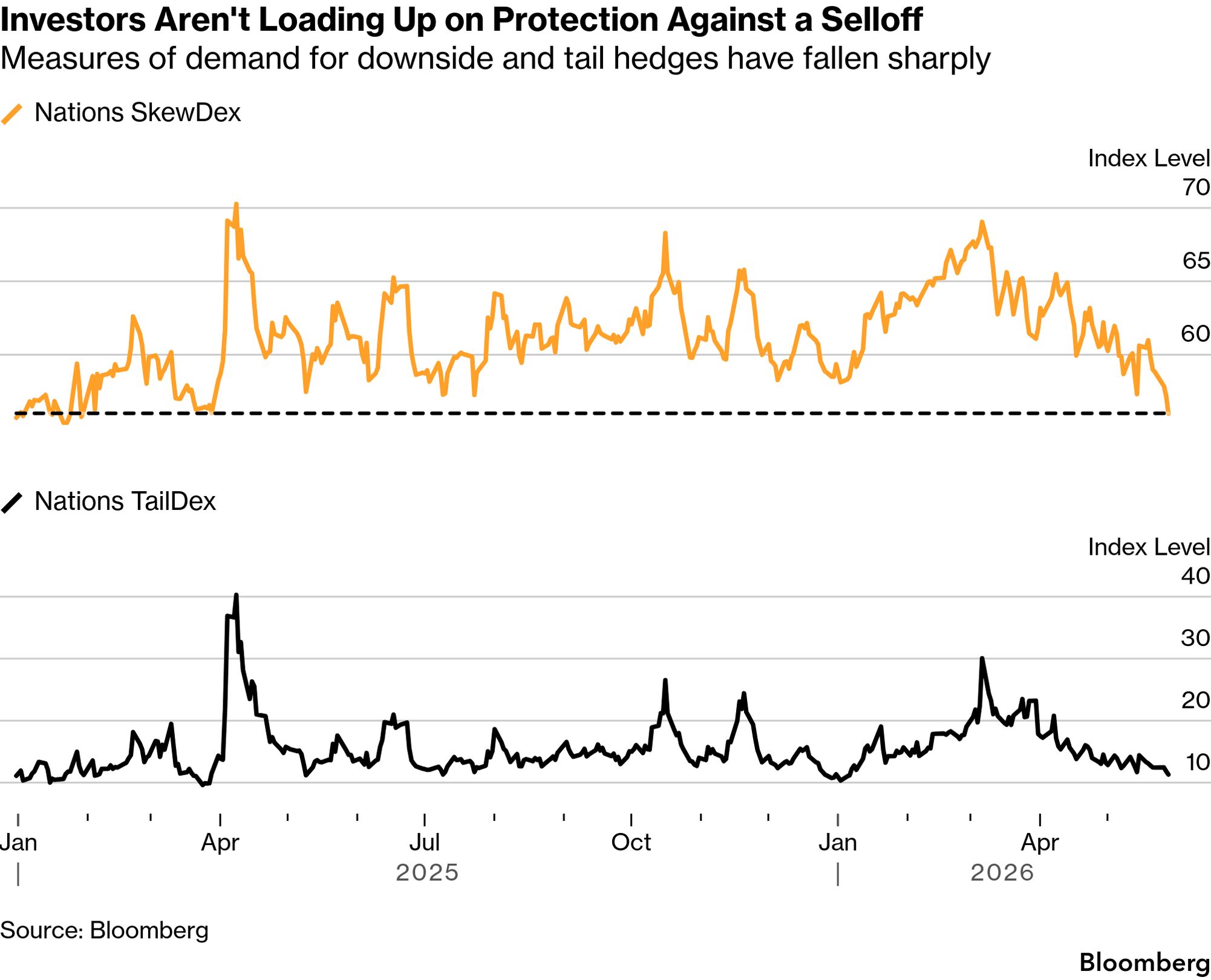 Arguably. Stocks this week extended their longest weekly winning streak since 2023 to fresh records, junk bonds rallied and the cost of insuring against a selloff tumbled. Gains across risk assets may owe less to conviction than to the rising cost of being left behind: Investors who have spent months doubting the market frenzy find themselves underexposed. Few investors want to be the last holdout if the ceasefire holds, oil retreats and the rally broadens beyond its narrow leadership. The question is whether markets have become more confident in the outlook, or simply less willing to pay for protection against being wrong. It seems there’s a lot of money to pay a pied-a-terre tax after all. Citadel Securities, the firm founded by billionaire Ken Griffin, posted a record $4.3 billion of trading revenue in the first quarter as it benefited from the same kind of volatility that’s spurred windfalls at market-making peers and Wall Street banks. The firm’s trading revenue is said to have risen 28% from the same period a year earlier. Trading desks have been on a hot streak since Trump returned to the White House, pursuing often chaotic policies and policy shifts that frequently whipsaw markets. The swings force investors to reposition their portfolios, driving demand for trading services provided by Wall Street firms. Some of the biggest banks said this week that the strong trading environment is continuing in the current quarter. Louisiana’s legislature gave final approval to a new congressional map that eliminates one of the state’s two Black-majority districts, following on a landmark ruling by the Republican-appointed supermajority of the US Supreme Court largely gutting key provisions of the Voting Rights Act. The move means the state, which has a long history of racial discrimination against Black residents, will likely see a one-seat GOP pickup in November. Part of a larger effort by the party to keep control of Congress by marginalizing potential Democratic voters, the shift is likely a harbinger of what’s to come, as other Southern states propose similar redistricting. Spring Sale: Save 60% on your first year Get the numbers behind the narratives. Enjoy unlimited access to Bloomberg.com and the Bloomberg app, plus market tools, expert analysis, live updates and more. Offer ends soon. Unlock 60% offWhat You’ll Need to Know TomorrowFor Your CommuteMore from BloombergEnjoying Evening Briefing Americas? Get more news and analysis with our regional editions for Asia and Europe. Check out these newsletters, too:
Explore all newsletters at Bloomberg.com. We’re improving your newsletter experience and we’d love your feedback. If something looks off, help us fine-tune your experience by reporting it here. Follow Us
You received this message because you are subscribed to Bloomberg’s Evening Briefing Americas newsletter. If a friend forwarded you this message, sign up here to get it in your inbox.
|