| Read in browser | ||||||||||||||
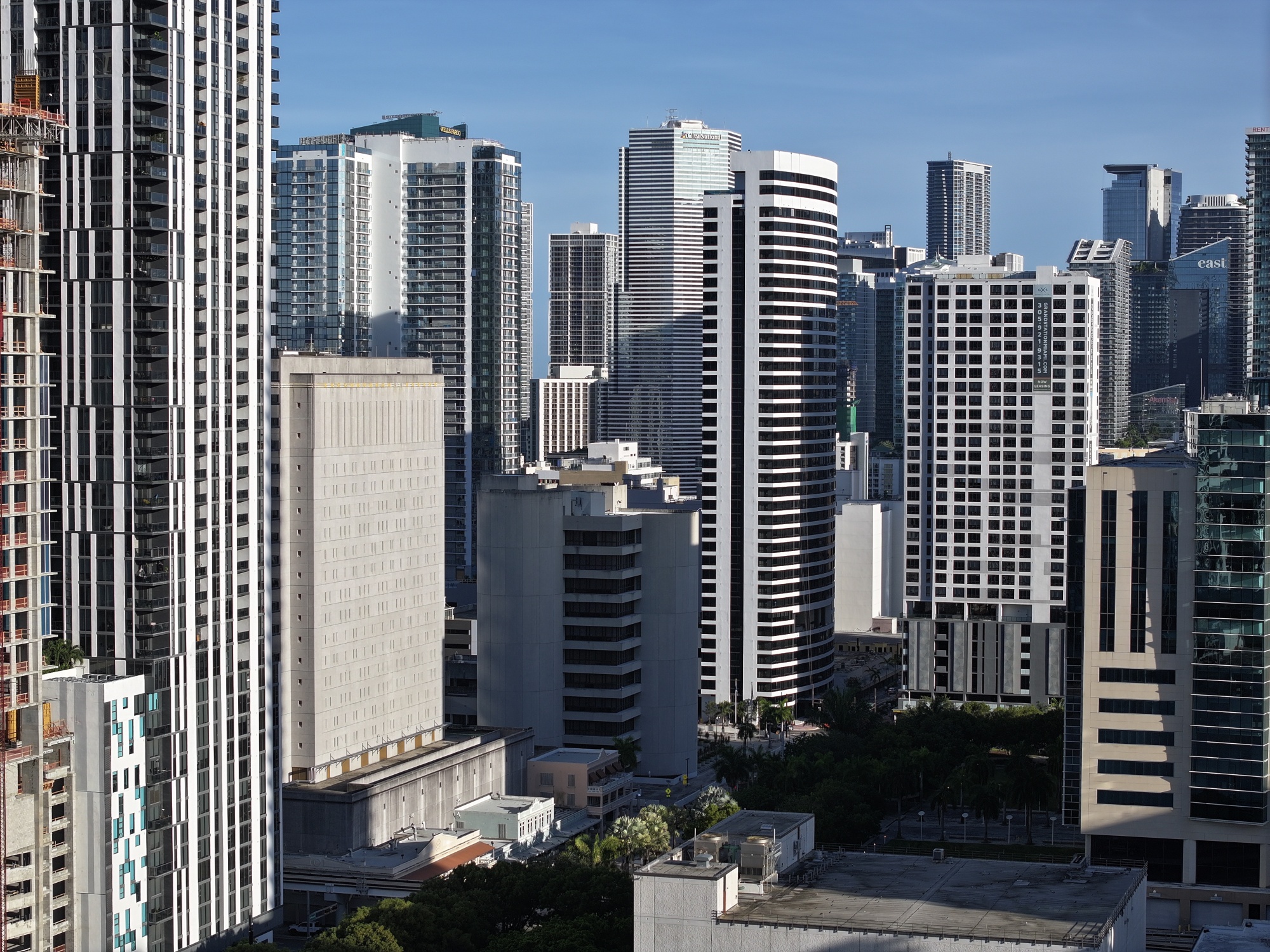
 The growing global threat posed by a so-called super El Niño to global food supplies is spurring the finance industry into action — with a new commodities fund. Hedge fund Moreton Capital Partners is targeting $500 million for a special-purpose vehicle to trade multiple commodities that stand to be impacted by the weather phenomenon, including South African corn, Malaysian palm oil and Australian wheat. The markets are underestimating risks, according to Moreton’s co-founder, Les Finemore. 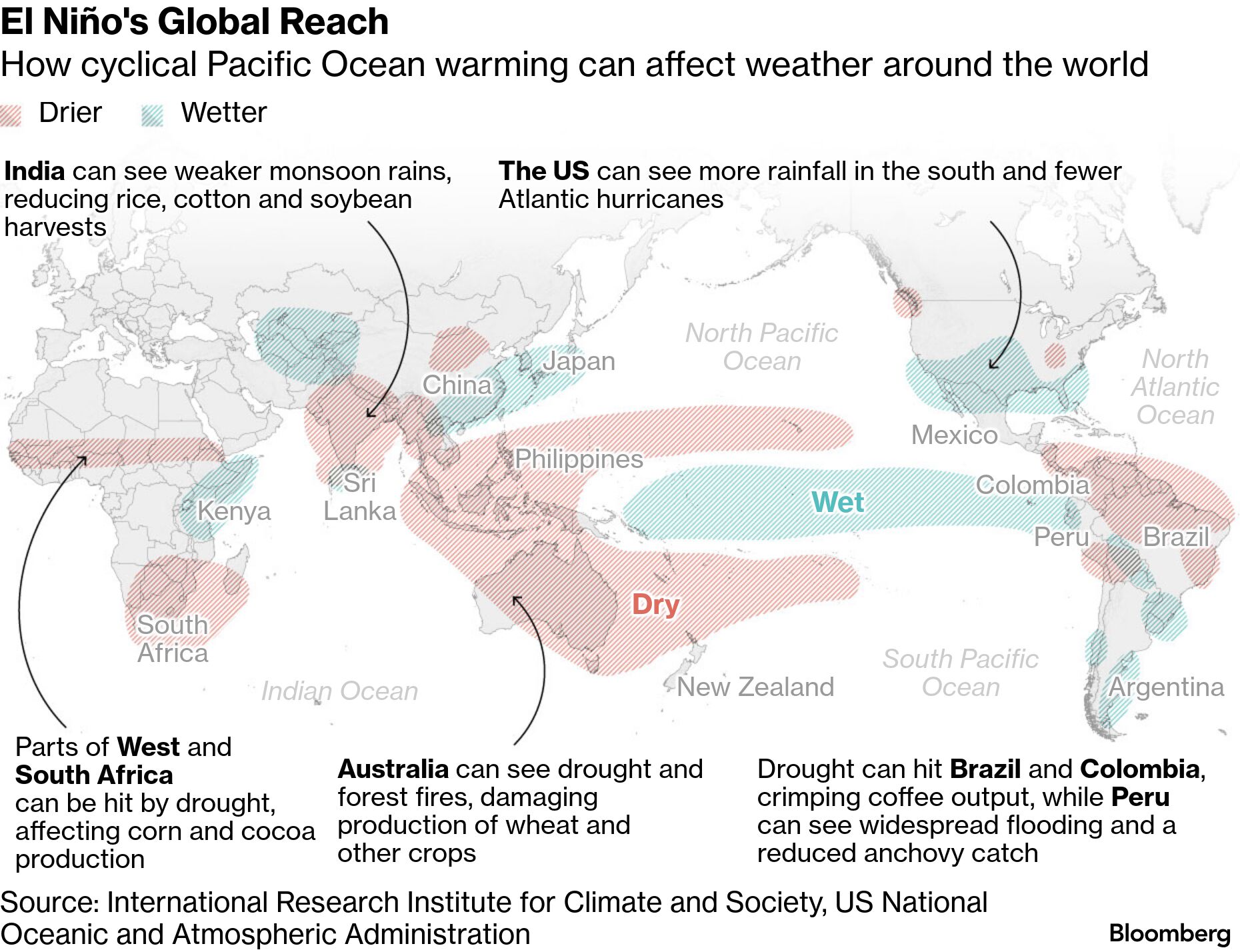 El Niño, confirmed by scientists earlier this month, is characterized by a warming of the Pacific Ocean that alters global weather patterns, which can damage crops. The phenomenon could be one of the strongest on record. Top rice exporter India has already been hit by a delayed start to the monsoon. The World Bank warned that El Niño could push food prices above current expectations, just as farmers contend with the impact of the Iran war on fertilizer and fuel costs, and the broader threat of accelerating global warming. “It’s gonna be a dramatic reshaping of the global food situation,” Finemore said. “We feel like today the market is seriously mispricing that risk.” —David E. Rovella What You Need to Know TodayWhile the White House says one thing and Iranian officials say another with regards to ongoing peace talks over the US-Israel war with Iran, one thing that is clear is that fossil fuels are again on the move. So much so that suddenly there’s too much to go around. Key parts of the oil market are suddenly awash in supply, as a stream of cargoes out of the Strait of Hormuz accelerates after Iran agreed to loosen its grip on the waterway. Even before the interim peace deal, a combination of strategic inventory releases, a collapse in demand from top buyer China and a substantial number of tankers sneaking “dark” out of the Persian Gulf had contributed to a small oversupply in some key markets. Now, those markets are weakening across Europe and Asia as buyers find themselves inundated with offers for cargo. One of the key pillars of Donald Trump’s strategy to keep Republicans in control of Congress — along with radical mid-decade redistricting recently turbocharged by the Supreme Court — has been his stalled, highly controversial voter identification legislation, which would impose nationwide requirements for Americans to show photo identification and present proof of US citizenship in order to vote. On Wednesday, Trump found a new reason to demand Congress pass it by refusing to sign a rare bipartisan bill on housing unless Senate Republicans push through his law. The voter ID measure, justified by Trump on false claims about voter fraud despite its near-nonexistence, is seen by critics as a thinly veiled Republican attempt at voter suppression aimed at disenfranchising Democratic voters. Also on Wednesday, a federal judge permanently blocked as unconstitutional a Trump executive order that would have required documentary proof of citizenship to register, barred mail ballots from being counted if they arrive after Election Day and punished states that failed to comply. The Constitution, the judge noted, gives states and Congress the authority to regulate elections, not the president. Moreover, she noted the administration provided no evidence of widespread illegal voting, discrimination, fraud and other forms of malfeasance and error within American elections, “which the executive order purports to safeguard against.” The largest US power grid is creating a new emergency warning as surging data-center demand pushes electricity supplies toward shortages beyond periods of extreme weather. Reliability concerns that were largely tied to heat waves and cold snaps are increasingly emerging at other times of the year as demand for electricity outstrips supply. PJM Interconnection, which serves 67 million people across 13 states, agreed Wednesday to add a new “capacity advisory” to warn customers when electricity supplies could become tight. A Blackstone loan on an office tower in the heart of Chicago’s financial center has gone into default, the latest sign of the persistent challenges landlords face after the city’s commercial real estate values tumbled in the wake of the pandemic. Chicago’s office market struggled to recover when work from home measures and rising crime hammered the value of buildings across the central business district. Crime has dropped while the city ranks third for return to office occupancy. But office values remain depressed, with many buildings trading for a fraction of their previous purchase price. The vacancy level in downtown office buildings is at 27%. Anthropic accused Chinese technology giant Alibaba Group of waging a large-scale effort to “illicitly” access its Claude artificial intelligence model using thousands of fraudulent accounts that undermine the US AI developer’s decision to keep its products out of China. Anthropic claimed that a campaign by operators linked to Alibaba’s Qwen AI lab targeted Claude’s most prized capabilities, including software engineering and agentic reasoning, according to a letter that the AI startup sent to several US senators and White House officials. Anthropic warned that Alibaba and other Chinese labs are making systematic and unauthorized use of results from leading US models to develop a rival generation of chatbots at a fraction of the cost via a practice known as adversarial distillation. What You’ll Need to Know TomorrowFor Your CommuteMore from BloombergEnjoying Evening Briefing Americas? Get more news and analysis with our regional editions for Asia and Europe. Check out these newsletters, too:
Explore all newsletters at Bloomberg.com. We’re improving your newsletter experience and we’d love your feedback. If something looks off, help us fine-tune your experience by reporting it here. Follow Us
You received this message because you are subscribed to Bloomberg’s Evening Briefing Americas newsletter. If a friend forwarded you this message, sign up here to get it in your inbox.
|