| Bloomberg Evening Briefing Americas |
| |
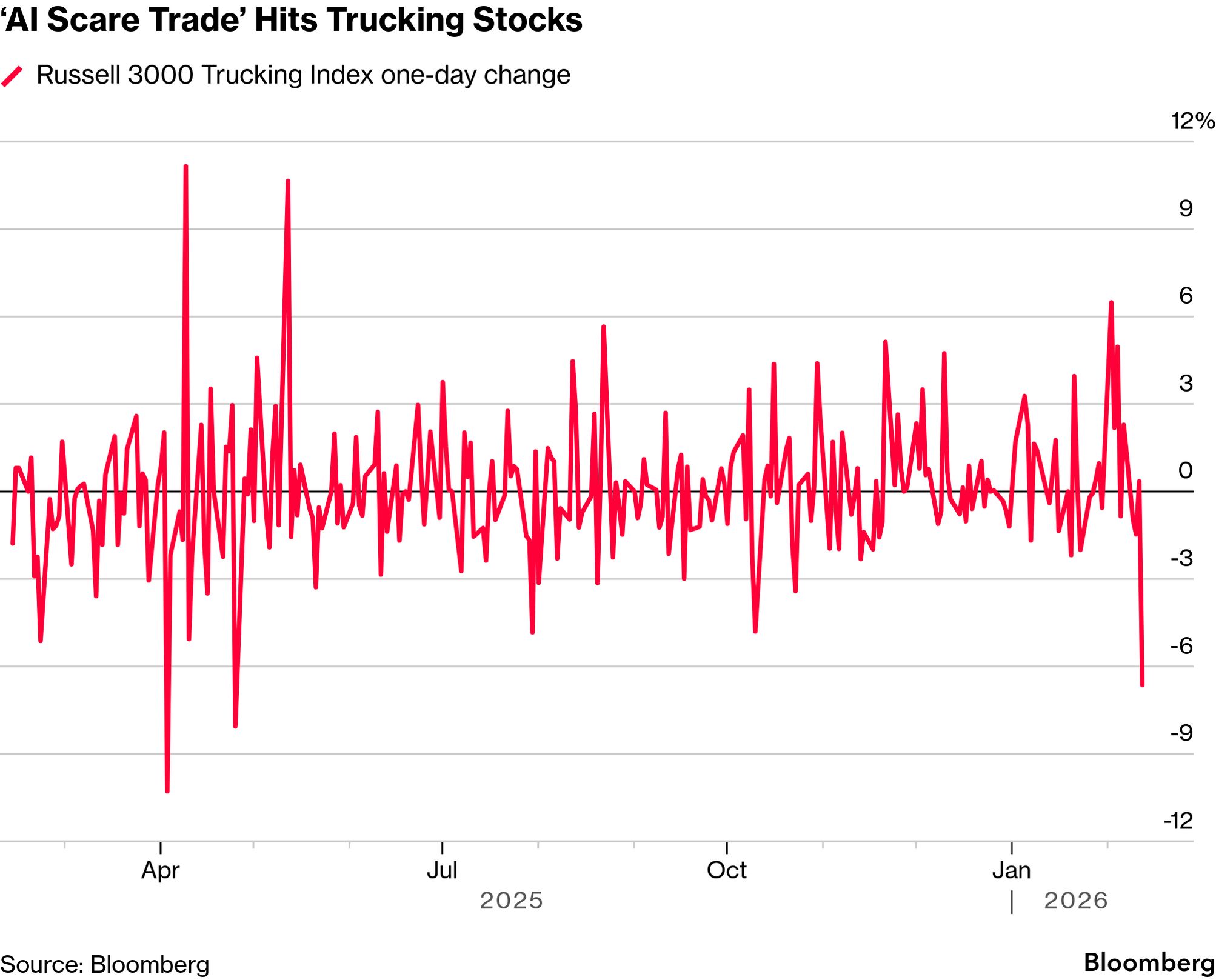
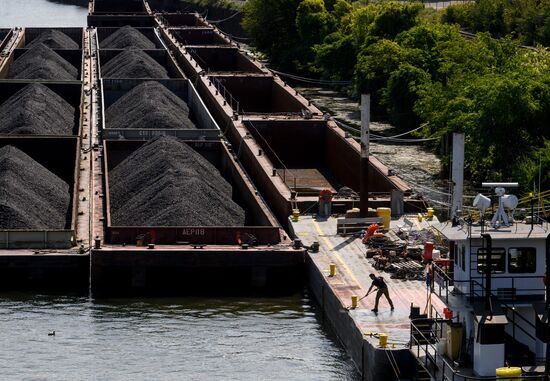
| Next up for the AI freakout are logistics stocks, which had the embarrassing distinction of being knocked about by a former karaoke company. They sank Thursday as investors rushed to dump shares amid ever-growing fears that artificial intelligence is going to take down more and more industries. The Russell 3000 Trucking Index dropped 7.8%, with CH Robinson Worldwide at one point plunging by a record 24%, and Landstar System falling 18%. The index is on track for its worst day since President Donald Trump launched his global trade war last April. Drug distribution stocks were also caught up in the selloff, with McKesson and Cardinal Health both sliding more than 4%. The rout was sparked by an update from tiny AI logistics firm Algorhythm Holdings, which previously traded as the Singing Machine Co.. It announced that its SemiCab platform in live customer deployments was helping its customers’ internal operations to scale freight volumes by 300% to 400% without a corresponding increase in operational headcount. Shares of the company soared 12%. Investors had seen transportation as part of the “AI resistant” trade, particularly as volatility in technology names caused a push to diversify portfolios. However, Thursday’s selloff has proven that even the “old economy” isn’t immune to the AI concerns that have been wreaking havoc on the market. —David E. Rovella | |
What You Need to Know Today | |
| |
|
| The Trump administration says it’s pulling most of its forces associated with federal immigration agencies out of Minnesota, a Democratic-led state the Republican targeted for his deportation dragnet. The result of his campaign there was a national uproar following the government’s killings of two US citizens, Renee Good and Alex Pretti, and widespread allegations of other civil rights violations and criminal conduct by various agencies under the Department of Homeland Security. A poll from the Associated Press-NORC Center for Public Affairs Research released earlier Thursday found that 62% said Trump’s use of immigration agents, largely in Democratic-led cities and states, had “gone too far.” Among those surveyed, 54% said Trump had also gone too far in restricting legal immigration and 52% said the same regarding efforts to deport immigrants living in the US illegally. The immigration crackdown has also sparked a fight in Congress, where Senate Democrats are opposing a measure to fund DHS unless they secure changes to Trump’s enforcement policies, raising the risk of a partial government shutdown that would start Saturday. | |
| |
|
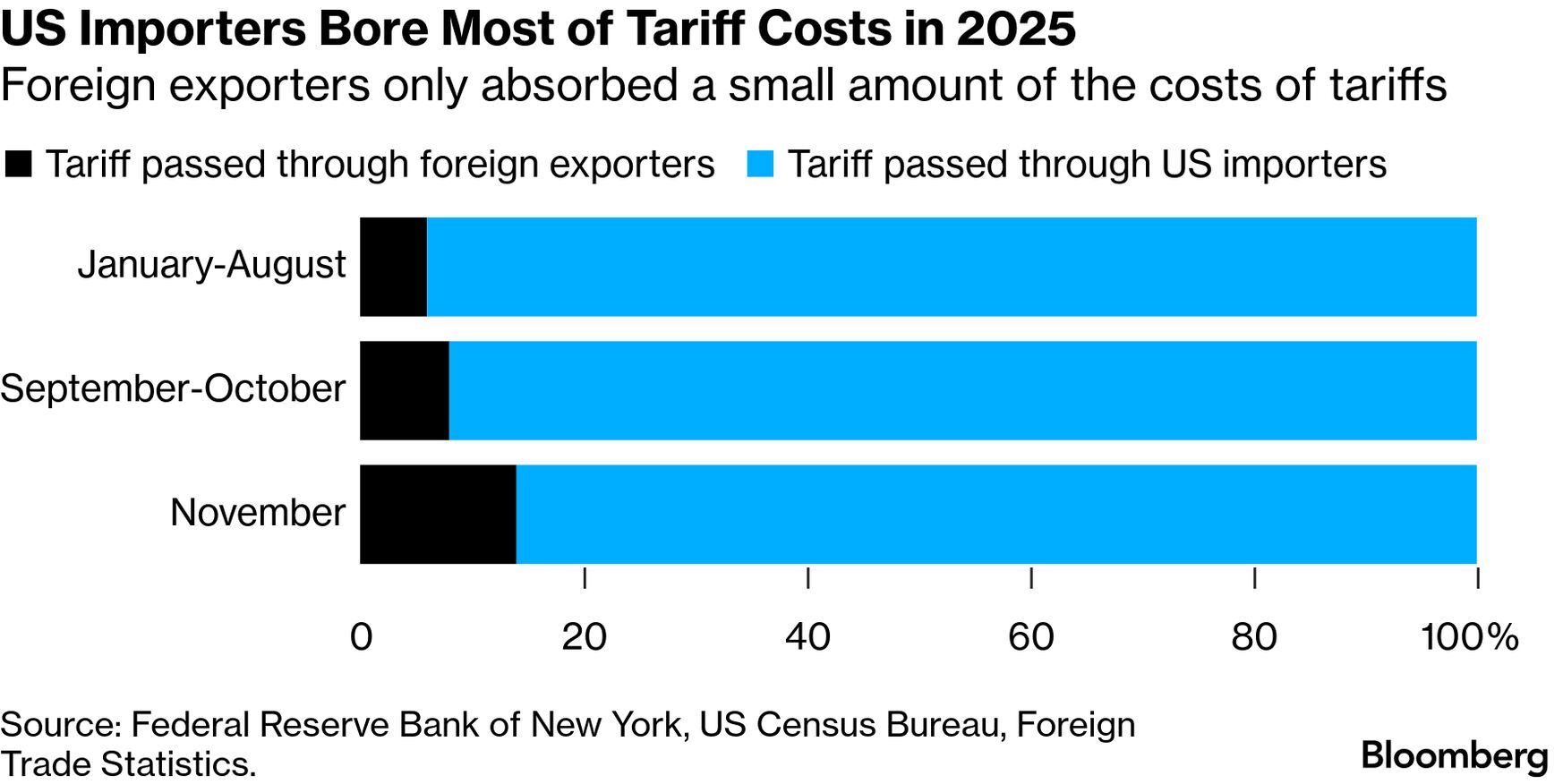
| Guess who is paying for the US trade war? You and American companies. It turns out the president’s repeated claims that foreign countries would pony up for the cost of his tariffs were false. Almost 90% of the economic burden from Trump’s trade war has been borne by US companies and consumers, according to a new study by economists at the Federal Reserve Bank of New York. | |
|
| Prices buckled across several asset classes on Thursday amid concern over technology company profits and weakness in commodities. The S&P 500 and the Nasdaq 100 slipped 1.6% and 2%, respectively. Cisco Systems plunged 12% as a tepid margin outlook signaled higher memory-chip prices are taking a toll. All megacaps fell and an exchange-traded fund that tracks software firms slumped 2.7%, illustrative of the “AI scare trade” making the rounds. “This is the most uncertain outlook we’ve seen for AI and the tech-driven rally since this bull market started,” said Tom Essaye at the Sevens Report. “That does not mean tech won’t recover like it has since then. But I do want to caution against dismissing this weakness as ‘just another bump in the road’.” Here’s your markets wrap. | |
|
| |
|
| The Kremlin has set out proposals that could see Russia embrace the dollar again as part of a wide-ranging economic partnership with Trump and his administration, according to an internal Russian document reviewed by Bloomberg. It is a platform some experts see as an attempt by Vladimir Putin to further divide European democracies and the US. The high-level memo, which was drafted this year, details seven points where, in the Kremlin’s view, Russian and US economic interests could converge following a deal to end Putin’s war on Ukraine. Moscow sees the two countries working together to champion fossil fuels over greener alternatives in the face of accelerating global warming and climate change, as well as joint investments in natural gas, offshore oil and critical raw materials plus windfalls for US companies. | |
|
| |
| New Year Sale: Save 60% on your first year
Enjoy unlimited access to Bloomberg.com and the Bloomberg app, plus market tools, expert analysis, live updates and more. Offer ends soon. | | | | | | |
What You’ll Need to Know Tomorrow | |
| |
| |
| |
| Bloomberg Invest: Join the world’s most influential investors and financial leaders on March 3-4 in New York. Powered by insights from the Bloomberg Terminal and one of the largest global newsrooms, this flagship event examines how artificial intelligence disruption, geopolitical uncertainty, shifting central bank policy and the convergence of public and private markets are reshaping global finance. Don’t miss sharp, forward-looking conversations with top CEOs, asset managers and industry titans in the heart of the financial district. Learn more. | |
| Enjoying Evening Briefing Americas? Get more news and analysis with our regional editions for Asia and Europe. Check out these newsletters, too: Explore all newsletters at Bloomberg.com. | |
| |
Before it’s here, it’s on the Bloomberg Terminal. Find out more about how the Terminal delivers information and analysis that financial professionals can’t find anywhere else. Learn more. Want to sponsor this newsletter? Get in touch here. | | | You received this message because you are subscribed to Bloomberg's Evening Briefing Americas newsletter. If a friend forwarded you this message, sign up here to get it in your inbox. | | |