



TL;DR: We’re announcing gift links, which let paid and All Access Every members share paywalled articles with anyone. Using Codex and the latest frontier models, senior editor Jack Cheng took on the project himself. The process showed us that people across Every can now build and test ideas without taking engineers away from more important work.
Was this newsletter forwarded to you? Sign up to get it in your inbox.
Last month, we rolled out gift links on the Every website. If you have a paid or All Access membership, you can now share paywalled articles with people who aren’t Every members. Standard paid members can share five gift links each month, with the count resetting on the first of the month. All Access members can, starting today, share unlimited gift links.
Gift links by themselves aren’t novel. You’ve likely interacted with them in articles in the online editions of the Wall Street Journal, the Atlantic, or the New York Times. But those publications also have product teams larger than our entire company of 30 people.
Many of us at Every are veterans of organizations structured to dampen risk and dodge uncertainty, often at the cost of experimentation. We’re learning to explore new workflows, cede control to AI agents when it makes sense, and embrace the fact that good ideas can come from anyone—and now be built by anyone.
The path our small editorial team charted to ship the new gift links feature is a case study in how AI tools can turn a heavy organizational lift into a feasible experiment, and how an AI-native company decides what to build.
Here’s how we did it.
Scratching my own itch
As a senior editor at Every, I’ve edited dozens of pieces by our team and outside contributors, as well as written my own essays on creativity, taste, and maintenance. I’m proud of our work. I regularly share links to it in my personal newsletter.
When I share articles from other paid publications, though, I usually use gift links. Some of my favorite blogs, like Metafilter or Jason Kottke’s, tend to share paywalled articles as gift links as well. As much as I wanted gift links for myself, I saw a business case for them. Were we limiting Every’s reach and potential for virality by not giving people a way to share paywalled content?
To find out, I started digging.
I first searched Every’s Slack and Discord channels to see if anyone had raised the idea before. Maybe we’d even tried gift links in the past, or the feature had been proposed and declined for reasons I hadn’t considered. My search turned up a message from Kate Lee, Every’s editor in chief, also wondering about gift links. Each article in our system had a preview link that bypassed the paywall, but the feature was more meant for sharing drafts internally.
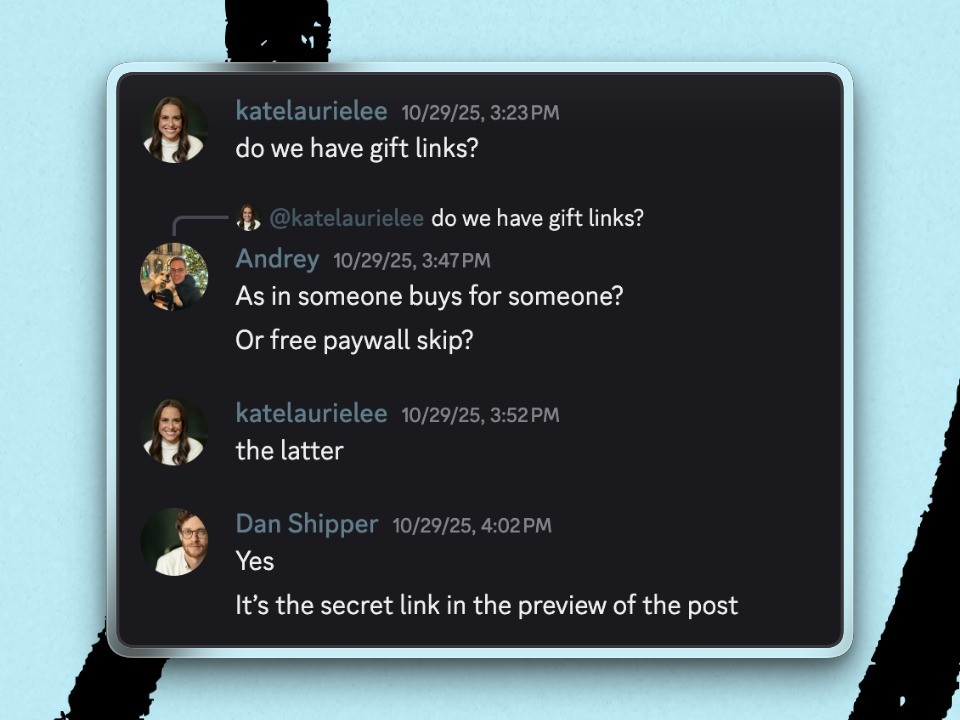
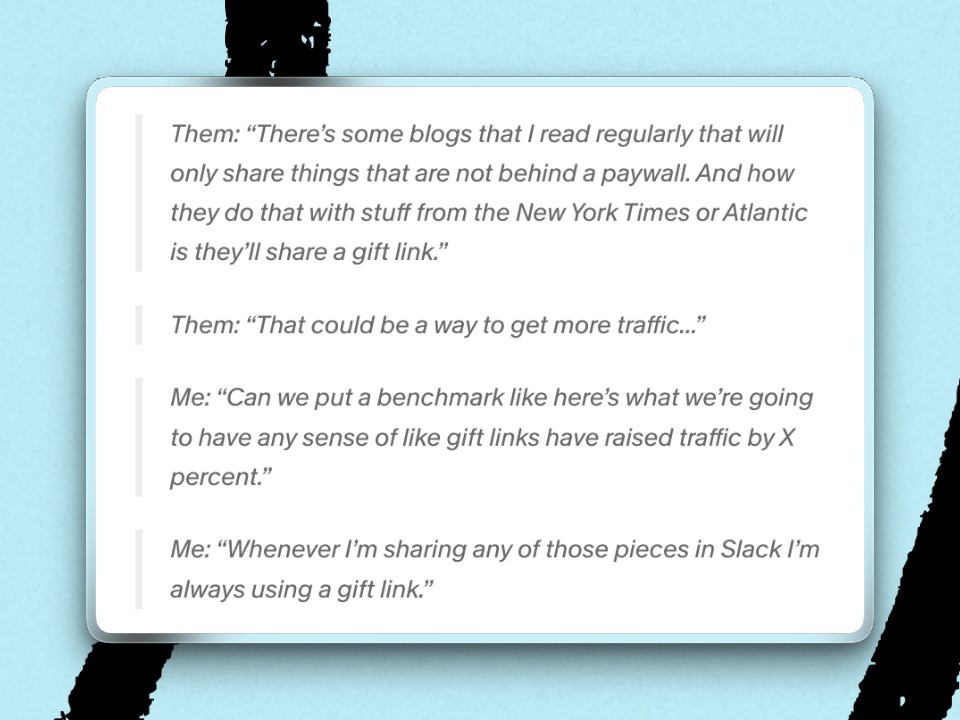
Kate and I have a weekly check-in, so I brought up the idea then. She said that whenever she shares articles with the rest of the team in Slack, she uses gift links too.
Given that gift links could bring new readers to our site, I knew that Austin Tedesco, Every’s head of growth, would be an important stakeholder. I sent him a feeler message.
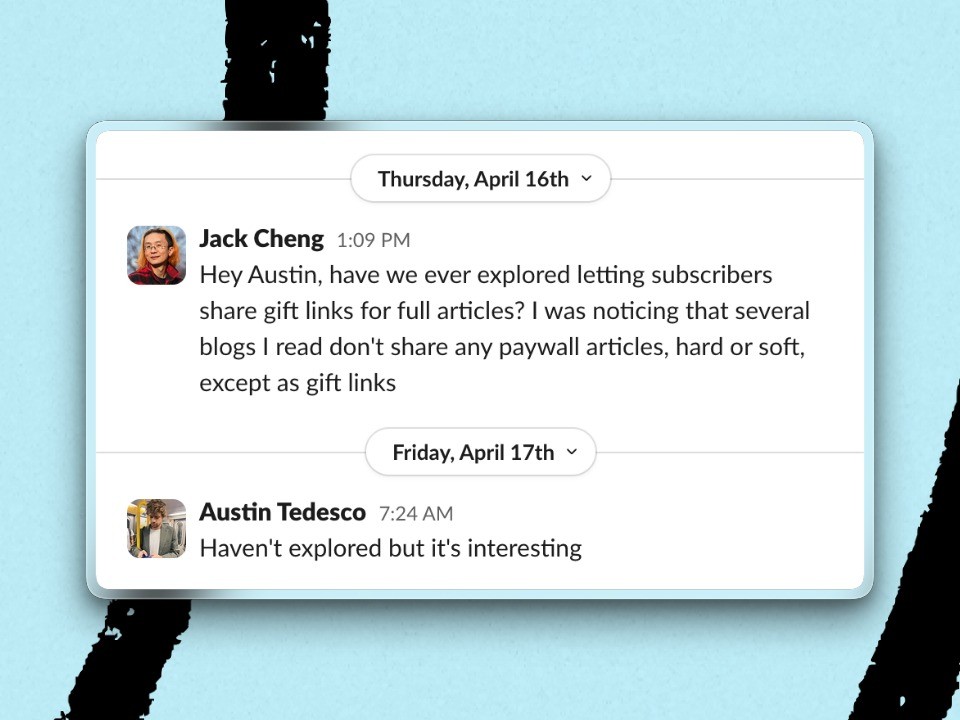
Austin’s response was unenthusiastic. As he said candidly in our video about building gift links, “interesting” was his way of telling me, “Don’t waste my time with this.”
But it also wasn’t a no. At most other companies—even at the company Every was one year ago—I might’ve left it there. The additional time and effort needed to sell the idea to Austin and other stakeholders, and convince the rest of the organization that it was worth diverting our website’s engineering lead Andrey Galko from more pressing engineering projects—all while pulling focus from my own duties editing, writing, and building much-needed tools to improve our editorial workflow—wouldn’t have merited the reward. Pursuing my gift links idea would have been the path of most resistance.
Luckily, it’s not one year ago. The capabilities of today’s frontier models, and agent orchestration apps like Claude, Codex, and Cursor, made this a feasible spare-time project.
Deep research, approvals, and execution
Using my Claude-connected OpenClaw agent in Slack, as well as the ChatGPT website, I kicked off “deep research” tasks looking into how gift links worked and how well they performed for other media companies. Larger news sites have had gift links for years; the links had to work to some degree, right?
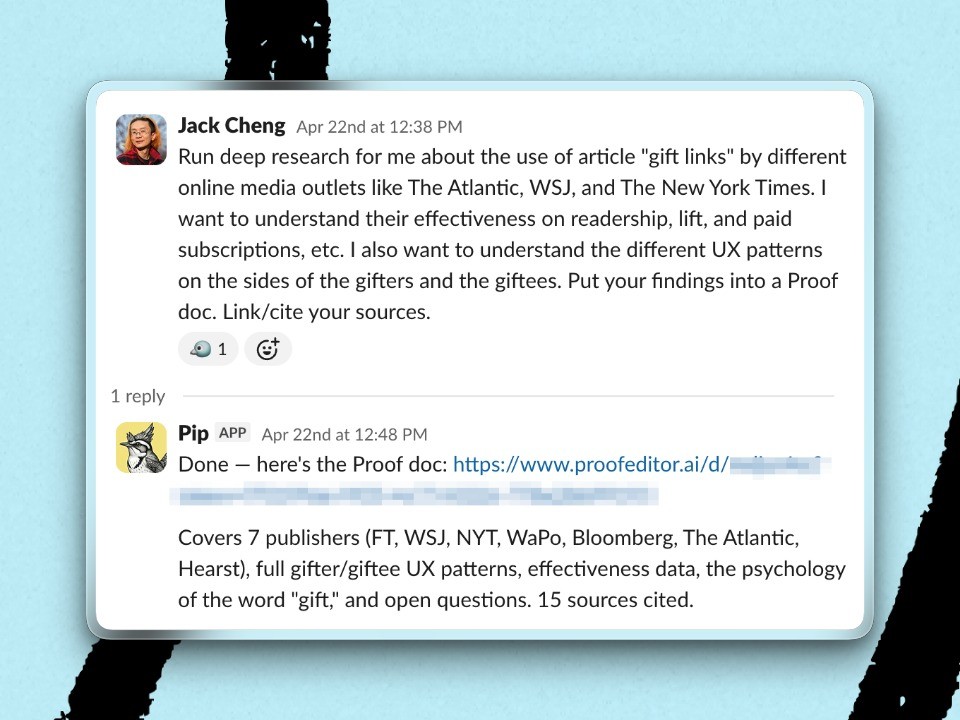
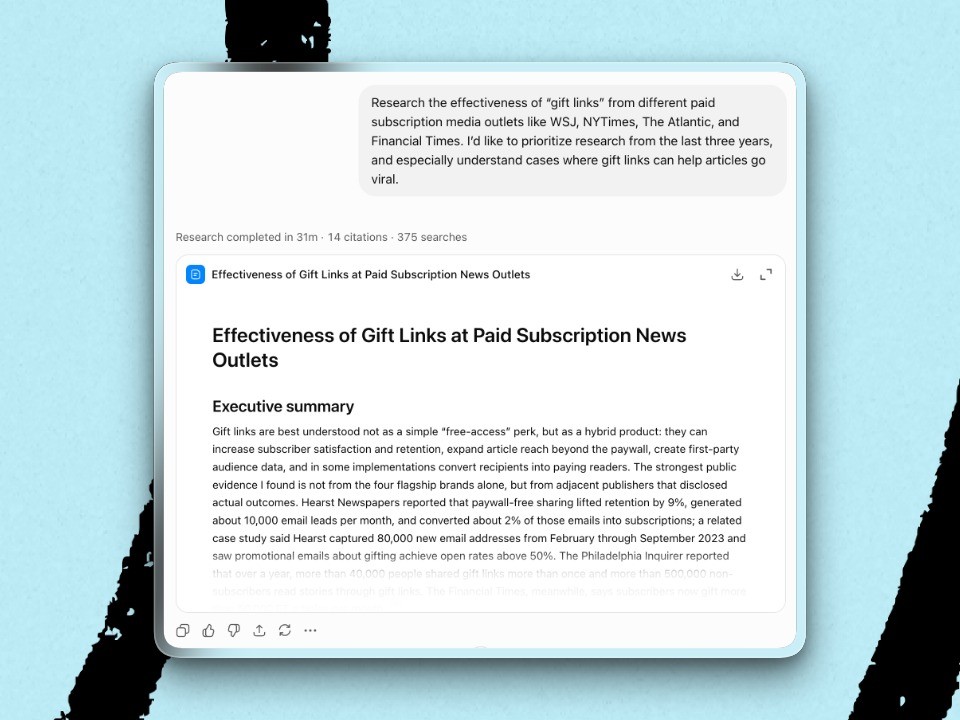
I compared the two reports, verified the cited sources—many of them studies done by the Nieman Journalism Lab—and asked the agents follow-up questions to make sure I understood the findings. I then worked with my agent to draft a separate report to share with Kate and Austin—then Andrey, if we decided to build the feature. This report had to be much more comprehensive; it should present the business case and sketch out a plan for implementation, including what changes we’d need to make on the existing site’s backend and how we would measure success. I determined those backend changes by pointing Codex at our existing codebase. My goal was to have a document that everyone could look at and say, “Let’s try it.”
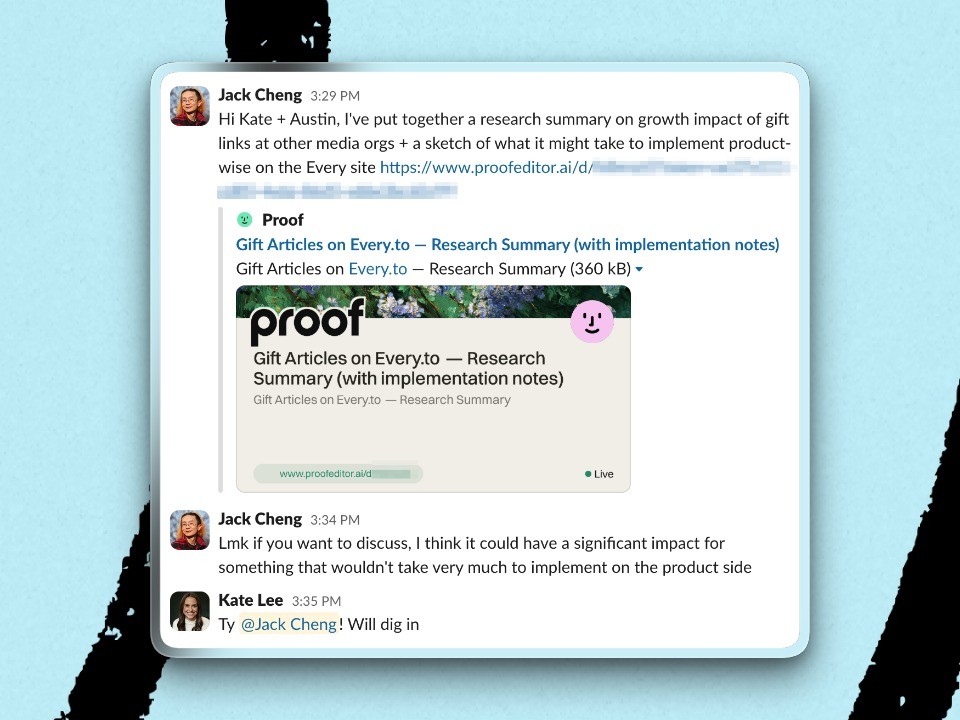
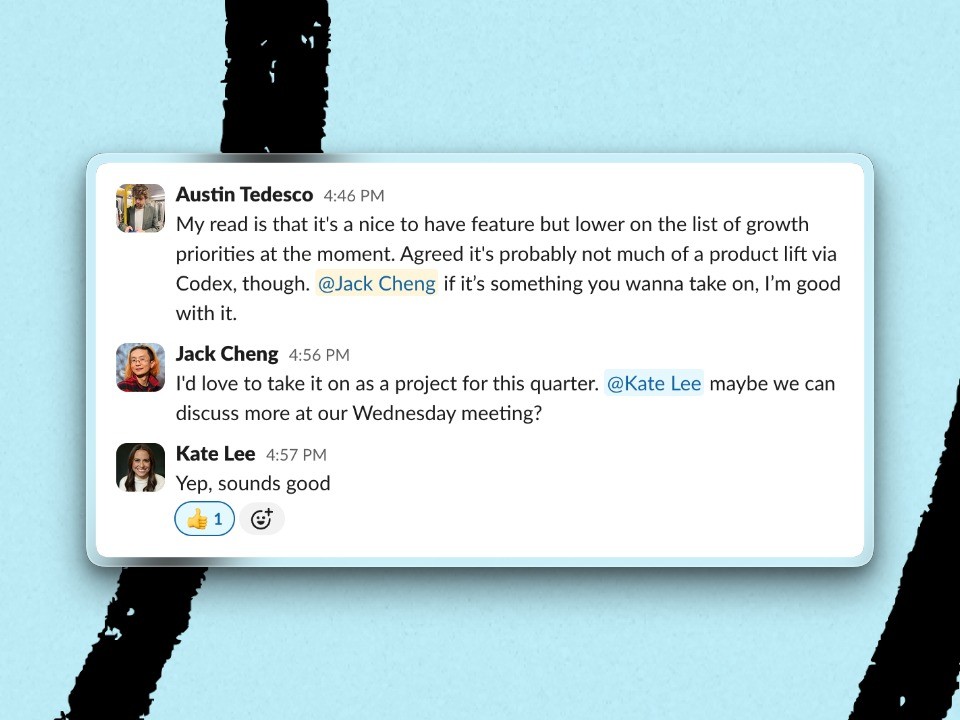
Austin’s response: Based on the report, gift links didn’t seem like a growth priority. But also: If you want to do it yourself with Codex, go ahead.
“I had to have this moment of, ‘You know what? It’s really for the best [to] just go for it,’” Austin said later in our conversation. “Rather than how I’ve worked before, where you’re really protective of your resources. [...] It’s so much better to just see this stuff play out with the user journeys and the data.”
It was clear to everyone, Andrey included, that this was the kind of clearly scoped product change that I could feasibly do without much involvement from him.
I had the green light I wanted. The next part was on me.
Going for it
Building out the gift links feature was more typical of traditional software development—only with agents doing most of the work. I had Codex research the common user interaction patterns for gift links among some of the news sites we referenced. I added screenshots of flows I thought worked well to the report and shared it with Andrey to get his feedback on the architecture; he told me to confirm how we were handling article preview in the codebase.
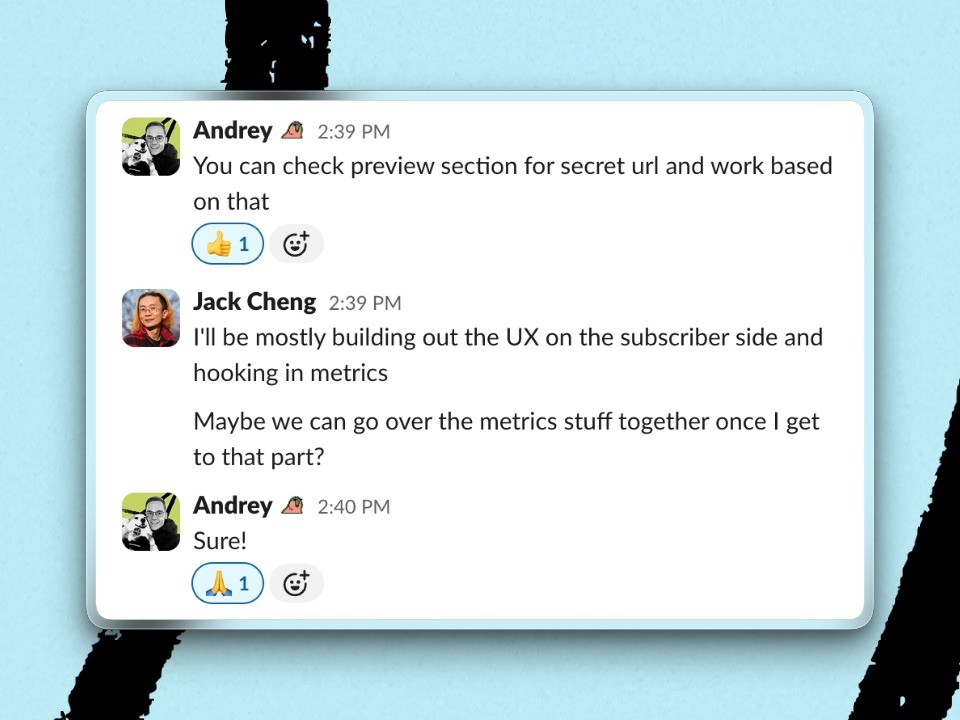
With the report and Andrey’s feedback as inputs, Codex put together a plan.
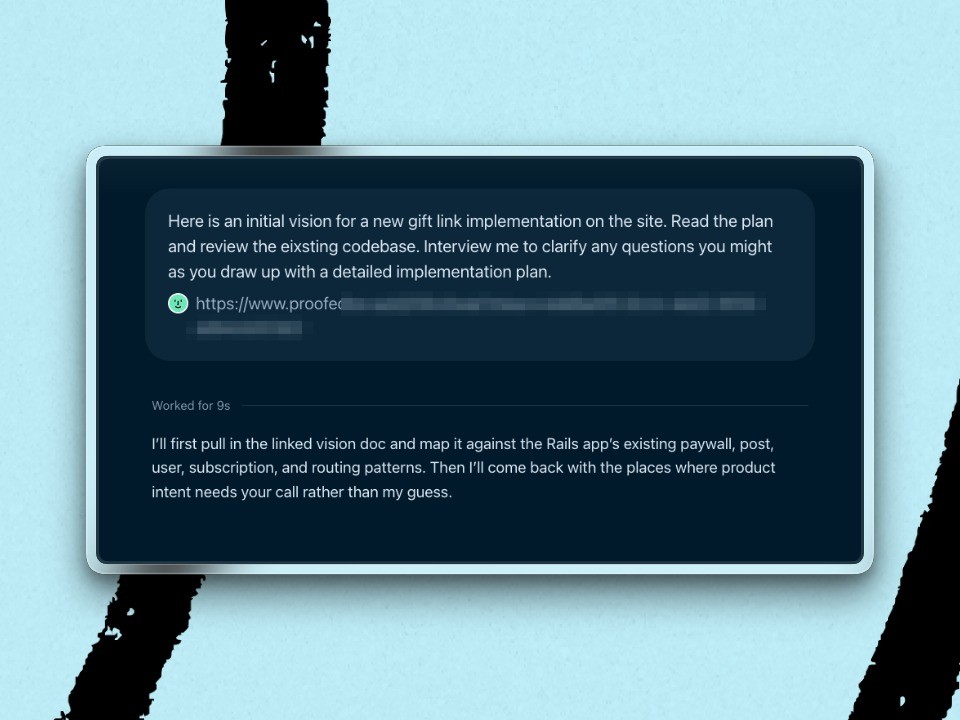
Over the next half hour, Codex conducted a comprehensive interview to clarify my vision. We refined the plan in stages, and once I was satisfied, I told the agent to carry out the plan.
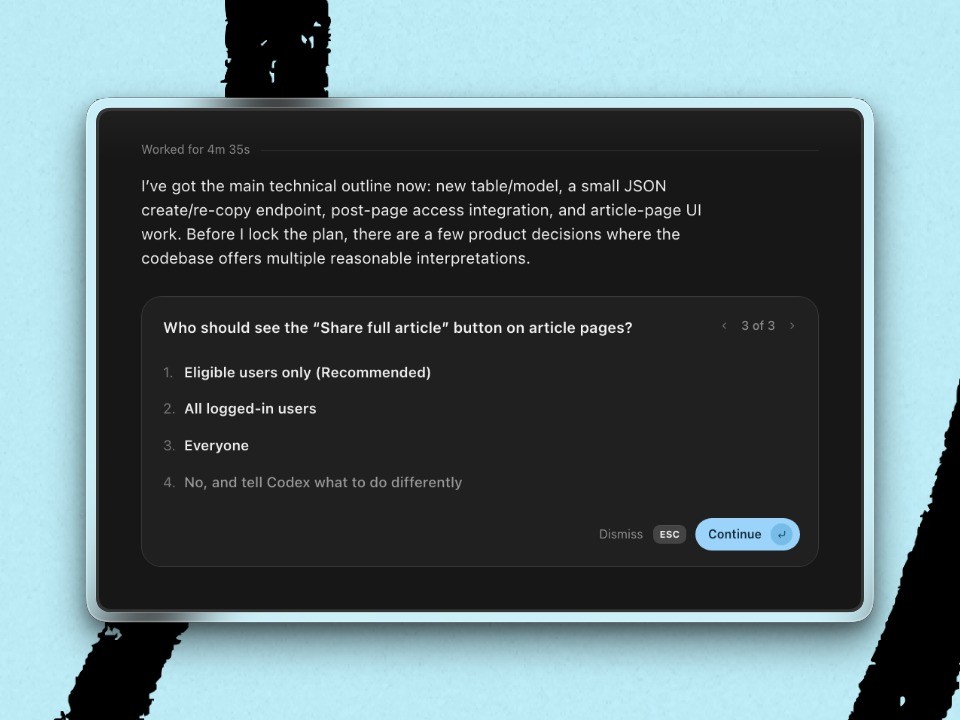
The build took a few hours spread across a couple of afternoons—the latter half mostly me going back and forth with Codex on copy and UI interactions using the in-app browser. I submitted a draft pull request, and Andrey had his Codex review it. We set up a tracking page for analytics in PostHog and deployed the feature on our staging server for Kate’s and Austin’s feedback. We tested the feature internally first, then soft-launched it on the site last month.
In the grand scheme, gift links weren’t a particularly large change to our site or a major differentiator among our competitors. But our experience building them is a good look into how, if an organization is set up to support what AI tools make possible, non-technical teams can dream up, validate, build, and launch an idea—all without diverting resources from higher-stakes work.
We’re watching to see how much of a difference gift links make on Every’s subscription business. Austin had his Slack agent add the report from the PostHog dashboard to the growth team’s Monday briefing. Regardless of the results, I know at least a few people, myself included, who are excited to share those links.
All Access and paid Every members can try out the new feature by clicking the “Share full article” button under article titles. Here, too, is a gift link for my piece from December on AI and creativity.
Jack Cheng is a senior editor at Every. He is a creative generalist and the author of two novels for young readers. You can follow him on X or read his occasional Sunday newsletter.
Everyone’s a builder now. Every All Access gets you the full membership plus the Builder Pack—$7,000+ in credits for the tools we build with.