

Was this newsletter forwarded to you? Sign up to get it in your inbox.
Last year at Google I/O, the company made an overwhelming 100 announcements, including an AI video model—Veo 3—that was miles ahead of anything else at the time. This year had less wow but more dutiful iteration. Gemini 3.5 Flash is faster and more capable than Google’s previous frontier model. Search now builds the right small tool to answer your question on the fly. Gemini assistants can keep running with your laptop closed. Even Gemini Omni, a new, multi-model world model that intuitively understands gravity, kinetic energy, and fluid dynamics—and will likely help train robots—is, for now, being billed as “Nano Banana for video.”
In a year when competitors like OpenAI continued to throw things at the wall—touting its video model, Sora 2, as a ChatGPT moment for video that, according to former head Bill Peebles, would “evolve into a mini alternate reality”—only to shut it down later in the same year. Or leaned into the work market while simultaneously talking, as Anthropic CEO Dario Amodei did, about AI’s potential to decimate entry-level jobs, Google’s releases were not flashy. But filling the gaps both within AI’s jagged intelligence and across its products, while getting the tools to people who will use them, is probably orders of magnitude more important.
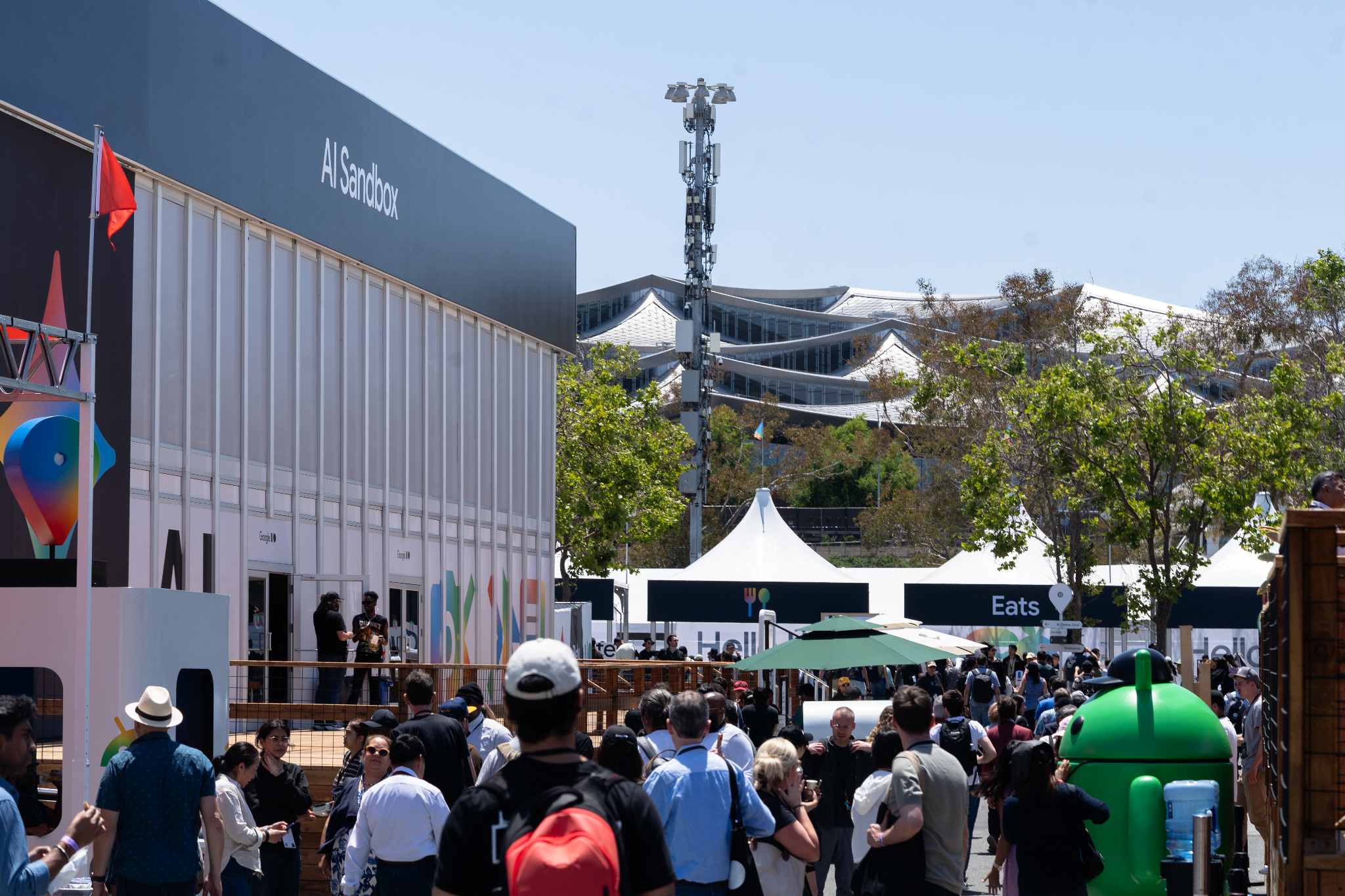
Demis Hassabis, CEO of Google DeepMind, called this moment the “foothills of the singularity.” He puts artificial general intelligence (AGI) “just a few years” out and its total impact at 10 times the Industrial Revolution, and arriving 10 times faster. We now have the ability to automate almost anything we can capture reliable data on, but one of the biggest hurdles is convincing society that it’s worth investing in that ability. Right now most people don’t think it is.
Hassabis called out explicitly that “it’s incumbent on the field, our field, the AI field and industry to show the unequivocal benefits more clearly and more concretely.” My impression, after this year’s conference, is that Google sees the precarity of the current moment clearly, and its scale gives it a rare position to do something about it.
PRDs don’t work in the AI era
You’re probably used to old product specs. You write acceptance criteria, engineers build according to it, and QA verifies that it shipped correctly. But AI doesn’t do that—it gives different results every time. Braintrust just published “Evals Are the New PRD”—the argument is that, for AI products, evals replace the spec, the acceptance criteria, and the roadmap all at once. While a PRD gathers dust in a Google Doc, an eval suite runs on every commit. The piece walks through a four-stage flywheel: Observe, analyze, evaluate, improve. It’s based on how teams at Stripe, Zapier, and Vercel actually ship quality AI. Read it now.
The loop
Google’s loop works like this...
Become a paid subscriber to Every to unlock this piece and learn about:
- How Google’s AI roadmap got a lot clearer at this year’s conference
- Why the AI race is between progress and public trust
- What needs to happen before the window closes on AI’s biggest opportunity

What is included in a subscription?
Daily insights from AI pioneers + early access to powerful AI tools
 Front-row access to the future of AI
 In-depth reviews of new models on release day
Playbooks and guides for putting AI to work
Prompts and use cases for builders
In-depth reviews of new models on release day
Playbooks and guides for putting AI to work
Prompts and use cases for builders
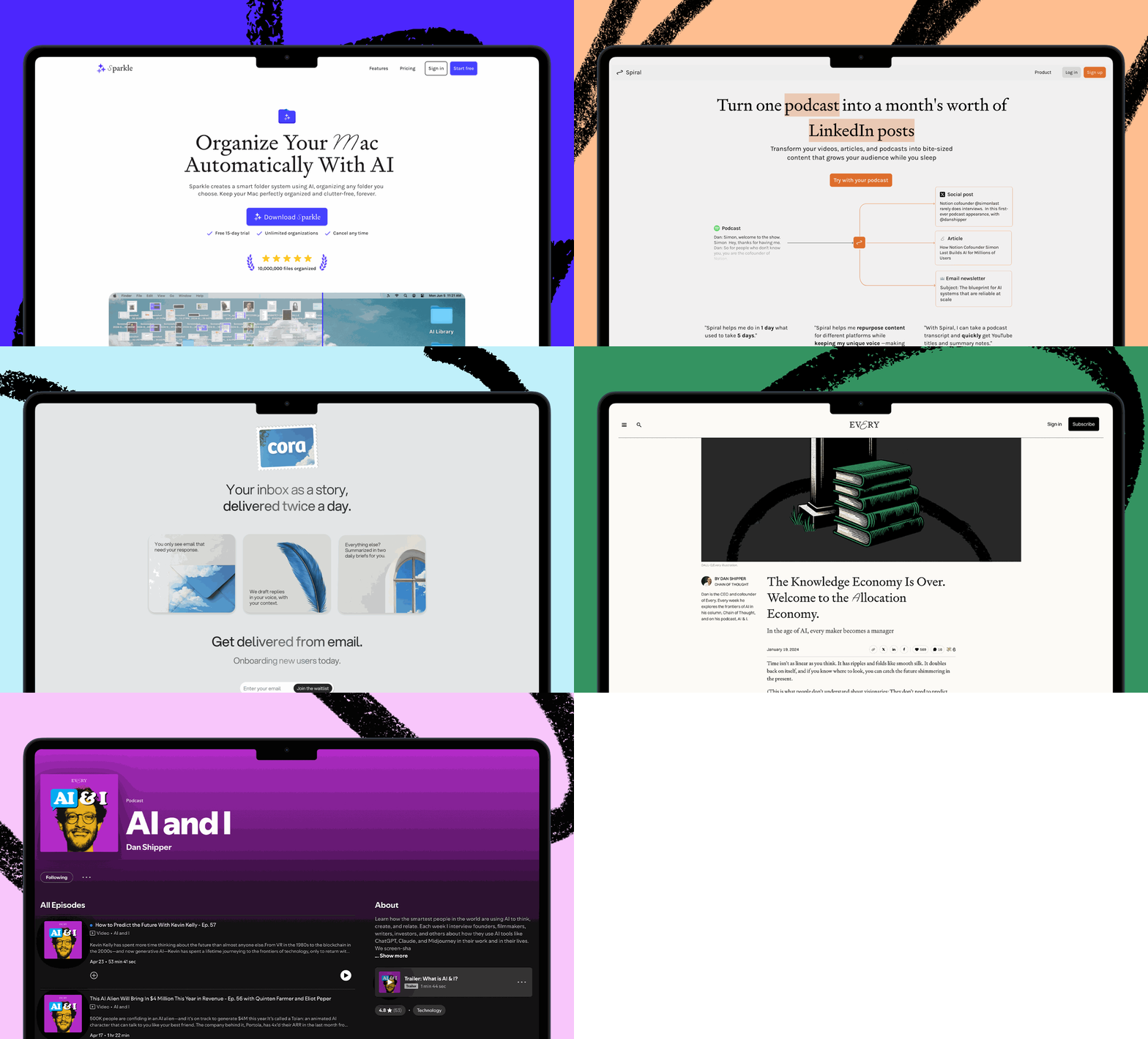
 Bundle of AI software
 Sparkle: Organize your Mac with AI
 Cora: The most human way to do email
 Spiral: Repurpose your content endlessly
 Monologue: Effortless voice dictation for your Mac