


ChatGPT got a wallet last week, so we asked the team: Do you actually let your agents buy things for you now? We look at what the Every team lets AI agents buy, from groceries to flights, and when we still insist on pressing “buy” ourselves. Elsewhere, head of evals Mike Taylor shows how marketers are already writing to win over your agent.—Grant Harvey
Was this newsletter forwarded to you? Sign up to get it in your inbox.
What’s going on
- Anthropic started trading on Nasdaq today, opening at $111.50 a share for a $2 trillion market cap. It’s the first frontier AI lab to go public, raising $81 billion and beating SpaceX for the largest IPO on record. It’s also now the largest “public benefit corporation” on record and could deliver $156 billion to charity through the company’s public benefit fund.
- OpenAI reported that its researchers’ AI use is growing exponentially and argued that all AI labs should be required to publicly track how much AI is speeding up its own development. Its heaviest users, the top 10 percent of researchers, burn about $25,000 worth of tokens a day.
- Researchers including Oxford’s Ruben Laukkonen found that the training that makes AI models helpful also gives them a bleaker view of humans and the world than their base versions, which raises the question of whether today’s alignment tactics are creating the problem they’re meant to solve.
- Vercel launched Board, an experimental message board where people and agents share tasks and permissions, a bet that teams of agents need a shared place to coordinate more than another chat window.
- Grand Theft Auto VI launched today and pulled in an estimated $1.84 billion in sales, already more than The Odyssey made in its entire theatrical run. Mike Taylor took the day off to play it, and four hours in, he found it “so weird to work hard at something manually again.” Now he “can’t wait to get back to the office tomorrow for a break.”
Lovable now helps you find your users
Building is just the beginning. The hard part comes after: getting your app in front of the right people and turning them into happy customers.
Lovable is the only software creation platform that covers the full loop: from brainstorming an idea, to building production-grade software, to helping you find users. Through Lovable you can launch ads on Google, YouTube, Facebook, and Instagram, get found through search, and create all the marketing assets you need, just by asking. It also tells you what's working and your next best marketing move.
Signal: Bot shopping is about to break out in a big way
What happened: ChatGPT can pay for things now. Last Friday, OpenAI launched ChatGPT Wallet for a small group of U.S. Pro subscribers. You add your credit card, your Dot (ChatGPT’s personal agent) shops for you, and you approve each purchase with Face ID or a fingerprint. The purchase is made without the agent or the merchant ever seeing your card number.
Why it matters: Checkout has been a hurdle for shopping agents, often requiring your card details or an account with a saved payment method. Wallet lets you approve purchases while keeping your card details hidden. Now, the hard part is deciding what to let agents shop for. Although we haven’t yet tested ChatGPT Wallet, our team members have already had agents make purchases and process refunds for them, and they’re more comfortable handing off some aspects of shopping than others.
What it means: ChatGPT Wallet fixes paying, not picking. Let your agent handle purchases when you’d take the first reasonable option and it already knows what you have, and keep approving each one, for now, because even the best agents still get it wrong sometimes. Stores are adjusting, too.
In a new report, Andreessen Horowitz calls this the start of the “B2A” (business-to-agent) economy, where agents increasingly decide which products to use, which services to subscribe to, and where to spend money on our behalf. Agent browsing traffic grew eightfold between August and October, and Shopify reported that orders from AI-powered searches grew nearly 13-fold year over year in Q1.
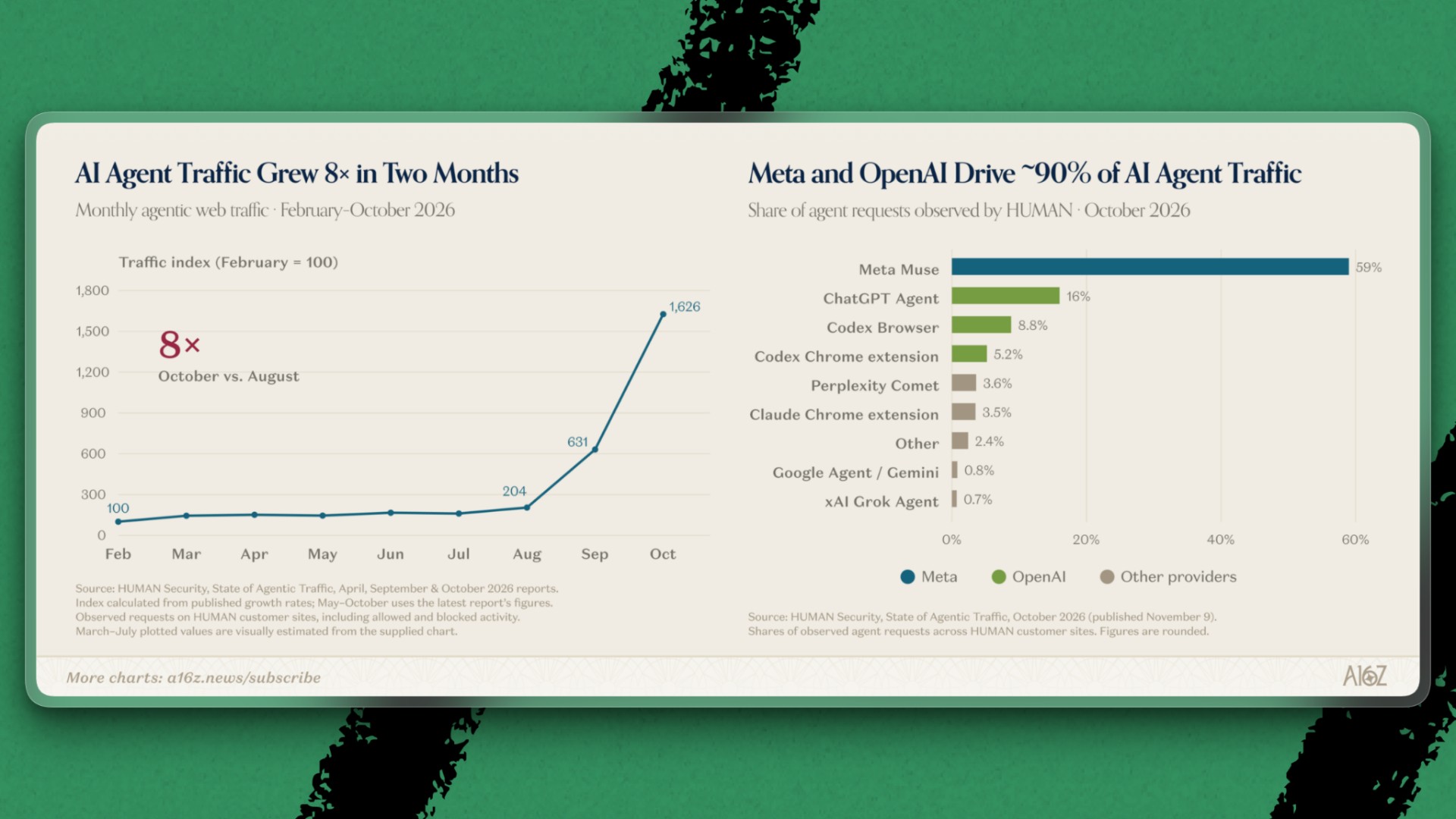
Some stores still keep bots out. For example, Amazon famously blocks Meta’s Muse agent. But a16z expects stores will soon “have to fight for bots’ business.” Mike tested what wins that fight with simulated AI shoppers: The same product sold to Claude Sonnet 4 percent of the time with hype copy written for humans and 97 percent of the time with copy written for AI shoppers. (The same goes for articles—see his guide to getting agents to recommend yours.) Expect shopping to split between stores that block agents and stores that write for them.
Try this: This week, give your agent (Dot, Muse, Grok Bot, Duet, etc.) one purchase where you’d take the first reasonable option, like a refill or a rebooking. If your agent is Grok Bot, start with Lauren Tan’s guide to automating with it. She’s one of the people who build it.
Inside Every
How our team uses agents to shop, what we buy, and what agents we use
Everyone at Every has atheir own personal agent, whether that’s Dot, GrokBot, Instinct, or something elseoften from different providers. But when it comes to shopping, the team is much more split not just on choice of agent but on whatthe types of things they let the agent buy for them. If you’re wondering what’s actually safe to hand off, here’s what we trust agents to buy, where they still slip up, and which ones we use.
- Head of video Randy Counsman’s assistant buys his groceries and places Amazon orders with a saved card (“YOLO”). When it comes to getting his order rightOn order accuracy, he says it’s “no worse than DoorDash/Uber Eats.”
- Head of operations Arielle Shipper has her Dot fill an Amazon cart for the office grocery run, but she still checks it and presses buy herself: “I don’t 100% trust it.”
- CEO Dan Shipper’s agent had a rougher run. For a dinner he was cooking for his girlfriend, it bought salt and olive oil he already had, and frozen shrimp instead of fresh. “Basically still needs oversight in order to have common sense,” he says.
Tyler uses Grok Bot to call airlines and stores to change flights, upgrade seats, and get refunds.
- Tyler says once you get Grok Bot logged into your accounts and trained on your preferences, it’s great for life admin.
- For example, he lets it book his flights to Hilo, Hawaii, from Oahu, because “it’s a 45 minute flight where I spend more time at the airport than in the air.”
- But he won’t let it pick a gift for his sister-in-law: “If you care at all about what that gift is, it’s going to be a slog.”
- Why? Because if your purchase still depends on your taste and judgment, it takes time whether you or Grok Bot does the browsing.
But Grok Bot will often repeat the same mistakes, until you’ve typed the same instruction 10 times (in all caps), so for most people Tyler recommends Claude Duet, though he suspects he’s the only one at Every who prefers it to Dot. Fair warning: you should expect Duet to stop short of pressing the buy button fully autonomously for you.
What about you? Where do you let your agent buy, and where do you draw the line? Hit reply and tell us.
ICYMI @ Thesis
AI rollouts fail on people, not models
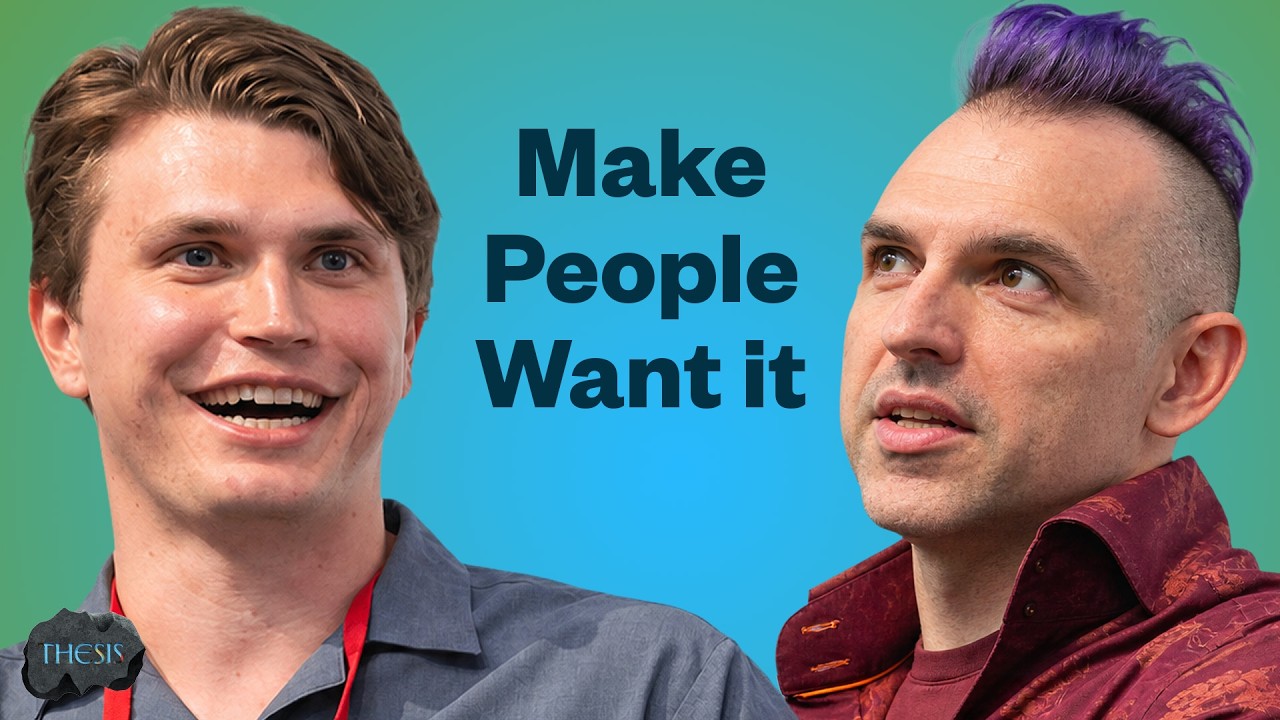

Getting teams to change how they work is a bigger obstacle than model capability. That was the message from Ode’s Hugh Wimberly, Anthropic’s Jeremy Hadfield, and Every head of platform Willie Williams at Thesis: 2027.
The models are ready: Hadfield pointed to Bun, the software that runs Claude Code, whose 1 million lines of code were rewritten in Rust “fully autonomously in about a week,” followed by a few weeks of verification—a job that “literally would have taken a team over a year.”
The people side is slower. Wimberly’s advice is to automate the part of the job people don’t like first, then let them see it work. At one Ode client, 20-year veterans ignored the AI assistant until they watched new hires outpace them with it. Then, as Wimberly put it, “Oh, I have to keep up.”
Use it now: Pick the most time-consuming task your team already dislikes and automate that first. Watch the panel on YouTube.
This conversation is one of 25 Thesis: 2027 sessions on Every TV, all of which you can access right now with a paid Every subscription.
Dispatches from the Frontier
Our staff writer built her own word processor
Pros really are making their own pro tools now. In August 2025, Katie Parrott published an essay about giving up on her first AI editor. It had been shaky from the start. While she built it during Think Week, it kept “rising and then collapsing like a soufflé.” At Every’s Demo Day for subscribers, she couldn’t get the AI part working, so she showed it with fake outputs and told the audience they were dummy content. After six weeks of debugging, she moved the work into a shared Claude project. Maintaining her own app wasn’t worth it.
This week, she introduced Wordbetter, a word processor with her Compound Writing skills built in, a home for your voice, style, and audience files, and comments where you can summon an AI writing coach for feedback on specific passages.
This time, the first feature request was dark mode. Katie asked her agent for it, and 17 minutes later, it returned a draft pull request.
Dan Shipper offered this discovery as a measure of progress: “You can judge AI progress by seeing which members of our team vibe code their own word processor.”
In 2022, building your own AI word processor took a builder like Nathan Baschez, who combined his engineering and design experience with GPT-3 to create Lex. By late 2025, Opus 4.5 had made it possible for founders like Dan to build ambitious software between running a company—leading to Proof, his editor for humans and AI agents to work on documents together. By 2026, we’ve reached the professional writer.
BTW: Kieran Klaassen built his own word processor, Everytype, with Fable 5.1, which we’d barely begun testing before Katie used 5.2 to create Wordbetter. Look out for more from Katie and Kieran on their competing word processors and what it means when anyone can build personalized software.
Want more experiments like this? The Frontier feed is where Every’s team posts what we’re building and testing, including the parts that break. Full write-ups are free with an Every account.
Agent tip
Get your Every articles in your team’s Slack
Did you know that the Every Agent can now share relevant Every articles with your teammates automatically? Three times each weekday, it checks your team’s public conversations and DMs new articles to teammates who might find them useful. The feature is called Frontier Alerts and is on by default for teams of up to 100 people.
Use it now: Add the Every Agent to your team’s Slack.
Grant Harvey is a staff writer at Every. To read more essays like this, subscribe to Every and follow us on X at @every and on LinkedIn.
Thanks to Eleanor Wikstrom for editorial support.
Stop explaining AI to your team and start showing them. Every Agent does the work in Slack, where everyone can see it, so one good workflow quickly becomes the whole team’s.