


Hello, and happy Sunday. How do you stay focused when you’ve got several agents working at once, each coming back to you with questions? Our head of operations Arielle Shipper asked nine colleagues how they handle it. A thread ran through their responses: Give yourself one place to see what needs your attention and make the calls that are up to you. On Wednesday, we announced a $17.5 million Series A to expand the writing, software, skills, and training that help you and your team put AI to work. As a thank-you for helping us get here, paid subscribers can give three friends a free month of Every.—Grant Harvey
Don’t forget, our holiday sale is still on: Get your first year of All Access for $388 (normally $625), including $8,000-plus in AI credits. Already a paid subscriber? We’ll credit the time left on your plan.
Was this newsletter forwarded to you? Sign up to get it in your inbox.
Protocols
Four habits to try from this week’s stories.
Run multiple agents without losing the thread
From Arielle Shipper’s “Your AI Agents Can Multitask. Can You?”
Keep your attention on the work that needs your judgment. Arielle Shipper runs operations at Every with help from a team of AI agents. One morning, her assistant pointed out that she put agents to work on seven tasks in 29 minutes, including reviewing company priorities and preparing paperwork for a visa application. She was getting more done but struggling to think deeply about any of it, so she asked nine colleagues how they stay focused while managing several agents:
- Track what’s in flight. Social lead Becky Isjwara writes down every task and where it’s running on a notepad by her computer—a log an agent can also keep for you. The prompt
- Sort tasks by who can check them. Every Agent engineer Lee Knowlton runs tasks agents can verify with tests in parallel threads and keeps work that needs his judgment in one thread. The prompt
- Return with a decision list. Engineer Jannik Jung takes 15 to 30 minutes to catch up, asking the agent what happened, where things stand, and which calls he needs to make. The prompt
- Take stock before you tidy up. Head of evals Mike Taylor tolerates a mess of five or six agent threads as long as the work is good; an agent can tell you what each of yours produced. The prompt
Knowledge base
“The 10 Levels of AI Adoption” by Mike Taylor and Laura Entis/Guides: We added two levels to our ladder of how people work with AI. Level 9, simulation, is where teams of agents compete using different strategies to see which comes out ahead. Level 10, the multiverse, is where you rerun that simulated world many times to rule out luck and find the strategies that win every time. Find your level and get a certificate for your LinkedIn profile.
“Google’s Neon Is Great… on a Short Leash” by Grant Harvey/Context Window: Gemini 4 Neon went viral this week, and our testers found it works best when you stay in the loop. Also inside: why the team stopped using Anthropic’s Duet, how head of marketing Douglas Brundage made Every’s first AI commercial by directing Claude, and senior editor Jack Cheng’s video on rebuilding Checks, our tool for testing models on your own work.
“We Raised $17.5 Million to Make You and Your Team AI-native” by Dan Shipper/On Every: We raised a Series A funding round led by IA Ventures (Fortune has the full story). In his piece, Dan explains what this means for Every and for you. As a thank-you, paid subscribers can now gift a free month of Every to three friends.
Thesis: 2027
Kevin Roose’s agents now outnumber his colleagues
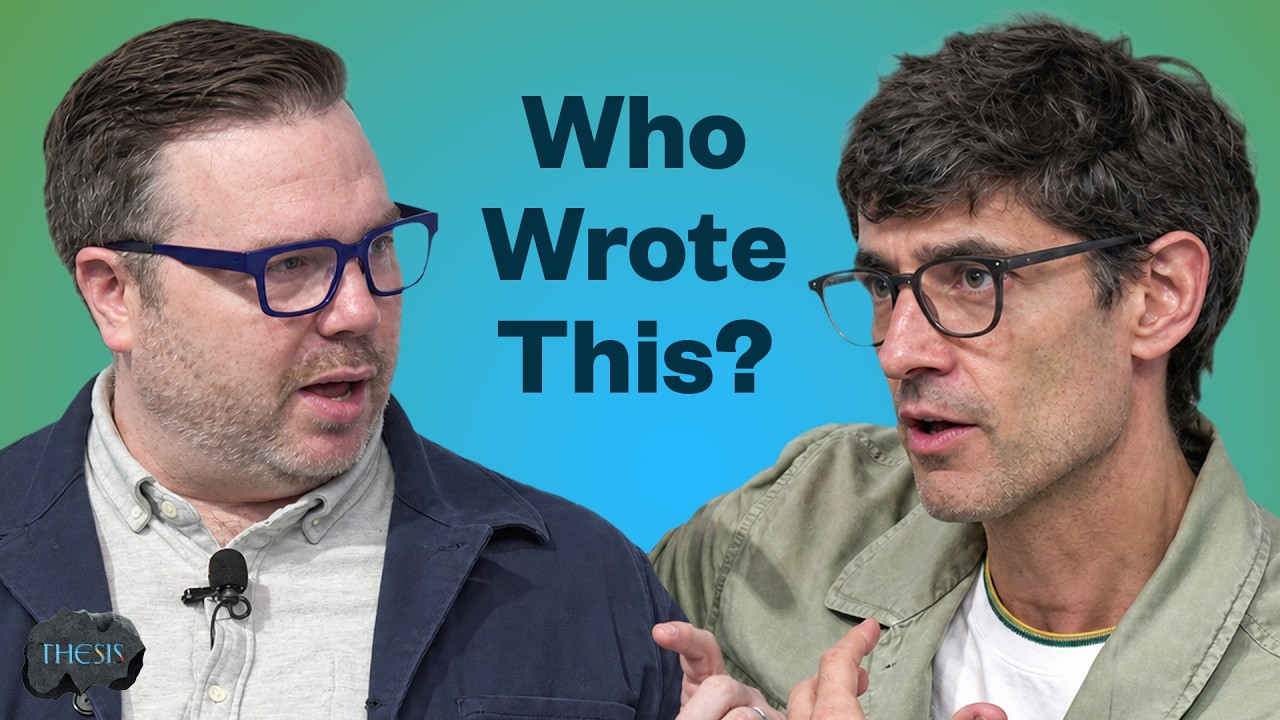

Writer Kevin Roose’s six-person team makes two episodes a week of Machine Gods, the podcast and video show he cohosts. Overnight, agents export videos, transcribe and publish shows, draft contracts, and review budgets, so the journalists can run their own company.
That prompted The Atlantic CEO Nicholas Thompson to joke, “Here I am sitting next to a journalist who’s, like, replacing me.”
Watch their panel with Kate Lee on what publishers can still offer writers who run more of the business with agents.
Unlock all 25 talks from Thesis: 2027 with a paid Every subscription.
Alignment
The longevity bet. When I heard that Anthropic mathematician Levent Alpöge and Claude had produced a proof of the Riemann hypothesis, I was in shock. I’m an appreciator of mathematics, which is a generous way of describing someone who knows enough to understand how far beyond him this is. One of the most famous problems in mathematics had yielded to a mathematician working with an AI. The formal proof has since passed independent computer checks, while mathematicians continue working to understand it. I’m starting to believe that Anthropic CEO Dario Amodei may be onto something when he says powerful AI could compress decades of progress in biology and medicine into a few years.
Among those taking this seriously are life insurance companies, whose profit and loss statements depend on estimating how many policyholders die and when. They already build medical progress into their forecasts through assumptions about mortality improvement: A model might assume, for example, that the risk of dying at a given age falls by 1 percent each year. Small differences in that rate compound over the decades their contracts cover.
Actuaries now list AI among the advances shaping their long-term mortality assumptions. Could AI turn scientific breakthroughs into treatments fast enough that we start living longer, sooner than the companies pricing our lives have forecast?
The answer depends on how quickly AI companies, working with drug developers, can shorten the journey from discovery to trial to patient. Developing a medicine can take a decade or more. If AI brought that down to three years for some treatments, the effects would be life-altering.—Ashwin Sharma
That’s all for this week. Hit reply and tell us: How many agents can you run at once before you lose the plot?
Grant Harvey is a staff writer at Every. To read more essays like this, subscribe to Every and follow us on X at @every and on LinkedIn.
Stop explaining AI to your team and start showing them. Every Agent does the work in Slack, where everyone can see it, so one good workflow quickly becomes the whole team’s.
Thanks to Eleanor Wikstrom for editorial support.