
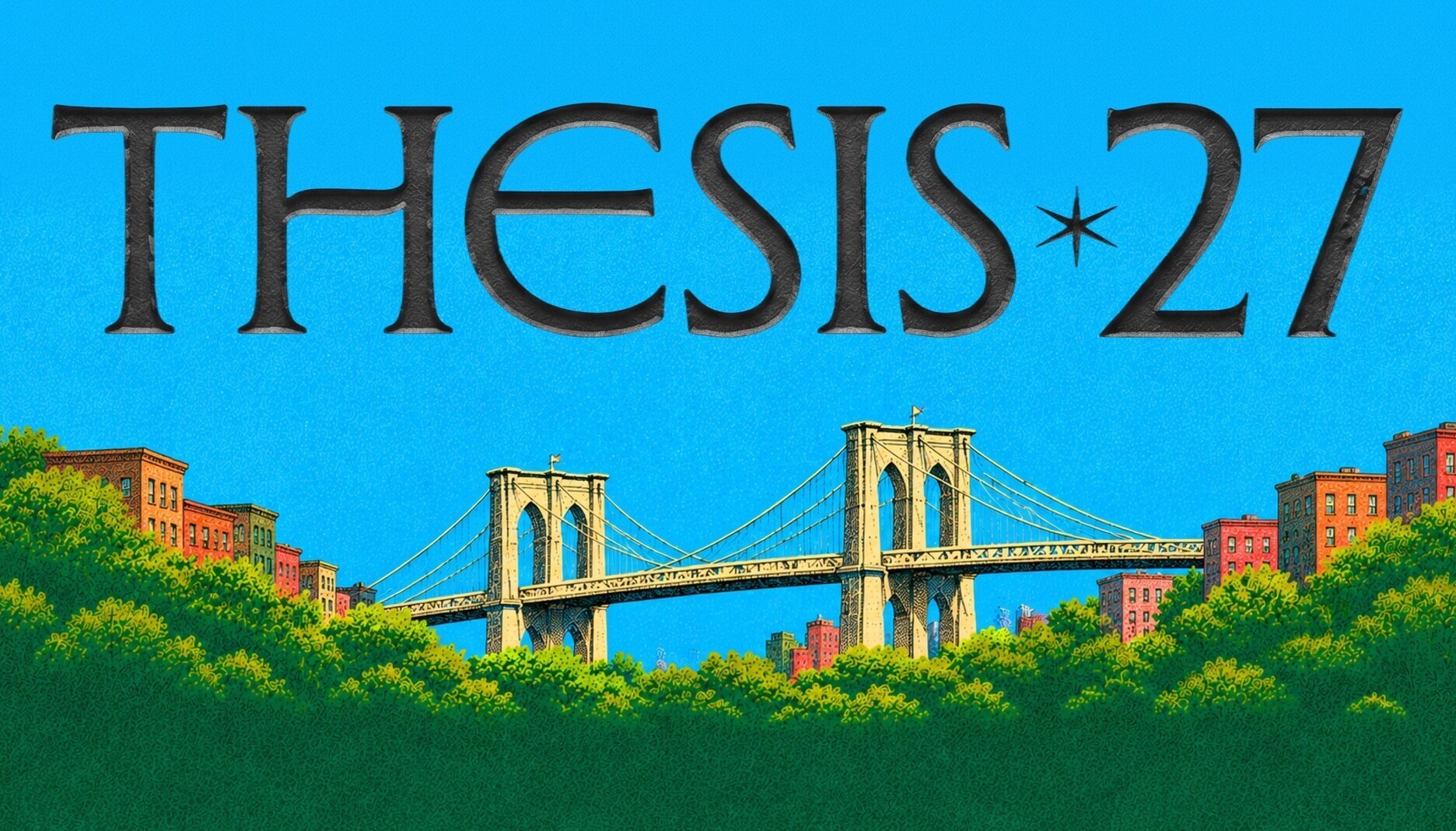
Hello, and happy Sunday. On Thursday, 400 of you joined us at Pioneer Works in Brooklyn for our first conference, Thesis: 2027, and thousands more tuned in online. Across 25 sessions, we worked to answer one question from Dan Shipper: What does great human work look like after automation? Paid subscribers can watch every session now on Every TV, and we’ll release them on our YouTube channel over the coming weeks. Here are some of the highlights. On Tuesday, we’ll start sharing our top insights with a recap of Dan’s closing keynote.—Kate Lee
Was this newsletter forwarded to you? Sign up to get it in your inbox.
Notes from Thesis: 2027
Setting the stage, Dan opened the day by addressing the shock that writers, then artists, then programmers, and now mathematicians have felt watching AI do work that took them years to master. But the people in the room, he argued, were among the few who see AI “not as a loss of who we are, but as an expansion of what humans can be, build, and achieve.” We’d brought them together, “from frontier labs, from tech companies, from startups, from schools, and art studios,” to work out what that expansion looks like in practice, and over the next eight hours, that’s what we tried to do.
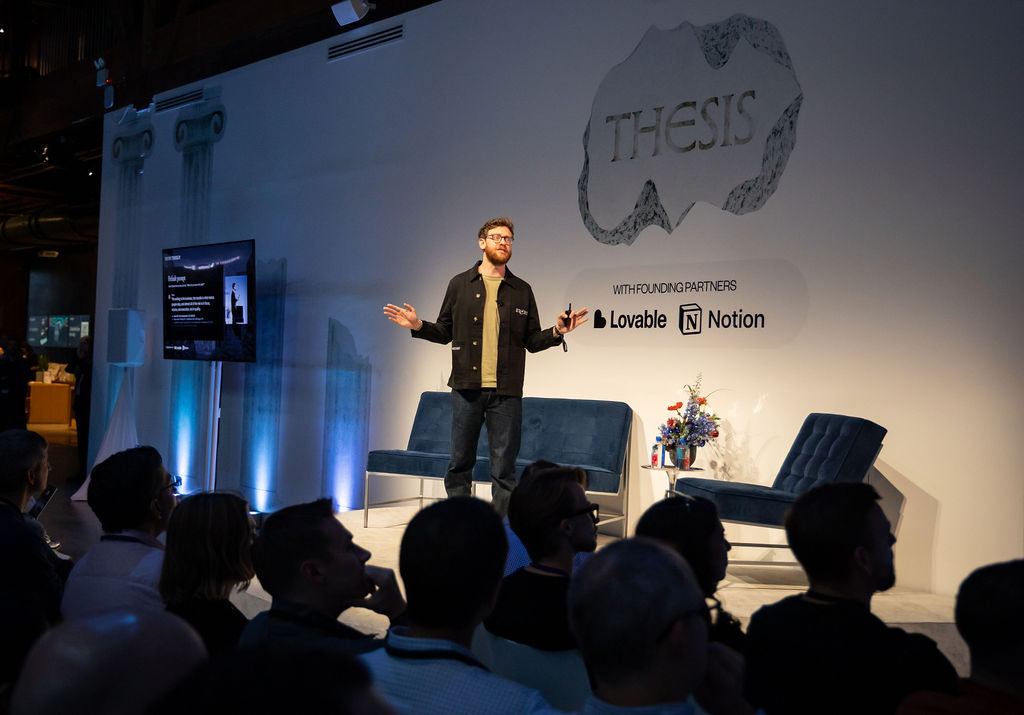
Three floors, three kinds of conversations
From there, the day played out across three floors in Pioneer Works, an arts and science center in Red Hook, Brooklyn, founded by artist Dustin Yellin, and each had its own feel.
In the Agora, our main stage, speakers from OpenAI, Anthropic, Microsoft, Notion, Runway, Sequoia, and the Atlantic each took their turns sharing their take on great work after automation. The audience was full of people trying to bring AI into large organizations: A leader from Pfizer described a 175-year-old company “stuck with the old way of change management,” an employee of Royal Caribbean asked how to help colleagues “think differently about what’s even possible,” and a Boston restaurant owner pointed out that his restaurant appeared in Anthropic’s S-1, in an industry where AI adoption barely registers. Fortune’s Allie Garfinkle bookended the session by polling the room: Was AI a bubble, a boom, or both? By the second vote, fewer hands went up for “bubble.”
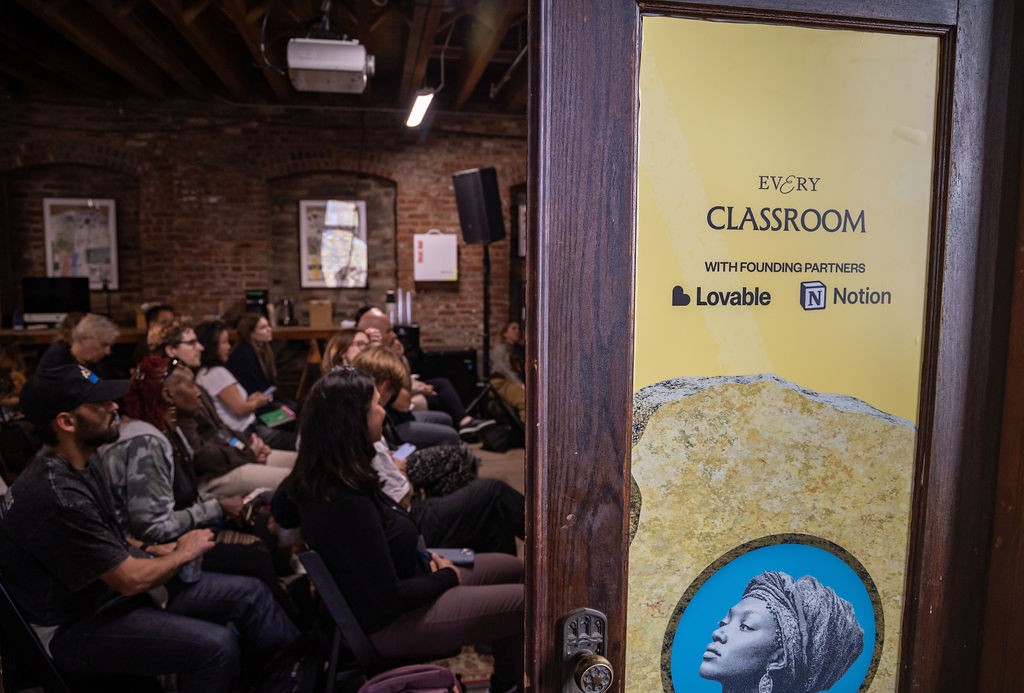
The Classroom sessions were packed throughout the day, with people standing in the aisles as Every staff and friends—including Alex Duffy, Kieran Klaassen, Trevin Chow, Katie Parrott, Mike Taylor, and Brandon Gell—demonstrated workflows, shared skills, and took questions. Mike ran a live Vibe Check on four different models by having them build slide decks, attendees left Kieran and Trevin’s session with free copies of Martin Heidegger’s Being and Time (“We are feeling like Oprah today,” the hosts joked), and one attendee told Katie they’d been using Compound Writing to write song lyrics. At the end of the session on how people organize their work with AI, head of enterprise AI adoption Natalia Quintero asked who would share their folder structure with a stranger, because “the way that we learn to do this ourselves is we show each other our folders, and it’s a really vulnerable thing to do.” By the afternoon, people were doing exactly that in an impromptu show-us-your-folders session in the coworking space.
Our third space, the Salon, was smaller, with converted church pews as benches and conversations that meandered in fascinating directions. Yellin, who swore freely, answered a question about AI models training on his work with “Train, baby, train.” Shane Hegde, CEO of Air, which makes software for managing creative teams’ images and videos, told the room his team flew to Japan hoping to apologize to Hayao Miyazaki on behalf of the tech industry for AI image generators’ relentless imitation of his style. But local craftspeople questioned the need for an apology, leading him to realize, “the storyteller is the art, not the piece.” During head of Founders School at Alpha School Nat Eliason’s session on teenage founders, the parents in the room had enough questions that our editor in chief Kate Lee wrapped up by admitting, “All of us with kids, our minds are reeling.”
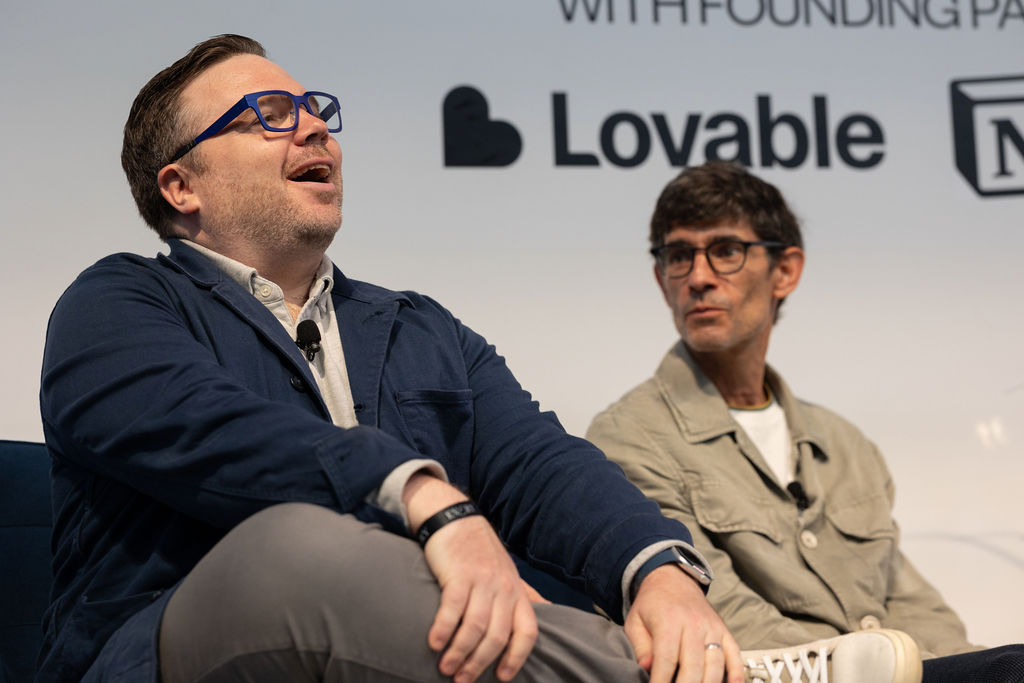
A few other moments stuck with us. On a panel about media after artificial general intelligence (AGI), Machine Gods cohost Kevin Roose described trying to use Claude Code to build his book’s endnotes, only to find that the best sources block AI crawlers. The Atlantic CEO Nicholas Thompson had a fix, and it drew applause: “The AI companies could pay us instead of stealing it.”
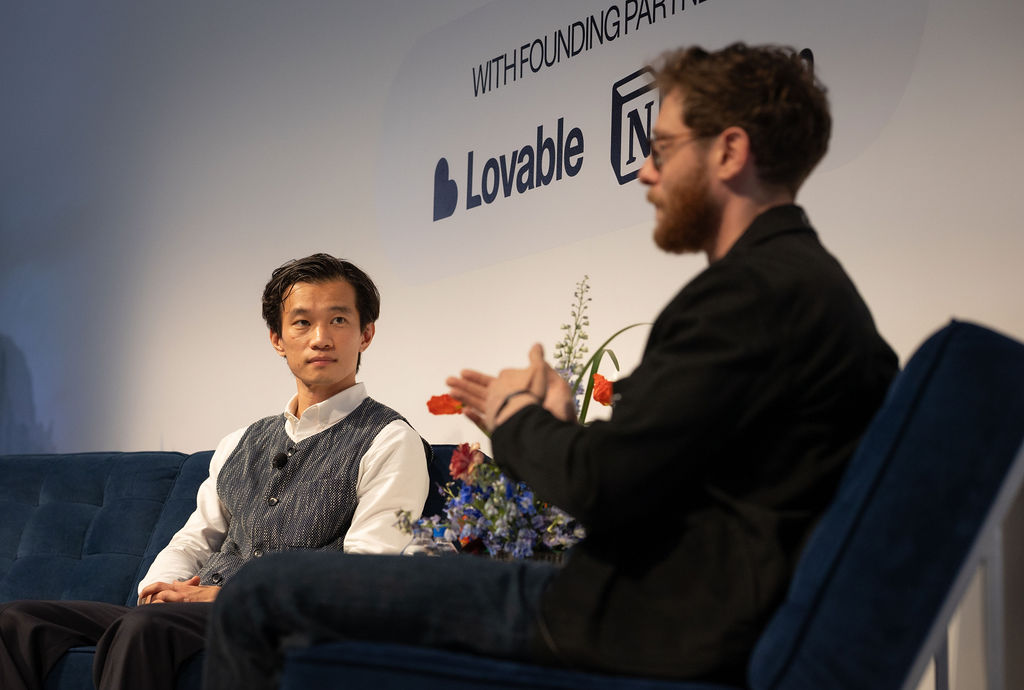
Dan’s interview with Notion cofounder and CEO Ivan Zhao kept coming up in conversations long after it ended, especially his warning to builders: “I don’t think we should surrender our understanding.” When every engineer on a team works through their own coding agent, he said, a medium-size codebase can stop making sense to the people responsible for it within a week. Now, Notion’s teams run their agents’ work through a shared kanban board, which lets the humans see what the agents are doing. (We do something similar to write this very newsletter, using Notion.)
Dan closed the day by arguing that once everyone has the same model, the default answer it provides becomes cheap, and what matters most is the perspective that each individual person brings on top of it. His charge to the attendees: “Now that the people in this room understand this and feel this, it’s our job to go and spread it to the rest of the world.”
We’ll be sharing lots more takeaways from Thesis: 2027 in the days ahead.
Sessions you might have missed
Our Classroom workshops filled up early and stayed packed all day, so if you attended in person and couldn’t get a seat or missed the workshops on the livestream, here are three sessions to catch up on:
- From Vibe Checks to Evals: Mike shows how to turn every correction you make into a yes-or-no check you can rerun on each new model. “You don’t have to be very good at evals. You just have to have an opinion,” he said.
- Where Humans Belong in Compound Engineering: Kieran, a member of the Frontier team, and Chow, a Compound Engineering maintainer, explain the “compound sandwich,” what to automate based on the stakes, and the one command to run on your repo first.
- Compound Writing: How to Make Your AI Know What You Know: Staff writer Katie walks through Compound Writing, including the editor persona she calls “Nemesis” and the audience.md file that stops AI from writing over your readers’ heads.
Paid subscribers can watch all 25 sessions now on Every TV, and we’ll release them for everyone on Every’s YouTube channel over the coming weeks.
What people said
Almost nothing about the day was left to chance, and attendees noticed, down to the Wittgenstein and Heidegger on the bookshop shelves. Jarad Johnson, cofounder and CEO of digital agency Mostly Serious, praised the short sessions, the lunch seating designed for spontaneous conversations, and the speakers, who “seemed at least a year ahead of the rest of the world, often much further.” And Air’s Kate Collins gave Thesis the award for best-dressed crowd at an AI conference.
Other notable reactions:
- “If there was an ‘AI conference’ that you should have gone to this year... it’s @every.”—Geoffrey Huntley
- “Masterclass conference from @every.”—Andrew Ambrosino, OpenAI
- “Special shout-out to the classroom sessions.”—Sean Scott, U.S. Bank
- “I usually dip out early at post-conference events, but before I knew it last night, it was last call!”—Kersa Haughey, Ink Communications
- “I’m trapped here. Can’t look away.”—Alyx Perry, consultant, in the livestream chat
That’s all for this week. Follow Every on X at @every and on LinkedIn.
Missed Thesis or want to watch it again? All 25 sessions are on Every TV, included with a paid Every subscription. And stay tuned for Thesis: 2028.
Grant Harvey is a staff writer at Every. To read more essays like this, subscribe to Every and follow us on X at @every and on LinkedIn.
Thanks to Eleanor Wikstrom for editorial support.